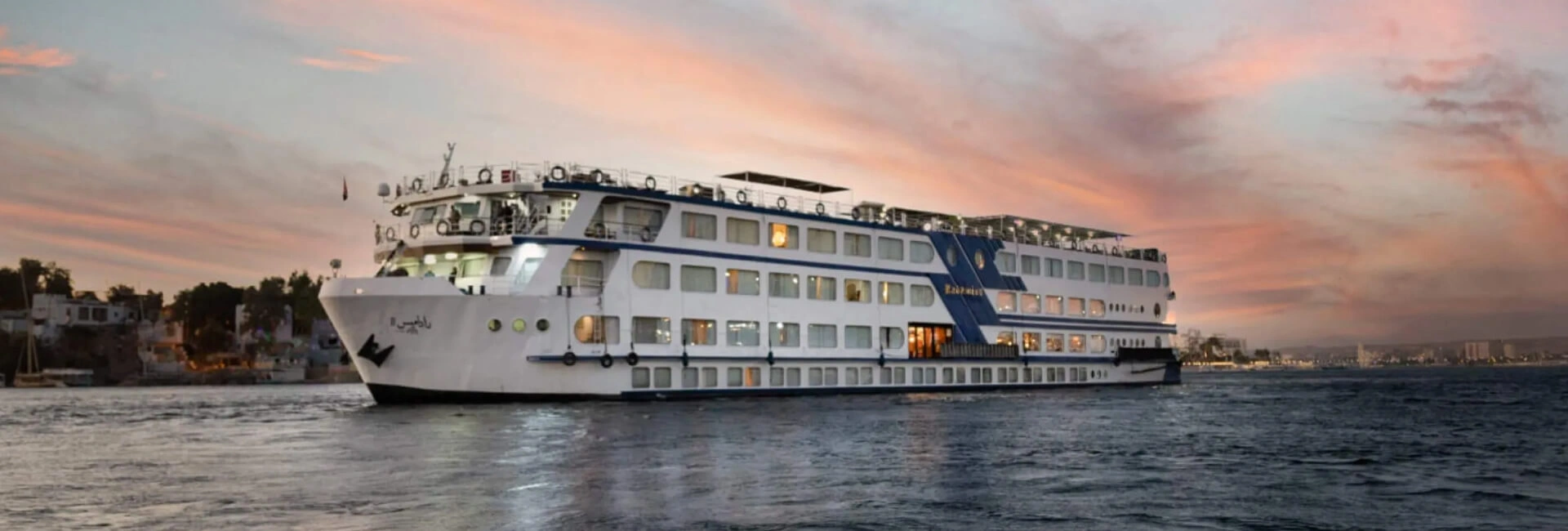
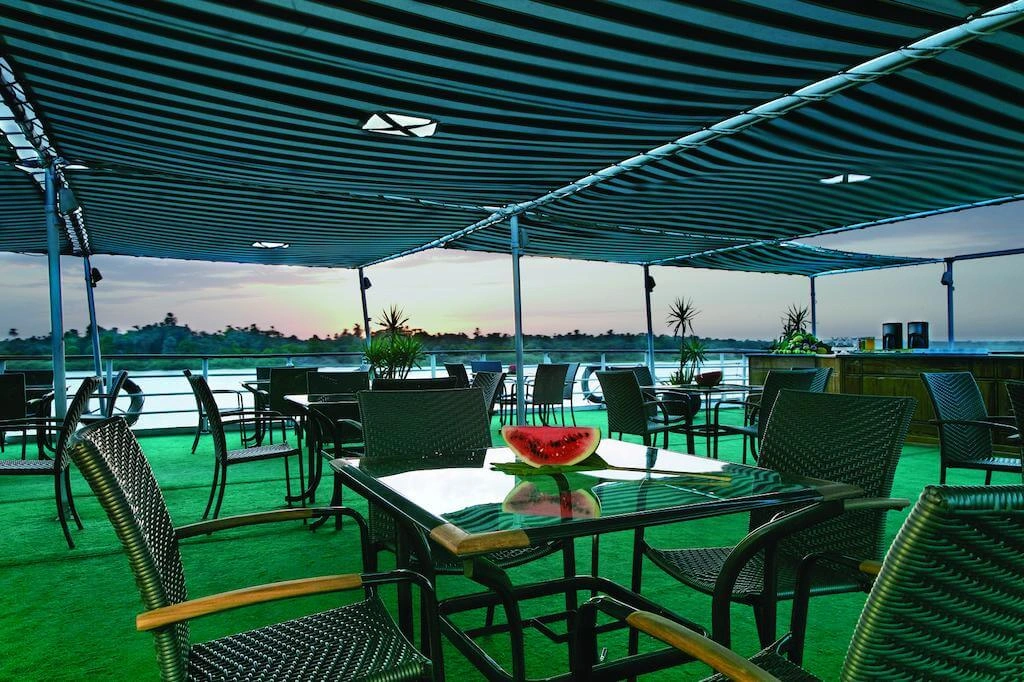
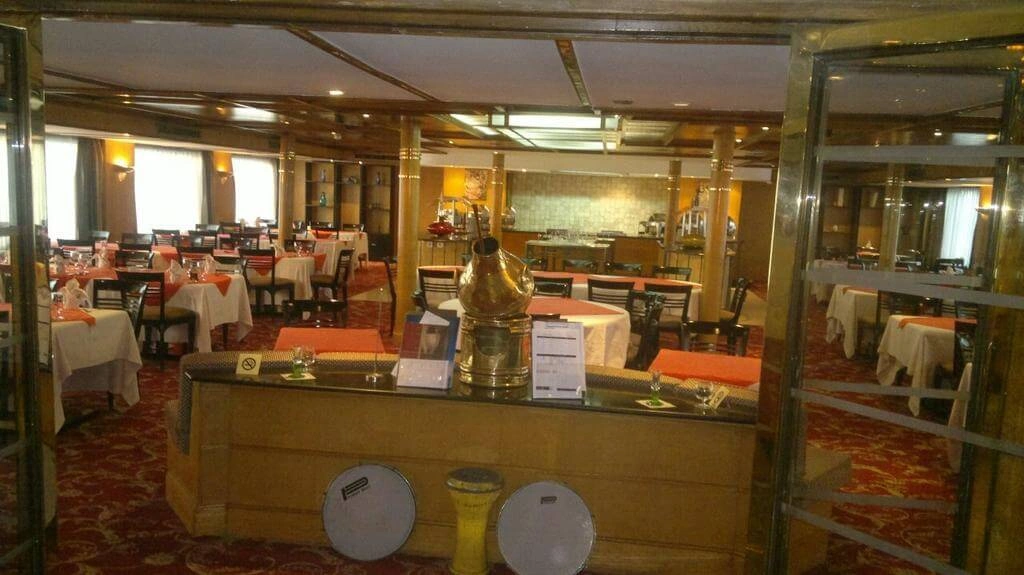
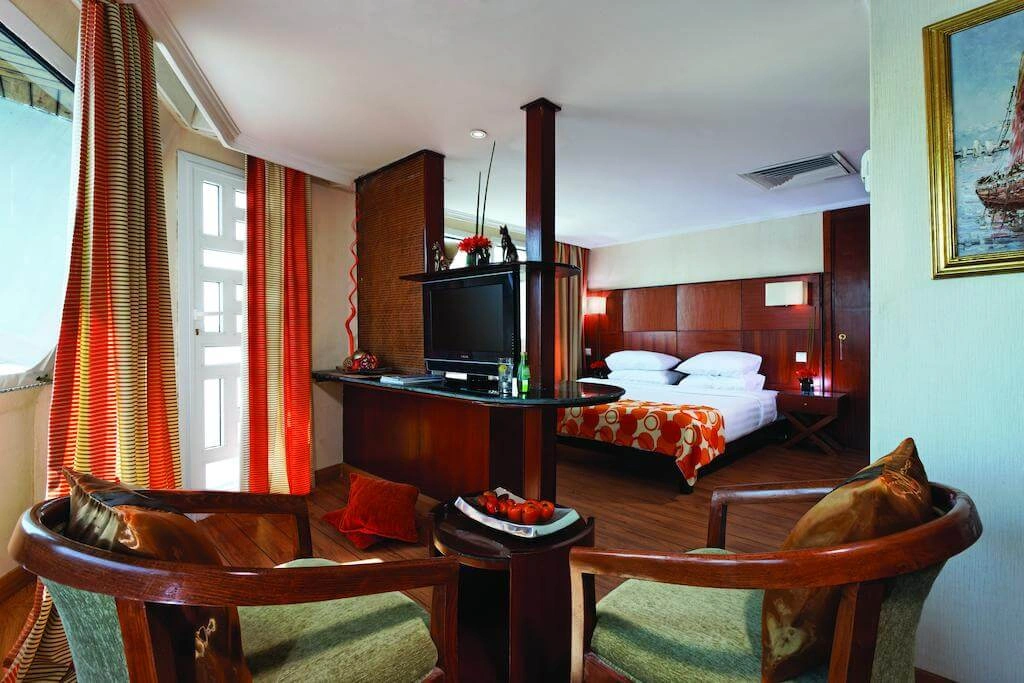
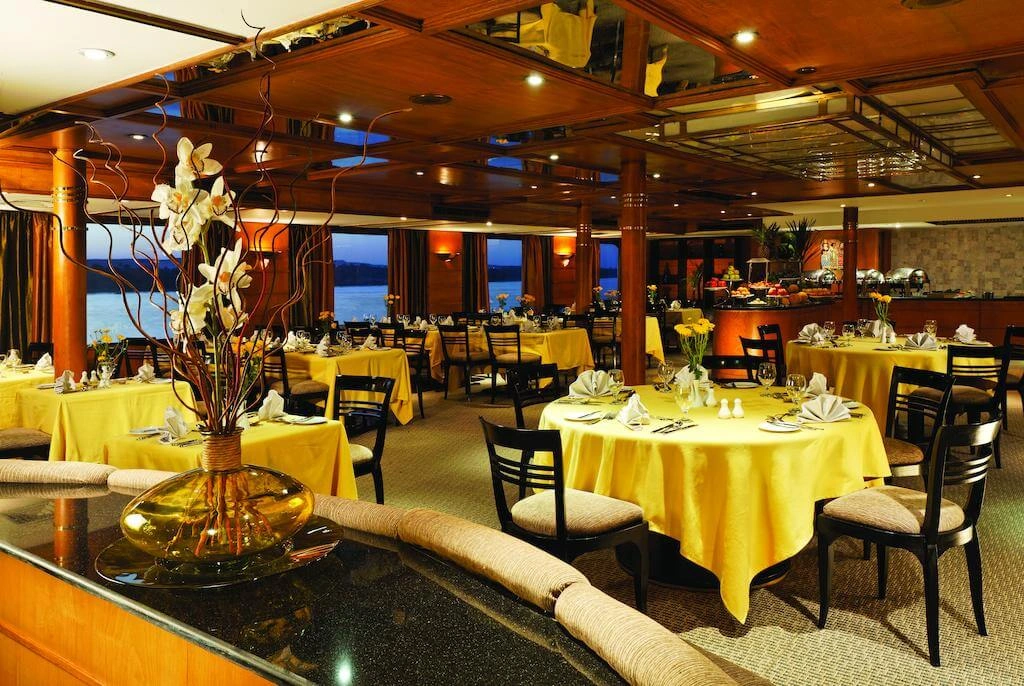
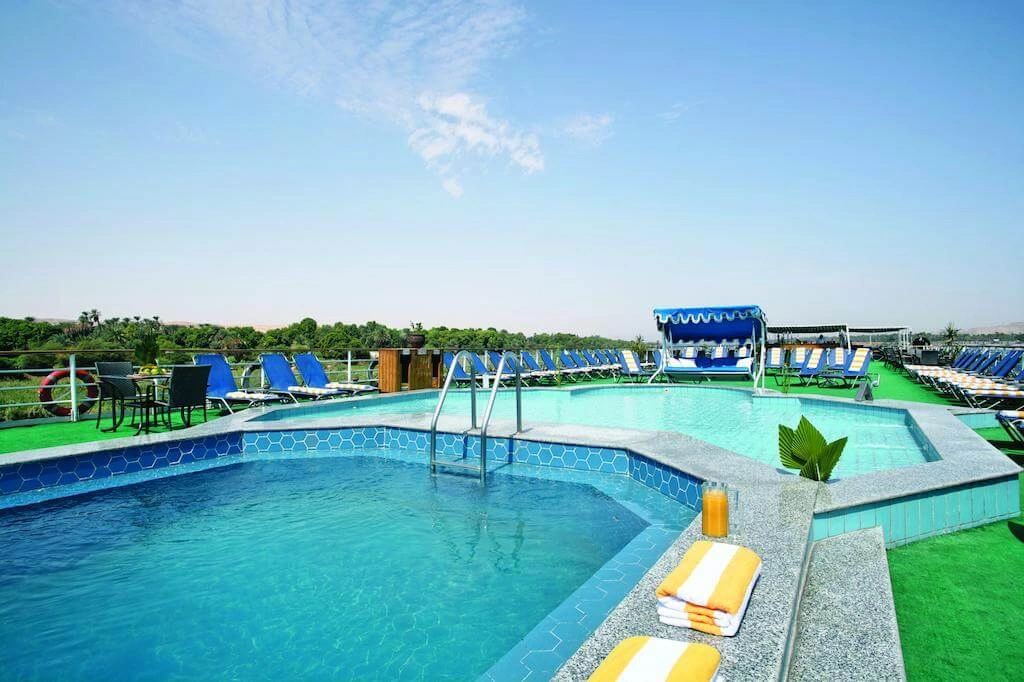
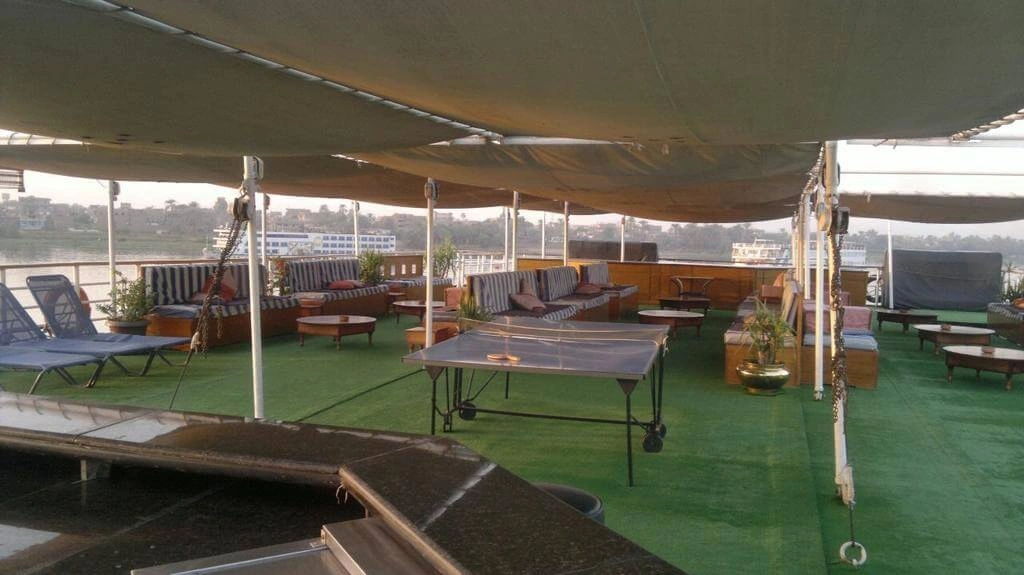
Step aboard the MS Radamis I and let the Nile do the travelling for you. Between Luxor and Aswan, this friendly ship becomes a floating balcony onto Upper Egypt: mud-brick hamlets slipping by, egrets lifting from the reeds, feluccas leaning into the breeze and long golden banks glowing in the late-afternoon light. Guided shore visits unlock the region’s greatest names — the pillared forest of Karnak, the painted tombs of the Valley of the Kings, the twin sanctuaries of Kom Ombo and the near-perfect temple of Edfu — while your cabin, the open sundeck and the generous dining room wait patiently for your return. Nights turn cool and quiet under wide, star-heavy skies. When you’re ready to trade taxis for a river, Daily Pyramids Tours will put you aboard the MS Radamis I.
The MS Radamis I is built for easy, unhurried Nile cruising between Luxor and Aswan, pairing a well-run onboard experience with the practical touches that matter across four or five days on the river. Cabins are comfortable, the public areas invite you to slow down, and service is quietly attentive, leaving you free to focus on the temples, the landscape and the rhythm of life along the banks.
Day 1: Arrival in Aswan – Aswan City Tour
Whether you land at Aswan Airport or set out from your hotel, our representative will be waiting to greet you and stay alongside you throughout the day’s touring. A private air-conditioned vehicle sets the pace, starting at the High Dam — the twentieth-century colossus that tamed the Nile’s floods and, in the process, safeguarded a chain of Nubian monuments from disappearing beneath Lake Nasser.
From there you travel to the Unfinished Obelisk, still resting in the granite quarry where a hairline flaw brought its shaping to a halt. Walking beside it is one of the clearest windows anywhere in Egypt into how these giants were carved directly from the bedrock.
A motorized felucca then ferries you across the Nile to Philae Temple, the island shrine of Isis painstakingly moved block by block to Agilkia after the High Dam raised the waters. If time allows, an optional sail around Elephantine Island and the First Cataract reveals the wilder river — smooth black boulders, whitewashed Nubian houses and shifting reflections.
Lunch is taken at a local restaurant before you head to the quay to check in aboard your Nile cruise. Dinner is served onboard, and the ship stays moored overnight in Aswan.
Meals: Lunch – Dinner
Day 2: Kom Ombo & Sailing to Edfu
After breakfast onboard, a private vehicle drives you roughly 45 km north to Kom Ombo, where a striking double temple stands right on the riverbank. Uniquely symmetrical, it was raised for two very different gods: Sobek, the crocodile deity of the Nile, and Haroeris, a form of Horus the elder.
You’ll walk through its twin sanctuaries, matching hypostyle halls and the intimate ritual chambers behind them, before stepping into the small Crocodile Museum next door, home to a haunting collection of mummified crocodiles unearthed in the temple precinct.
After lunch at a local restaurant, you rejoin the ship as she casts off for Edfu. The afternoon belongs to the deck: sugarcane fields, riverside villages and the pale sandstone cliffs that shape Upper Egypt’s skyline slide past in slow procession.
An evening briefing sets you up for tomorrow’s visit, and the vessel moors overnight at Edfu.
Meals: Breakfast – Lunch – Dinner
Day 3: Edfu Temple & Arrival in Luxor
After breakfast, a horse-drawn carriage clip-clops you through Edfu’s morning streets to the Temple of Horus — the most complete ancient temple to survive anywhere in Egypt.
Behind its towering pylons you’ll cross wide open courts, thread through the columned halls and read wall after wall of finely cut inscriptions telling the mythic contest between Horus and Seth, together with the ceremonies that shaped Ptolemaic worship. So little has been lost that you can trace nearly every original level, right up to the roof terraces.
Back aboard, the ship turns north for Luxor, with lunch served as you sail.
On arrival you visit Luxor Temple on the East Bank, a monument added to across the centuries by rulers including Amenhotep III and Ramesses II.
Its long colonnades, sunlit courtyards and the sphinx-lined avenue reaching towards Karnak still evoke the ceremonial heart of ancient Thebes. The cruise moors overnight in Luxor.
Meals: Breakfast – Lunch – Dinner
Day 4: Luxor West Bank & Departure
After breakfast and disembarkation, you cross to the West Bank of Luxor — the great necropolis of Thebes. The morning opens in the Valley of the Kings, where three royal tombs pull back the curtain on a private world of vivid paintings and funerary texts written to guide pharaohs through the afterlife.
From the valley you continue to the Temple of Hatshepsut at Deir el-Bahari, its long ramped terraces cut boldly into the amber cliffs above the plain — a fitting stage for one of Egypt’s most formidable female rulers.
A final stop at the Colossi of Memnon brings you face to face with two enormous seated statues that once framed the entrance to a now-vanished mortuary temple. After lunch you’re transferred to Luxor Airport or your hotel for onward travel.
Meals: Breakfast
Day 1: Arrival in Luxor – East Bank Exploration
Whether you arrive at Luxor Airport or step off the train, a representative meets you at the gate and a private air-conditioned vehicle takes you straight to the quay to board your Nile cruise.
Once you’ve settled in, the touring begins at the Karnak Temple Complex — the largest religious site ever raised by human hands, added to for more than two thousand years by generations of pharaohs.
From Karnak you continue to Luxor Temple, a New Kingdom masterwork historically linked to its greater neighbour by the ceremonial Avenue of Sphinxes.
Lunch is enjoyed at a local restaurant before you return to the ship for dinner and an overnight mooring in Luxor.
Meals: Lunch, Dinner
Day 2: West Bank of Luxor – Sailing Toward Edfu
After breakfast, you cross to the West Bank of Luxor for a guided walk through the Valley of the Kings, where more than 60 royal tombs still shelter startlingly fresh paintings of the ancient Egyptian afterlife.
The morning continues at the Temple of Hatshepsut at Deir el-Bahari, its clean, terraced lines rising directly from the cliff face — an audacious monument to Egypt’s most formidable female pharaoh.
A short stop at the Colossi of Memnon brings you before two enormous seated statues, all that survive above ground of Amenhotep III’s once-vast mortuary temple.
After lunch at a local restaurant, you return to the ship as she pushes off for Edfu, and the night is spent onboard as the Nile drifts past your window.
Meals: Breakfast, Lunch, Dinner
Day 3: Edfu and Kom Ombo Temples
The ship arrives at Edfu and a horse-drawn carriage takes you through town to the Temple of Horus.
Extraordinarily well preserved, this Ptolemaic masterpiece was dedicated to the falcon-headed Horus and remains among the most complete ancient temples anywhere in Egypt.
Back on board, you sail on to Kom Ombo, where a rare double temple honours two gods side by side under one roof: Sobek, the crocodile deity, and Haroeris, a form of Horus.
Its perfect symmetry and dramatic riverside setting make it one of the most photographed temples along the Nile. Lunch is served onboard as the ship continues south towards Aswan.
Overnight onboard in Aswan.
Meals: Breakfast, Lunch, Dinner
Day 4: Aswan Highlights and Nile Sailing
The morning opens at the High Aswan Dam, the great modern earthwork that rewrote Egypt’s relationship with the river, powering the country and creating the vast reservoir of Lake Nasser.
From there you visit the Unfinished Obelisk, still lying in its ancient quarry — a raw, unfiltered glimpse into how these enormous granite monoliths were cut, dressed and hauled to the temples.
A short motorboat ride carries you across to Philae Island for a guided walk through the Temple of Isis, a Ptolemaic sanctuary lifted stone by stone from its original island after the High Dam went up.
Lunch is served at a local restaurant, followed by a gentle felucca sail around Elephantine Island — the classic slow-Nile experience, all creaking timber, softening light and glimpses of Aswan’s granite outcrops.
You return to the ship for your last night onboard.
Meals: Breakfast, Lunch, Dinner
Day 5: Departure from Aswan
After a final breakfast on board, you check out of the ship and a private air-conditioned vehicle transfers you to Aswan Airport or the train station in good time for your onward journey.
Meals: Breakfast
At Daily Pyramids Tours, all prices are quoted in US Dollars (USD) unless otherwise specified. However, we gladly accept payments in other major currencies such as Euros (EUR), British Pounds (GBP), and more, based on the official daily exchange rate on the payment date.
Our prices reflect current market conditions, seasonal fluctuations, and service availability, so they may change without prior notice. Once a deposit or full payment is received, your booking price is locked in and guaranteed.
What’s Included in Our Packages:
Please check your specific booking confirmation and itinerary for exact inclusions and exclusions.
Holiday Supplement:
A 25% surcharge applies to all Nile Cruises and tour packages booked during Christmas, New Year, and Easter holidays due to peak demand.
To ensure a smooth booking process with Daily Pyramids Tours, our payment terms vary depending on the service type:
After payment, you will receive written confirmation, a tailored itinerary, and travel documents via email. Receipts for all payments will be provided.
We understand plans can change. Our cancellation terms are:
Refunds, when applicable, are processed within 14 business days of receiving your written cancellation notice. Some cruises or hotels may have stricter cancellation policies, which will be clearly communicated in your itinerary.
At Daily Pyramids Tours, we welcome families and offer the following children’s pricing:
Discounts apply only when children share accommodation with two full-paying adults. Note that certain Nile Cruises and luxury hotels may have different policies or restrictions for young children, which will be detailed in your itinerary if relevant.
Some special experiences are optional and not included in standard packages. You may book these in advance or arrange on-site (subject to availability). Examples include:
Optional tours are payable in USD or local currency (EGP). We recommend booking in advance, especially during peak seasons.
While our packages are comprehensive, travelers should budget for:
We advise carrying small amounts of local currency (EGP) for convenience, especially for tipping and shopping at local markets.
Tipping (“baksheesh”) is a customary way to show appreciation for good service in Egypt. Though not mandatory, it is widely appreciated:
Tipping is generally not included in your package price. We recommend carrying small USD or EGP bills for tipping convenience.
What you pay for a Nile cruise depends on how long you sail, the standard of the ship and what’s bundled into the fare. As a rough guide, a 3-4 night cruise on a mid-range to luxury vessel typically works out at around $600 to $900 per person, while longer itineraries and top-tier ships with richer inclusions can climb well above that.
The sweet spot for a Nile cruise is October to April, when the days are pleasantly warm and the light is kind to both photos and sightseeing. The peak summer window from May to September is best avoided, as temperatures in Upper Egypt regularly soar and turn long temple visits into hard work.
Absolutely — a Nile cruise is one of the most rewarding ways to see Egypt. You unpack once, wake up beside a different temple town each morning and swap the noise of transfers for slow river views, all while a guide leads you through the country’s most storied sites. Comfort, ease and a genuine sense of place make it a highlight for most travellers.
Swimming directly in the Nile isn’t recommended: water quality, bilharzia risk and unseen currents all make it a poor idea. Cruise ships don’t allow it either — for a dip, use the vessel’s own swimming pool instead.
Onboard, days are relaxed and casual — think light, breathable layers that cope with warm afternoons and cooler evenings on deck. Dinners lean smart casual, especially on gala nights. For temple and mosque visits, shoulders and knees should be covered out of respect, and a scarf is a useful extra to have on hand.