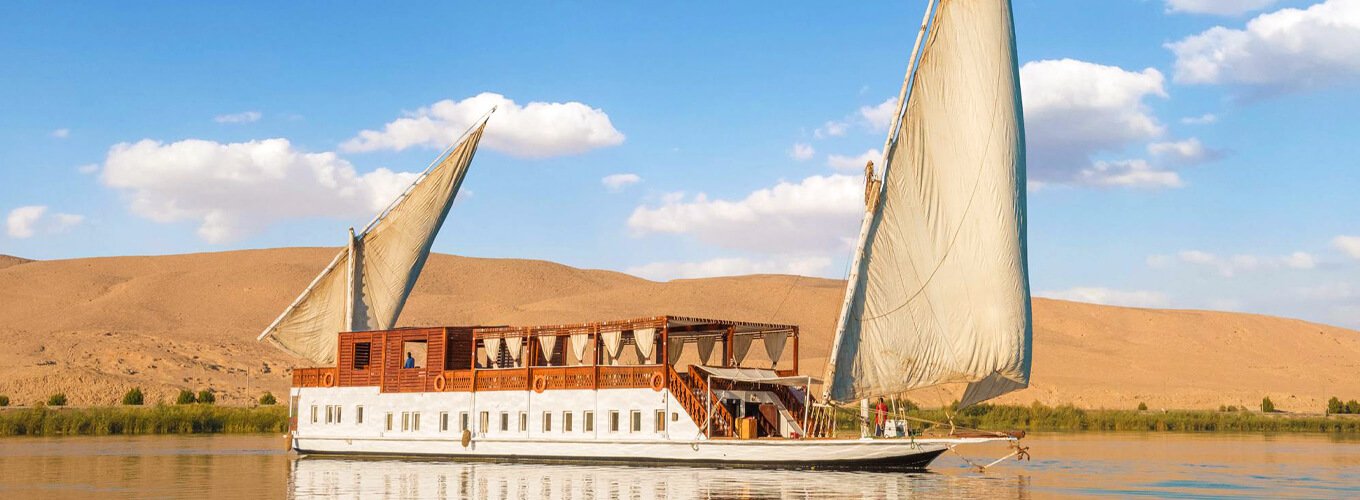
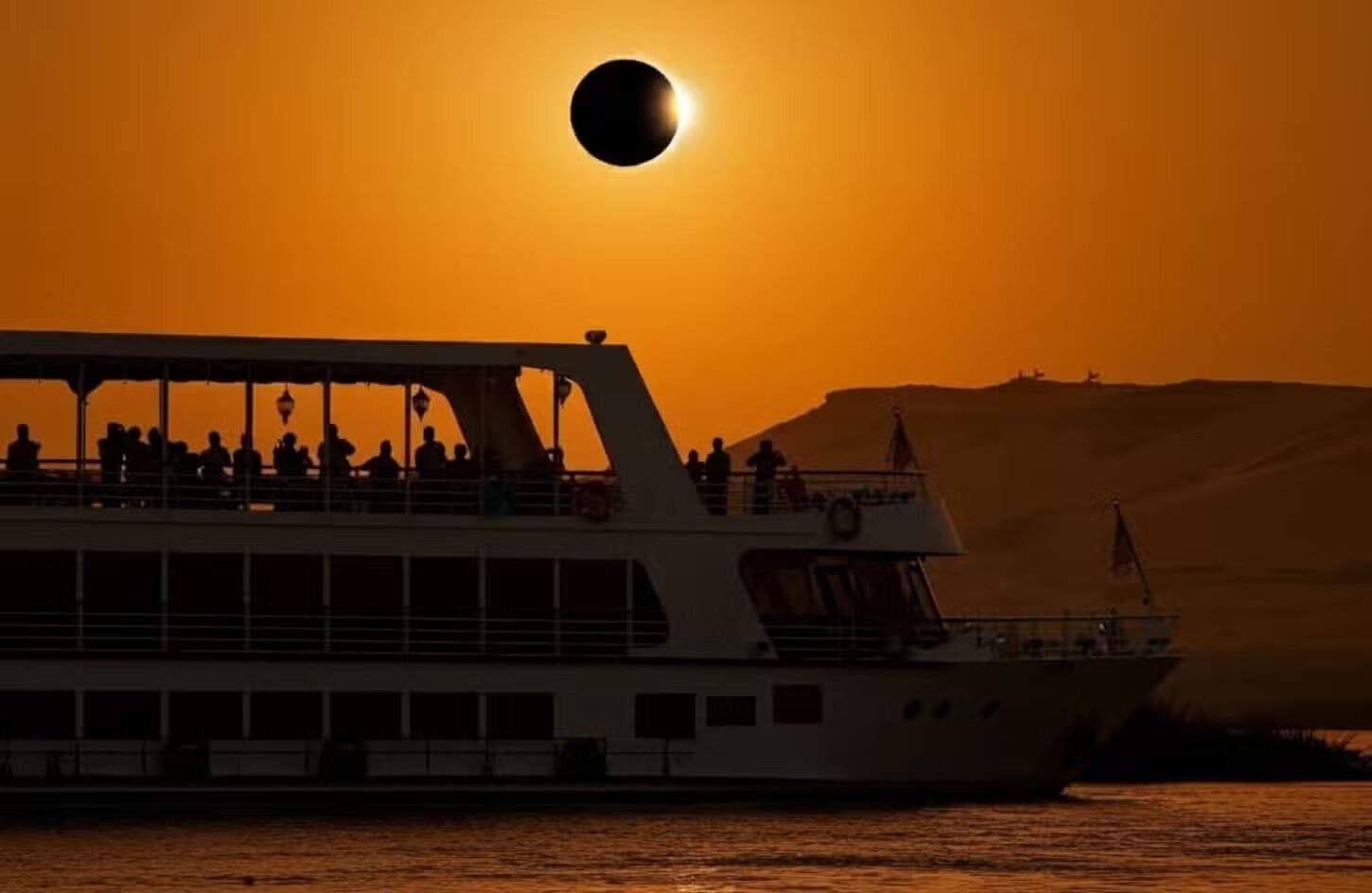
Picture the Nile at midday, sails filling with warm breeze, when suddenly the sky begins to darken and the sun slips behind the moon. This seven-night Dahabiya voyage runs Luxor to Luxor, deliberately timed to place you inside the path of totality for the August 2027 total solar eclipse as it crosses the temples of Upper Egypt. Your home is a small wooden sailing boat with only a handful of cabins, moored each night at riverside villages that the larger cruisers sail straight past. By day you walk the halls of Karnak, descend into the royal tombs of the Valley of the Kings, and cross to island shrines by launch. By night, mint tea on deck and constellations wheeling overhead. Book your cabin for this once-in-a-lifetime celestial expedition with Daily Pyramids Tours.
Cast off on an eight-day sail through the beating heart of Ancient Egypt, exploring the Nile from the polished decks of a private Dahabiya. You will thread past palm groves and sandstone temples, drop anchor beside sleepy villages, and step ashore at the pharaohs’ greatest monuments, all at a slow and deeply personal pace. The centrepiece is astronomical: the once-in-a-lifetime 2027 Solar Eclipse witnessed within the columns of Karnak Temple itself. You will also walk the tombs of the Valley of the Kings, share tea with Nubian hosts, and drift home the ancient way, under sail. From the moment you board to the last glow of sunset over Luxor, this is Egypt at its most cinematic and its most intimate.
Your journey begins the moment you step out at Luxor International Airport, where our representative will be waiting with a warm welcome and a private transfer to the mooring. The short drive traces the edge of the fertile Nile Valley, all sugarcane, palms and distant temple ruins. On arrival at the Dahabiya, the crew will show you to your cabin so you can unpack, take in the river view, and let the pace of Egypt’s ancient waterway begin to settle around you.
Your vessel is a hand-built wooden sailing boat, small by design and finished with real character rather than mass-cruiser gloss. This evening you will gather on deck for a welcome dinner on board, a table of freshly cooked Egyptian dishes served as the boat gently starts its slow drift along the Nile.
Meals: Welcome dinner on board.
Overnight: Stay aboard the Dahabiya, drifting gently along the Nile.
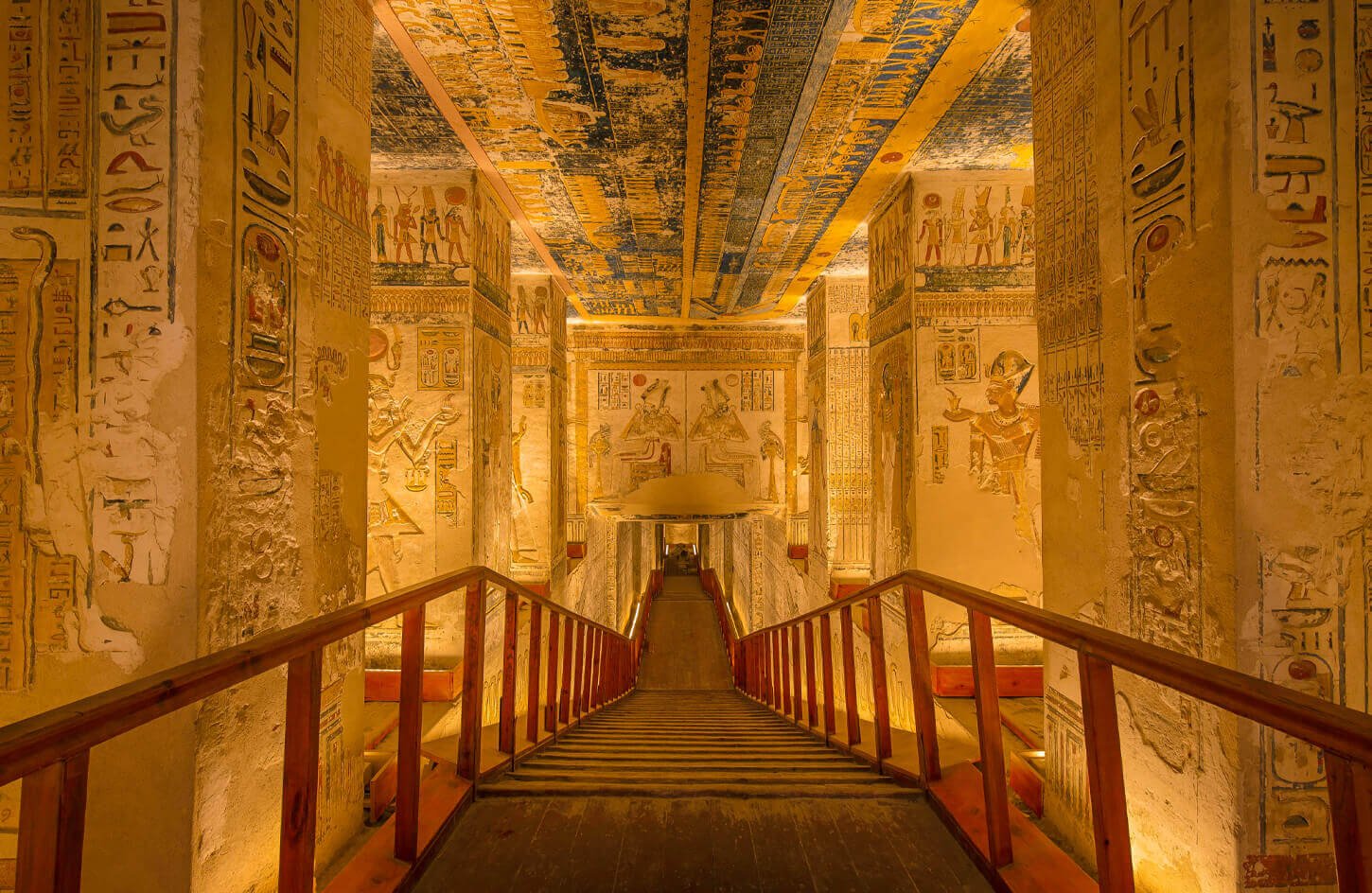
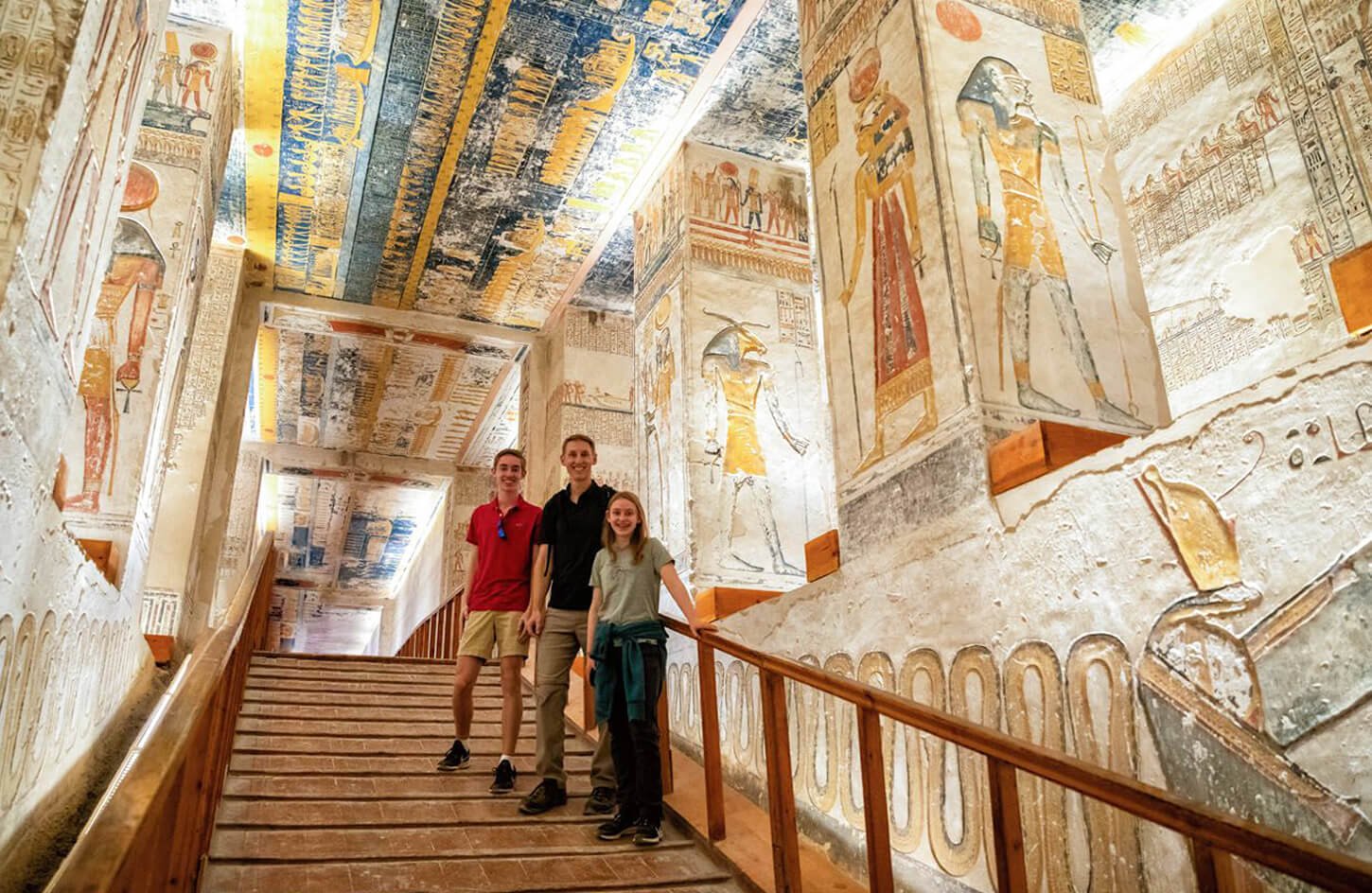
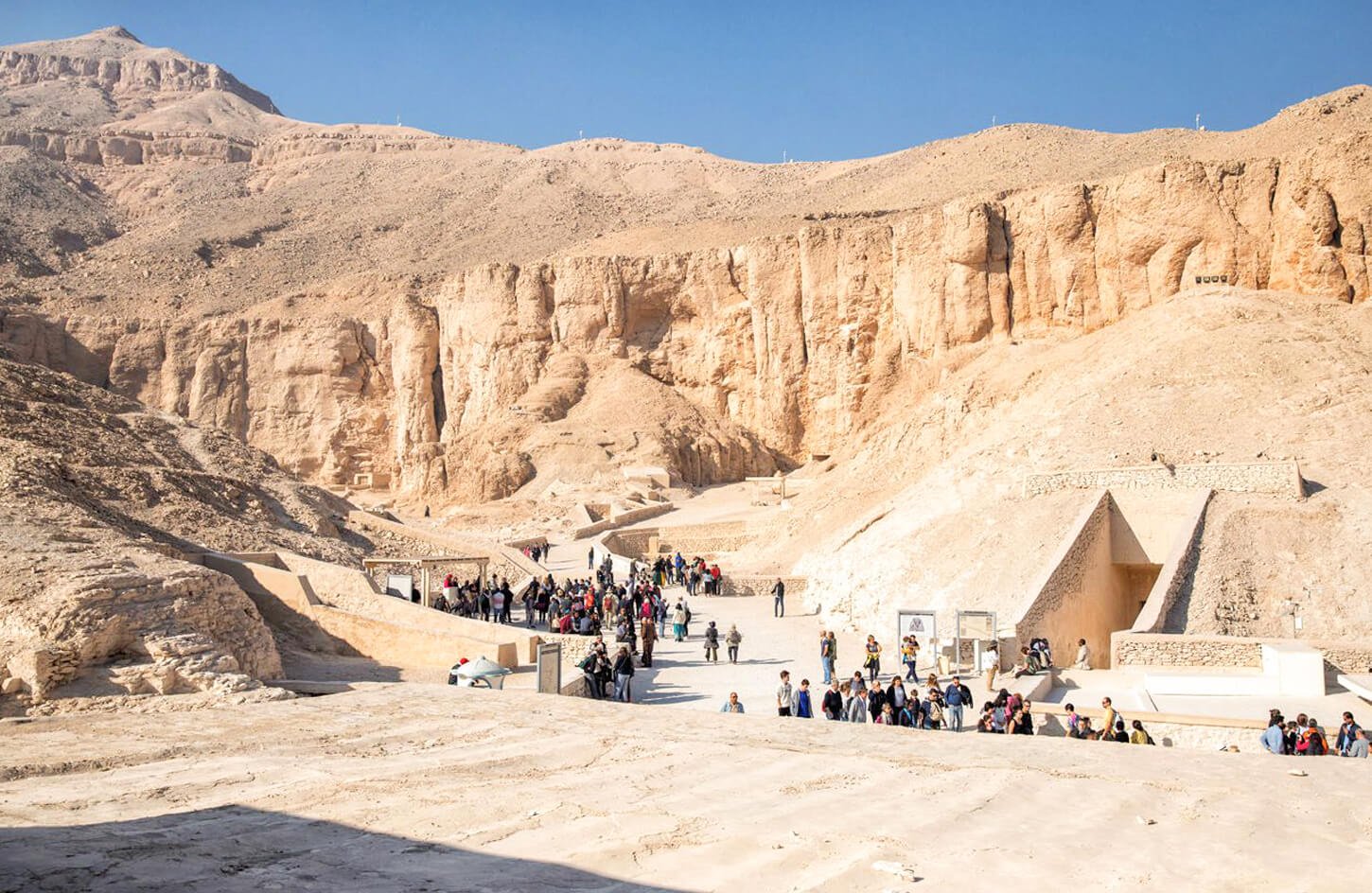
Breakfast on deck is followed by a full immersion in Luxor’s West Bank, the necropolis of the New Kingdom pharaohs. First stop is the Valley of the Kings, a hidden desert wadi honeycombed with royal tombs cut deep into the rock. You will step inside the burial chamber of Tutankhamun, still holding the boy king’s mummy, and continue through other tombs whose walls blaze with painted hieroglyphs and processions of gods.
From there you head to the extraordinary Temple of Hatshepsut, the terraced mortuary temple of Egypt’s only long-reigning female pharaoh. Rising in three colonnaded tiers straight from the cliffs of Deir el-Bahari, it is one of the most striking buildings in the ancient world. On the way back to the boat you pause at the Colossi of Memnon, the two weathered giants that once flanked the entrance to a lost temple of Pharaoh Amenhotep III.
Back aboard, lunch is followed by lazy hours on deck as the Dahabiya glides to a peaceful mooring further along the river, where you can watch the light soften over the palms and prepare for a quiet evening on the water.
Meals: Breakfast, lunch, and dinner on board.
Overnight: Stay aboard the Dahabiya at a peaceful location on the Nile.
After breakfast the sails are set for Edfu. Stepping ashore, you will explore the Temple of Horus, arguably the most complete temple to survive from ancient Egypt. Dedicated to the falcon-headed sky god, it soars up in massive pylons carved with victory scenes, then opens into a shadowy forest of columns and side chapels that give a rare, vivid picture of how these sanctuaries actually worked in ritual.
Continuing south, the boat pulls in at Kom Ombo, home to an unusual dual-temple shared between Horus and Sobek, the crocodile god of the Nile. Perched on a bluff above the river, the sanctuary is a mirror image of itself, with twin entrances, twin halls and twin altars. Look out for the wall reliefs showing surgical instruments and childbirth stools, some of the earliest medical images ever carved in stone.
Lunch is served on board as you sail on, the green ribbon of the Nile Valley slipping quietly past on either side.
Meals: Breakfast, lunch, and dinner on board.
Overnight: Stay aboard the Dahabiya, cruising through the serene waters of the Nile.
This morning the boat noses into Aswan, southernmost of Egypt’s great river cities and a place whose air feels different, warmer, softer, more African. After breakfast you transfer to a launch for the crossing to Philae Temple, the ravishing island shrine of the goddess Isis. Rescued stone by stone from the rising waters and rebuilt on higher ground at Agilkia Island, it sits amid palms and lapping water, one of the most photogenic sites on the whole Nile.
From ancient wonder to modern one, you continue to the Aswan High Dam, the vast rock-fill barrier completed in the 1960s to tame the Nile’s annual floods. Standing on its crest you look out over Lake Nasser and feel the scale of a project that rewrote Egypt’s agriculture, power supply and geography.
Lunch is a leisurely affair on board, and the rest of the afternoon is yours. As the sun begins to sink behind the western dunes, settle on deck and let Aswan’s famous golden hour wash over you.
Meals: Breakfast, lunch, and dinner on board.
Overnight: Stay aboard the Dahabiya docked in Aswan.
Today is devoted to the living heritage of the south. You will step into Nubian culture with a visit to a traditional Nubian Village, reached by a short boat ride across the Nile. Landing on the sandy bank, you are welcomed with the easy warmth for which Nubians are famous. The houses are painted in electric blues, yellows and greens, and the alleys smell of cardamom and river water. Take your time wandering between them, meet local families, listen to Nubian music and rhythms, and discover a way of life that predates the pharaohs.
Back on the river you climb aboard a Felucca boat ride, the graceful lateen-sailed craft that has plied the Nile for centuries. There is no engine, no hurry, just the sound of water on the hull and the wind in the cotton sail as you glide past granite islets and reed banks.
Meals: Breakfast, lunch, and dinner on board.
Overnight: Stay aboard the Dahabiya, cruising peacefully back toward Luxor.
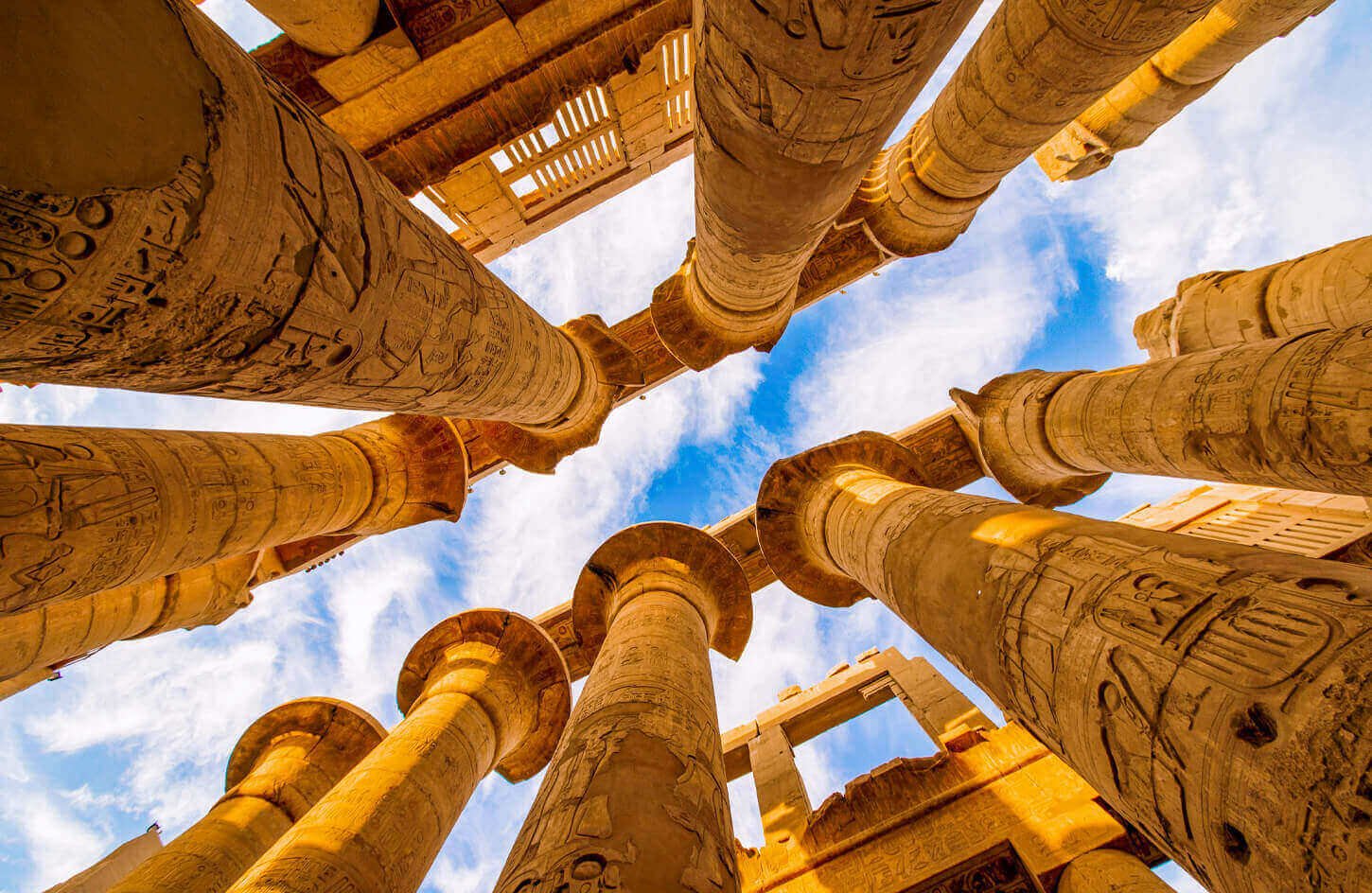
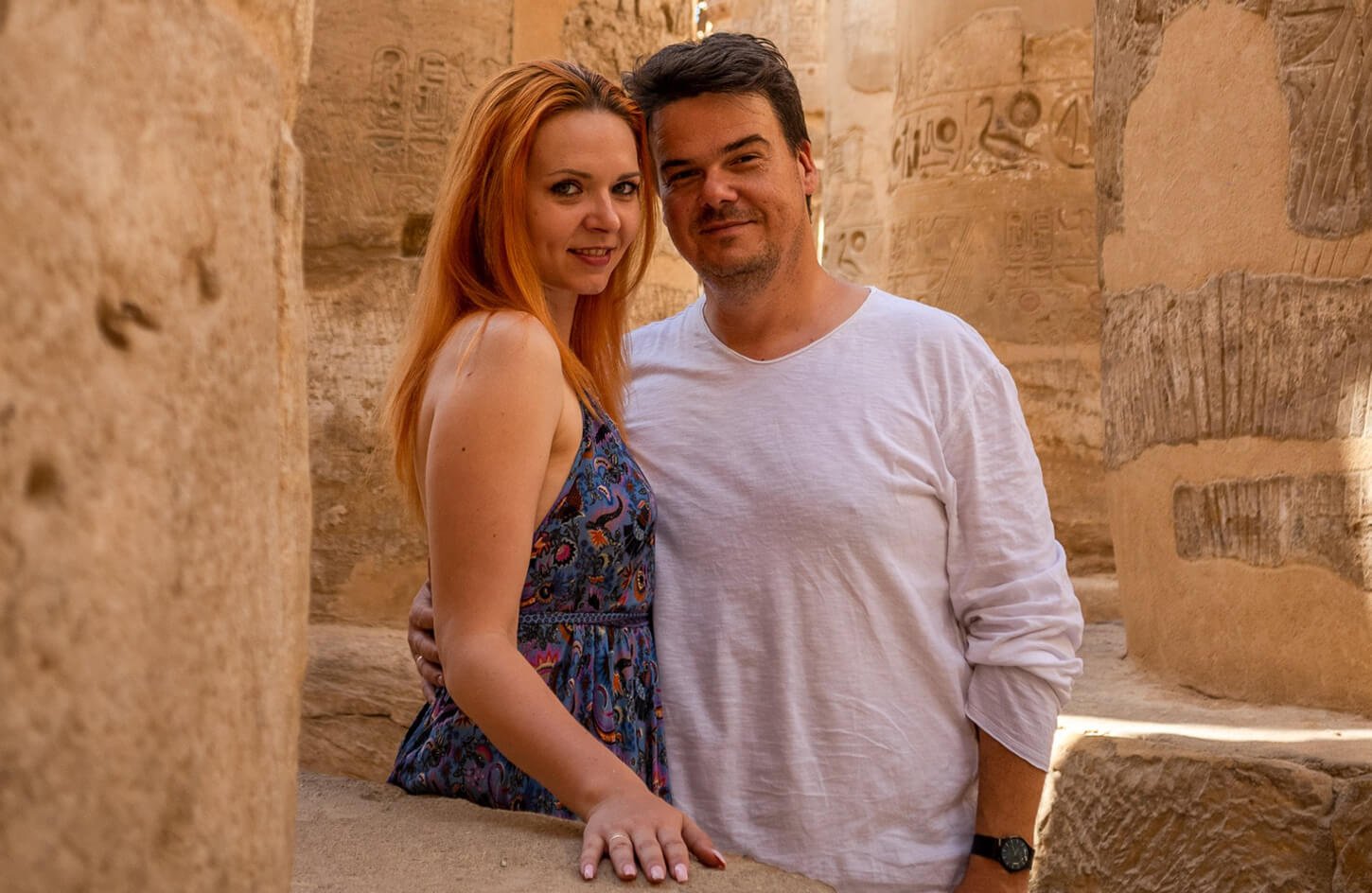
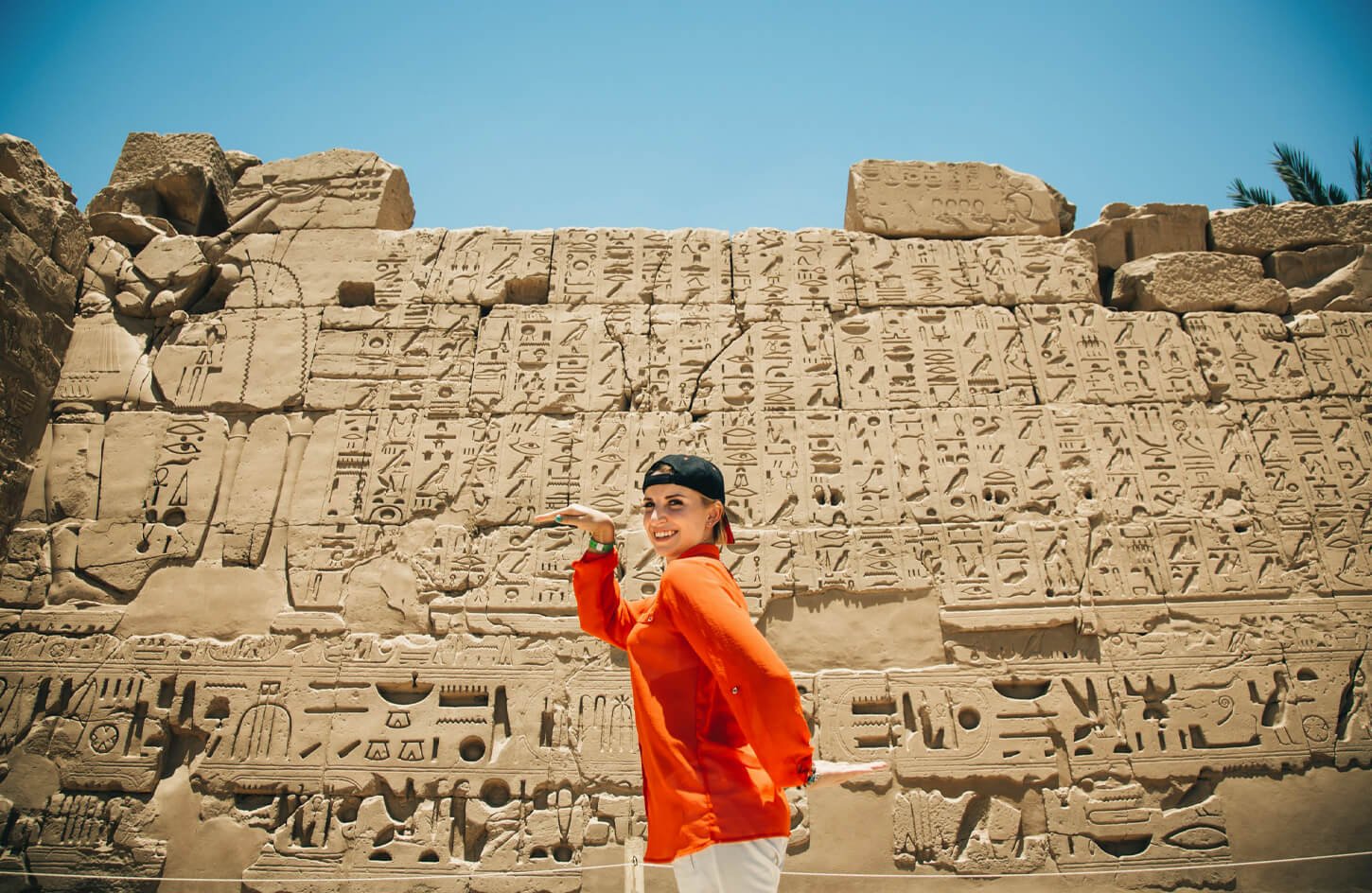
Today the Dahabiya carries you back north to Luxor and to the astonishing scale of Karnak Temple, the largest surviving religious complex on the planet. Dedicated to the sun god Amun-Ra, its stone forest of 134 columns, avenues of ram-headed sphinxes and monumental pylons has awed visitors for three thousand years.
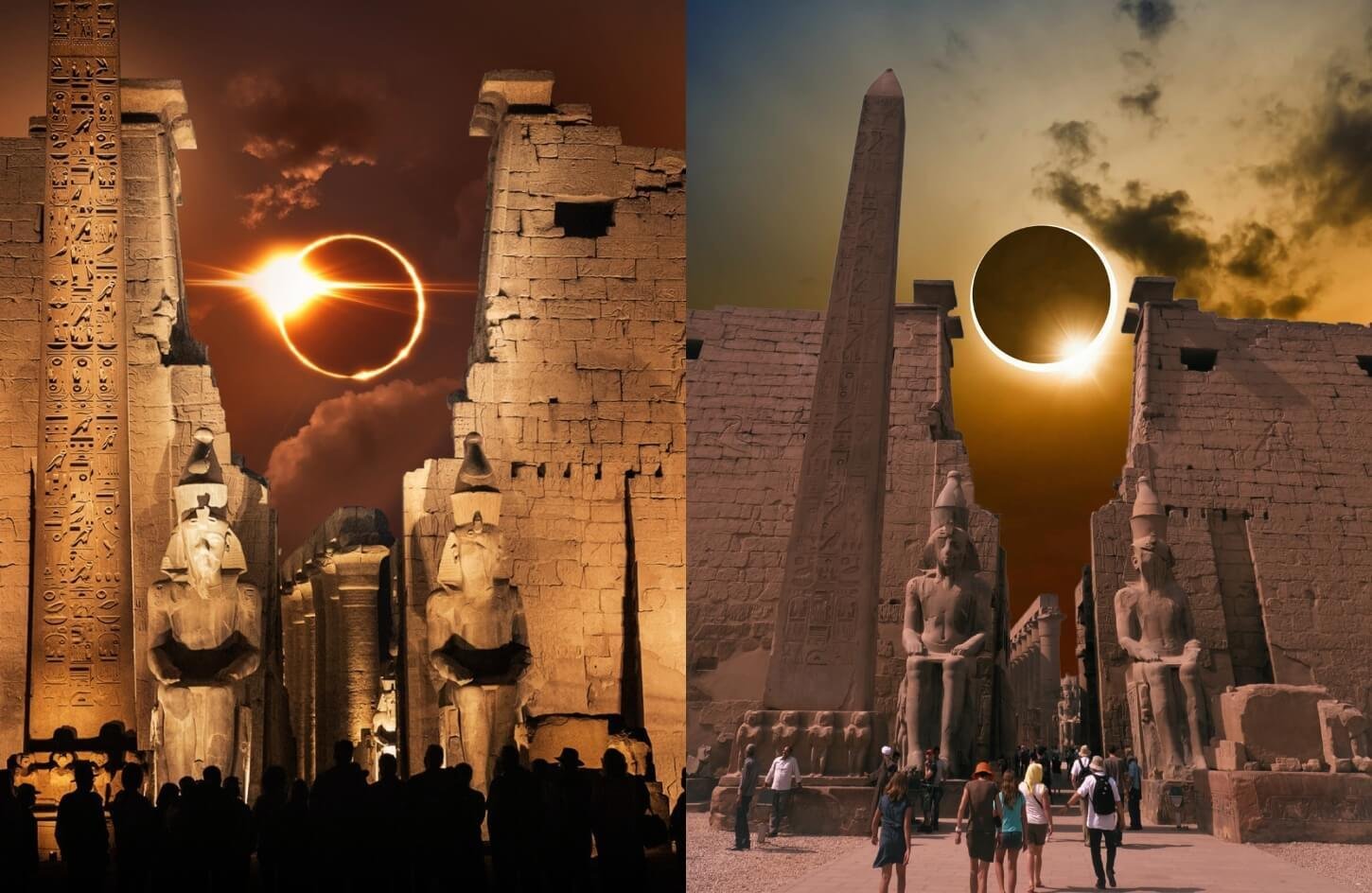
It is here, inside these mighty walls, that you will experience the Solar Eclipse 2027. As the moon slides across the sun and the light drops to an unearthly dusk, the temple’s obelisks throw stretched shadows and the hypostyle hall turns cathedral-quiet. It is impossible to overstate what it feels like to watch this cosmic event from a place designed, quite literally, to worship the sun.
Meals: Breakfast, lunch, and dinner on board.
Overnight: Stay aboard the Dahabiya, docked near Luxor.
This morning you cross into the modern city for Luxor Temple, the elegant riverside sanctuary that once anchored ancient Thebes. Also dedicated to Amun-Ra, it is famed for the great avenue of sphinxes that ran three kilometres to Karnak, its soaring papyrus columns and the exquisite reliefs of royal jubilees. If you glimpse it later, floodlit against a purple night sky, you will understand why so many travellers rate it above every other temple in Egypt.
Returning to the Dahabiya for lunch, you can spend the rest of the day quietly, reading in the shade, chatting to the crew, or watching the felucca traffic drift past as your final evening on board slowly unfolds.
Meals: Breakfast, lunch, and dinner on board.
Overnight: Stay aboard the Dahabiya.
A farewell breakfast is served on deck as the Dahabiya rests at its Luxor mooring. When you are ready, we will collect your bags, escort you ashore and drive you to Luxor International Airport in good time for your onward flight. You will leave with sunburn on your nose, sand on your shoes, a camera full of Karnak, and the memory of standing in eclipse-light beneath the pharaohs’ own sky.
Meals: Breakfast on board.
At Daily Pyramids Tours, all prices are quoted in US Dollars (USD) unless otherwise specified. However, we gladly accept payments in other major currencies such as Euros (EUR), British Pounds (GBP), and more, based on the official daily exchange rate on the payment date.
Our prices reflect current market conditions, seasonal fluctuations, and service availability, so they may change without prior notice. Once a deposit or full payment is received, your booking price is locked in and guaranteed.
What’s Included in Our Packages:
Please check your specific booking confirmation and itinerary for exact inclusions and exclusions.
Holiday Supplement:
A 25% surcharge applies to all Nile Cruises and tour packages booked during Christmas, New Year, and Easter holidays due to peak demand.
To ensure a smooth booking process with Daily Pyramids Tours, our payment terms vary depending on the service type:
After payment, you will receive written confirmation, a tailored itinerary, and travel documents via email. Receipts for all payments will be provided.
We understand plans can change. Our cancellation terms are:
Refunds, when applicable, are processed within 14 business days of receiving your written cancellation notice. Some cruises or hotels may have stricter cancellation policies, which will be clearly communicated in your itinerary.
At Daily Pyramids Tours, we welcome families and offer the following children’s pricing:
Discounts apply only when children share accommodation with two full-paying adults. Note that certain Nile Cruises and luxury hotels may have different policies or restrictions for young children, which will be detailed in your itinerary if relevant.
Some special experiences are optional and not included in standard packages. You may book these in advance or arrange on-site (subject to availability). Examples include:
Optional tours are payable in USD or local currency (EGP). We recommend booking in advance, especially during peak seasons.
While our packages are comprehensive, travelers should budget for:
We advise carrying small amounts of local currency (EGP) for convenience, especially for tipping and shopping at local markets.
Tipping (“baksheesh”) is a customary way to show appreciation for good service in Egypt. Though not mandatory, it is widely appreciated:
Tipping is generally not included in your package price. We recommend carrying small USD or EGP bills for tipping convenience.
Egypt is at its most inviting in the winter season, from November to February, when daytime temperatures are pleasantly warm and evenings turn cool, ideal conditions for exploring open sites like the Pyramids, Karnak and the Valley of the Kings. It is best to avoid the height of summer between June and August, when the mercury can push past 40°C (104°F) in many regions and midday sightseeing becomes genuinely uncomfortable.
Before you travel, make sure you have the essentials in order:
Passport: Valid for at least six months from the date of entry.
Visa: Depending on your nationality, you may need to obtain a visa in advance or upon arrival. Some nationalities are eligible for e-visas.
Travel Insurance: Recommended to cover medical emergencies and other unforeseen circumstances.
Vaccinations: While no specific vaccinations are required for entry, it’s advisable to check with your healthcare provider for any recommended vaccinations.
Egypt is broadly a safe destination for international travellers, and tourism is one of the country’s most protected sectors. You will notice a visible security presence around headline sites, resorts and major cities, all designed to keep visitors feeling comfortable. As with any long-haul trip, it is sensible to consult your government’s most recent travel advisory before you fly and to keep a light eye on local news while you are on the ground.
Decide Your Travel Dates and Budget
Start by locking in when you want to go and roughly what you are prepared to spend. Those two numbers will shape every other choice, from airline seats to hotel category to the length of your Nile cruise.
Choose Your Itinerary and Destinations
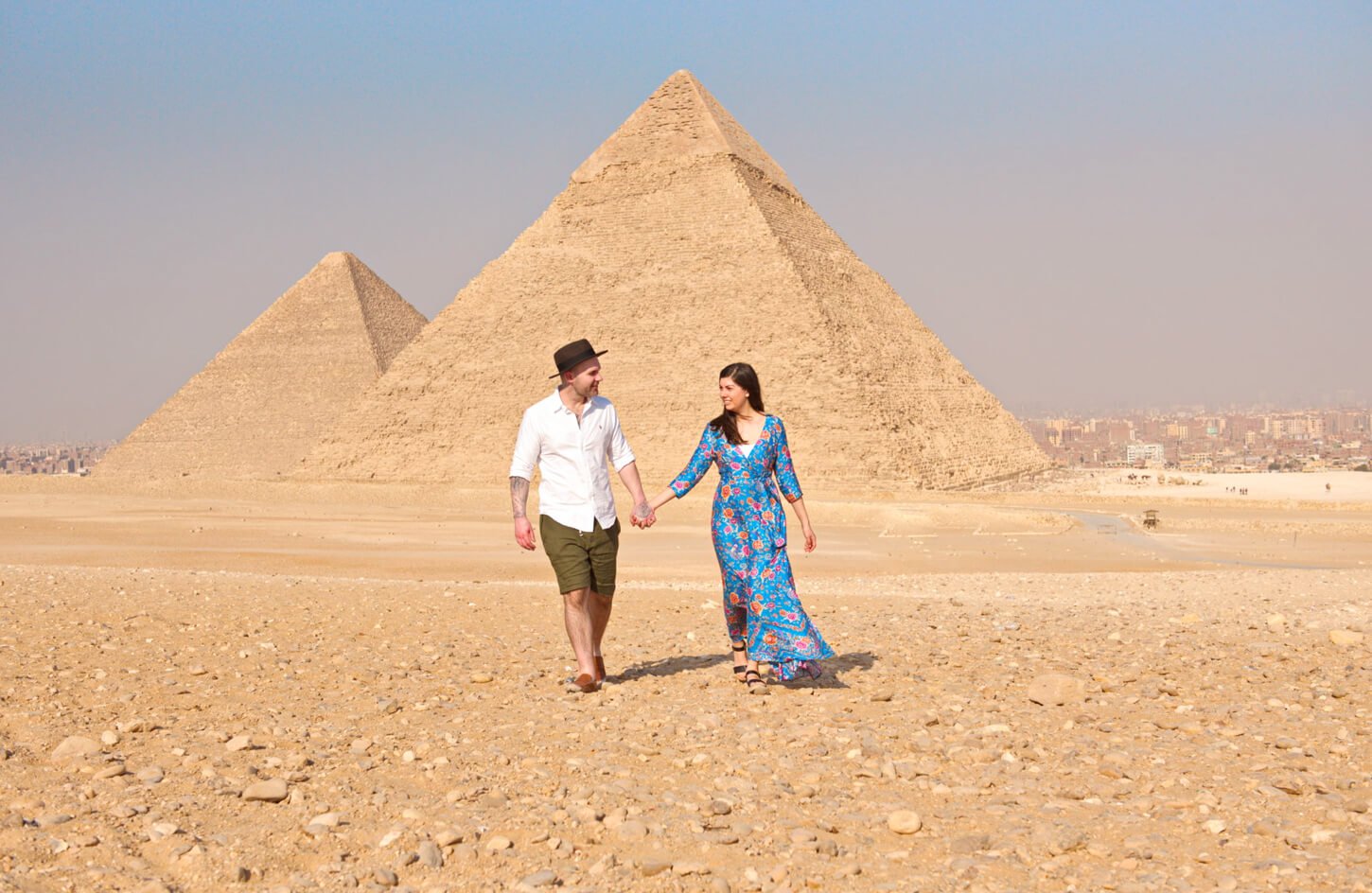
Egypt is bigger than most travellers expect. Popular anchors include Cairo, the Pyramids of Giza, Luxor, Aswan, a Nile Cruise, Alexandria and the Red Sea resorts. Draw up a shortlist of the sites you can’t miss and decide how many days each deserves.
Find a Reliable Tour Operator or Travel Agency
You can go direct through a local Egyptian operator like Daily Pyramids Tours, use an international agency, or book online through a specialist Egypt platform. Whichever route you take, always cross-check reviews and independent ratings before you commit.
Select a Tour Package or Customize Your Trip
Ready-made packages bundle flights, hotels, transport and guided sightseeing into one clean price. If you prefer, most operators will happily tailor an itinerary to your specific interests, pace and budget instead.
Make a Reservation
Once you have chosen the itinerary, get in touch with the operator to confirm availability. You will hand over passenger details and pay either a deposit or the full balance, depending on how close you are to departure.
Prepare Your Travel Documents
Check that your passport still has enough validity and apply for your Egyptian visa if needed. Print or save copies of all bookings, hotel vouchers and tour confirmations so you have them offline.
Pack and Get Ready
Pack for warm days and cooler desert nights. Comfortable walking shoes, high-factor sunscreen, a light layer, a hat and a universal travel adapter are non-negotiable.
Enjoy Your Trip!
When you land, relax into your itinerary, lean on your guide for local know-how, and let Egypt’s history, food and hospitality do the rest.
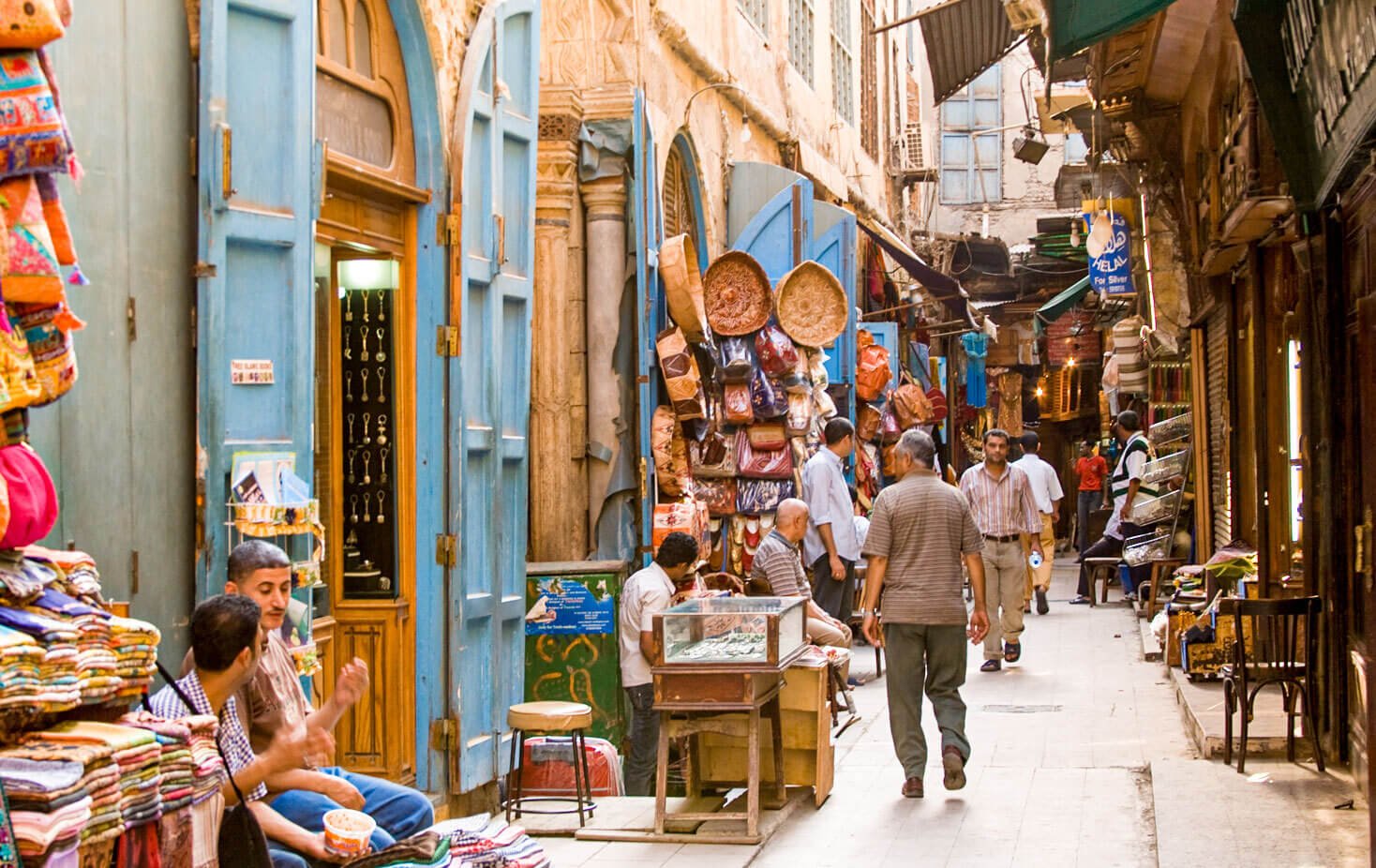
Tipping, known locally as “baksheesh”, is deeply woven into Egyptian service culture and is almost never built into the tour price. Guides, drivers, boat crew, waiters and hotel staff will all expect a small token of appreciation, and it makes a real difference to them. A useful benchmark is 10-15% of the bill or the service cost, adjusted up or down according to how happy you were with the service.