
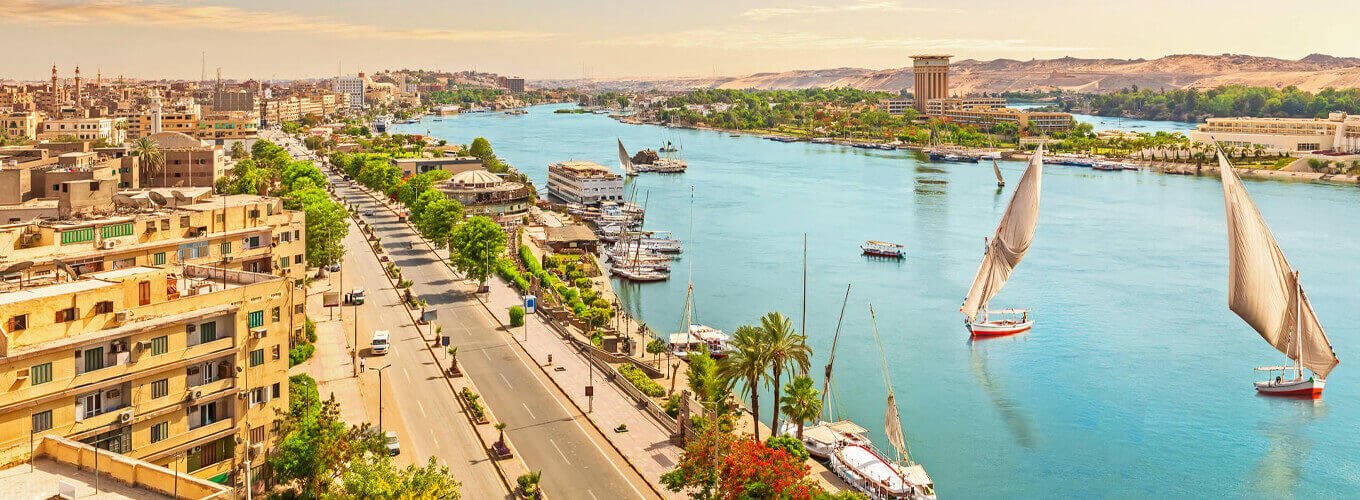
Must-see attractions in Aswan include the Philae Temple, the Unfinished Obelisk, the Nubian Village, and the High Dam, alongside felucca sailing on the Nile and the Abu Simbel temples nearby. Together they blend ancient monuments, Nubian culture, and scenic river landscapes into one of Egypt's most relaxed destinations.
There is a particular hush that settles over Aswan at dusk, when the Nile turns the colour of old amber and white-sailed feluccas drift past granite islands. As someone who has guided travellers through this corner of Egypt for years, I can tell you that the must see attractions in Aswan are not just monuments to tick off a list — they are the reason so many visitors call this the most soulful stop on the whole Nile. Let me walk you through the places that make Aswan unforgettable, and how to enjoy them like a local rather than a rushed tourist.
Why Aswan Feels Different from the Rest of Egypt
Aswan sits at Egypt’s southern gateway, roughly 900 kilometres from Cairo, and it wears its Nubian heritage proudly. The pace is slower here, the river is wider and cleaner, and the desert presses right up against the water in dramatic golden dunes.
Where Cairo overwhelms and Luxor astonishes with sheer scale, Aswan seduces you gently. It is a town built for lingering — for long boat rides, sweet hibiscus tea, and sunsets that genuinely make people fall silent.
Philae Temple: A Sanctuary Rescued from the Water
If you visit only one temple in Aswan, make it Philae. Dedicated to the goddess Isis, this graceful complex once stood on an island that was slowly swallowed by rising water after the dams were built.
In one of the great engineering rescues of the twentieth century, the entire temple was dismantled stone by stone and rebuilt on higher Agilkia Island. Today you reach it by a short motorboat ride, and arriving by water is half the magic.
The carvings here are wonderfully preserved, telling the story of Isis, Osiris and their son Horus. Come in the late afternoon when the crowds thin and the sandstone glows warm gold, or return after dark for the atmospheric sound and light show.
The High Dam and the Story of Modern Egypt
The Aswan High Dam is not a temple, but it is one of the most consequential structures in Egypt’s modern history. Completed in 1970, it tamed the Nile’s annual flood, generated hydroelectric power for much of the country, and created Lake Nasser, one of the largest artificial lakes on Earth.
A stop here is brief but genuinely worthwhile. Standing at the viewpoint, with the river on one side and the vast lake on the other, you grasp just how central the Nile has always been to Egyptian survival — from the pharaohs to the present day.
The Unfinished Obelisk: Ancient Ambition Frozen in Stone
Tucked into Aswan’s northern granite quarries lies one of the most quietly moving sights in the region. The Unfinished Obelisk was carved directly from the bedrock and would have stood some 42 metres tall — taller than any obelisk ever raised — had a crack not appeared during the work.
The ancient stonemasons simply abandoned it where it lay. Walking around this colossal shape, still attached to the mother rock, you can see the tool marks and understand exactly how these monuments were shaped. It is an open-air lesson in ancient engineering that no museum could match.
A Felucca Sail Around the Islands at Sunset
No trip to Aswan is complete without a felucca ride, and I would argue it belongs at the very top of any list of the best things to experience here. These traditional wooden sailboats have plied the Nile for centuries, powered only by the wind and the skill of Nubian captains.
An hour or two on the water at golden hour is pure serenity. You glide past Elephantine Island, the lush greenery of Kitchener’s Island, and the desert tombs on the west bank, all while the sun sinks behind the dunes.
- Go in the late afternoon so your sail finishes at sunset.
- Agree the length of the trip and price with your captain before boarding.
- Bring a light layer — the breeze on the water can turn cool once the sun drops.
- Ask your captain about Nubian life; many are wonderful storytellers.
Elephantine Island and the Nubian Villages
Sitting right in the middle of the river opposite the town, Elephantine Island is one of the oldest continuously inhabited places in Egypt. It holds the ancient ruins of Abu, a Nilometer once used to measure the river’s height, and two colourful Nubian villages.
Wandering the sandy lanes between mud-brick houses painted in bright blues, yellows and pinks is a highlight for many travellers. Locals are warm and welcoming, and a cup of tea shared with a Nubian family often becomes a favourite memory of the whole Egypt trip.
Aswan’s Nubian Museum
To understand the culture you see in these villages, spend an hour at the Nubian Museum on the east bank. Its well-curated galleries trace thousands of years of Nubian history, from ancient artefacts to displays on the communities displaced when Lake Nasser was formed. It is calm, air-conditioned and genuinely illuminating.
Kitchener’s Island and the Aswan Botanical Garden
A short felucca hop from town brings you to Kitchener’s Island, entirely given over to a lush botanical garden. Lord Kitchener planted it with exotic species gathered from across the tropics, and today its shaded avenues of palms and flowering trees are a cool, green retreat from the desert heat.
Birdlife is abundant here, and the paths are easy and flat. It pairs beautifully with a felucca outing — many travellers combine the two into one relaxed afternoon on the water.
The Tombs of the Nobles and the Aga Khan Mausoleum
The desert cliffs on the west bank hide the Tombs of the Nobles, rock-cut burial chambers of governors and officials who ruled ancient Aswan. Climbing up to them rewards you with painted interiors and one of the finest panoramic views over the river and town below.
Nearby stands the elegant sandstone Mausoleum of the Aga Khan, the leader of the Ismaili Muslims who so loved Aswan that he chose to be buried overlooking it. Though the interior is generally closed to visitors, its silhouette on the ridge is one of Aswan’s defining images.
Abu Simbel: The Journey That Rewards the Early Start
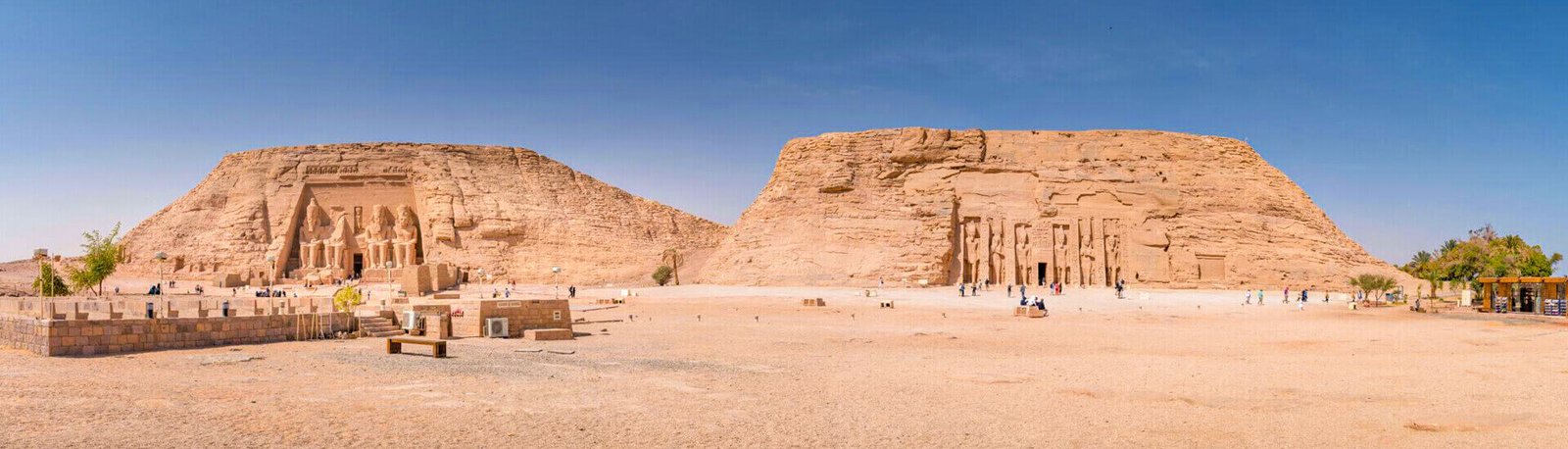
Roughly three hours south of Aswan, near the Sudanese border, stand the twin temples of Abu Simbel — and for many travellers they are the single most jaw-dropping sight in all of Egypt. Ramses II carved them into a mountainside more than 3,000 years ago to project his power over Nubia.
The four colossal seated statues of the pharaoh guarding the entrance are simply enormous. Like Philae, these temples were relocated in a remarkable rescue effort to save them from Lake Nasser’s rising waters.
How to Plan Your Abu Simbel Visit
Most visitors travel by road convoy in the early morning, returning by afternoon. It makes for a long day, but I have never met anyone who regretted it. If you would rather not do the drive, you can also reach it by a short domestic flight.
Twice a year, around 22 February and 22 October, the rising sun aligns perfectly to illuminate the inner sanctuary — a deliberate feat of ancient astronomy that draws crowds from around the world. Whenever you go, this is a destination worth building your whole southern itinerary around.
Lake Nasser and Its Hidden Temples
Beyond Abu Simbel, Lake Nasser stretches southward like an inland sea. Several other rescued temples, including Kalabsha and Beit el-Wali, sit near its shores and see far fewer visitors than the headline sights.
A growing number of travellers now explore this region on a dedicated Lake Nasser cruise, a quieter and more contemplative alternative to the classic Nile route. If you love the idea of ancient temples without the crowds, this stretch of water is a revelation.

Aswan’s Souk: Colour, Spice and Everyday Life
The main market street running parallel to the corniche is one of the most enjoyable souks in Egypt, and blessedly less pushy than those in bigger cities. Come in the cooler evening hours when locals shop and the lanes fill with life.
Here you will find mounds of vivid spices, sacks of dried hibiscus for the famous karkadeh tea, Nubian textiles, scarves and handmade crafts. Even if you buy nothing, it is a feast for the senses.
- Look for pure Aswan hibiscus and fragrant local spices — they make excellent gifts.
- Haggle gently and with good humour; it is part of the culture, not a battle.
- Sample fresh sugarcane juice from a street vendor for an authentic taste of the south.
Where Aswan Fits in a Wider Egypt Journey
Aswan is rarely a destination on its own — and that is part of its charm. It sits at one end of the classic Nile corridor, and most travellers pair it with the temples further north.
The most rewarding way to link them is by sailing between the two. A relaxed Nile cruise between Aswan and Luxor lets you wake up beside a different temple each morning, with stops at Kom Ombo and Edfu along the way that you simply cannot reach any other way.
Before or after your time on the river, it is well worth exploring the grand temples and tombs of nearby Luxor. Our Luxor tours cover the Valley of the Kings, Karnak and more, and they slot neatly onto the northern end of an Aswan itinerary.
Combining Aswan with Cairo and the Pyramids
Many first-time visitors want the full sweep of Egypt: the ancient wonders of the north as well as the serene south. It is easy to arrange, thanks to short domestic flights linking Aswan with the capital.
Pairing your southern sightseeing with Cairo tours gives you the Pyramids of Giza, the Sphinx and the Egyptian Museum to bookend your trip. If you would prefer everything wrapped into one seamless plan, our multi-day Egypt travel packages handle the flights, hotels, cruises and guides so you can simply enjoy the journey.
Best Time to Visit and Practical Tips
Aswan is the warmest of Egypt’s major destinations, which is precisely why it is so glorious in winter. From October through April the weather is beautifully mild and sunny — ideal for temple-hopping and felucca rides.
The summer months are genuinely hot, so if you visit between May and September, plan your sightseeing for early morning and late afternoon and rest during the fierce midday sun.
A Few Local Pointers
- Carry cash in small notes for felucca captains, tips and the souk.
- Dress modestly at religious and archaeological sites, and bring a hat and sunscreen.
- Stay hydrated — the dry southern air dehydrates you faster than you expect.
- Allow at least two full days in Aswan itself, plus an extra day if you add Abu Simbel.
How Long to Spend Among Aswan’s Attractions
I usually suggest two to three days as a comfortable minimum. That gives you time for Philae, the High Dam and the Unfinished Obelisk on one day, a leisurely felucca and island visit on another, and the long Abu Simbel excursion on a third.
If your schedule is tight, even a well-planned day can capture the essence of the city. For travellers short on time, our Egypt day trips can turn a single day in Aswan into a highlight reel of its greatest sights.
Making the Most of the Must See Attractions in Aswan
The secret to loving Aswan is to resist rushing. Yes, the temples are extraordinary, but so is an unhurried afternoon watching sailboats from a riverside café. The best itineraries balance the grand monuments with the gentle rhythm that makes this town so special.
If you want a trip shaped entirely around your interests — whether that is photography, ancient history, Nubian culture or simply slowing down — a tailor-made Egypt tour lets you build the pace and mix of sights that suits you best.
Final Thoughts: Let Aswan Surprise You
Of all the places I have guided travellers through, Aswan is the one they most often say they wish they had stayed longer in. It has the monuments, of course, but it also has a warmth and serenity that lingers long after you have flown home.
The must see attractions in Aswan reward curiosity and patience in equal measure. Come with an open heart, sail a little, sip the hibiscus tea, and let the southern Nile work its quiet magic on you.
When you are ready to turn this into a real journey, we would love to help you plan it. Explore our Aswan tours or get in touch with the team at Daily Pyramids Tours, and let us craft an Egypt adventure you will be talking about for years.
Ready to Experience Egypt for Yourself?
Let our local experts turn these ideas into an unforgettable journey — guided, seamless, and tailored entirely around you.