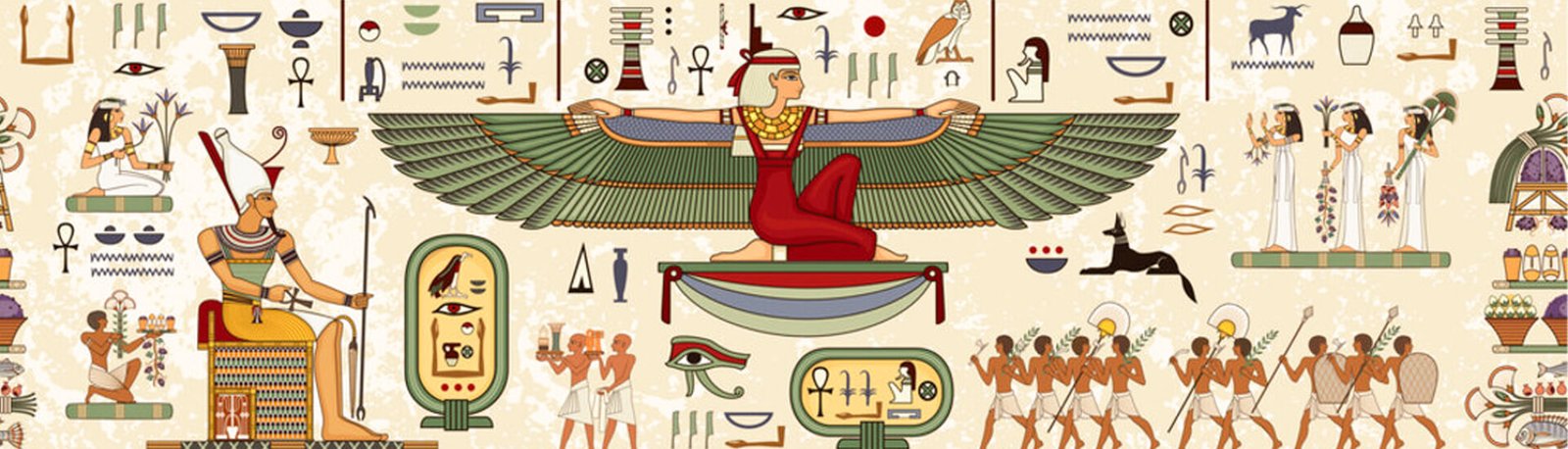
Ancient Egypt symbols were sacred images representing gods, protection, life, and power. The most famous include the ankh (life), the Eye of Horus (protection and health), the scarab (rebirth), the djed pillar (stability), and the was scepter (dominion), each carrying deep spiritual meaning.
Few civilisations have spoken to us as vividly through pictures as the one that flourished along the Nile, and the ancient Egypt symbols carved into temple walls, painted on coffins, and pressed into gold jewellery still hold the imagination captive thousands of years later. As a local who has spent countless mornings watching the sun catch the hieroglyphs at Karnak, I can tell you these signs were never mere decoration. Each one carried meaning, protection, and a promise about the world beyond, and learning to read them turns a good trip to Egypt into an unforgettable one.
Why the Symbols of Ancient Egypt Still Matter
The Egyptians did not draw a line between art and writing the way we do. A single image could be a word, a spell, and a work of beauty all at once. That is why the walls of a tomb can feel like a conversation across the millennia rather than a museum display.
Understanding a handful of these motifs changes how you experience the country. Once you can spot an ankh in a pharaoh’s hand or recognise the protective eye above a doorway, temples stop being confusing mazes of stone and start telling stories. It is the difference between glancing at a page in a foreign language and actually reading it.
The Ankh: Key of Life and Breath of the Gods
If you buy one souvenir in Egypt, chances are it will be an ankh. This looped cross is arguably the most recognised of all ancient Egyptian symbols, and it represents life itself, eternal and renewed.
In temple carvings you will constantly see gods holding the ankh to a pharaoh’s nose, offering the literal breath of life. Priests and deities carry it by the loop like a key, which is why it is sometimes called the “key of life” that unlocks the gates of the afterworld.
Look closely on your next temple visit and you will notice how deliberately it is placed, always near the mouth or held toward royalty. It is one of the easiest symbols to recognise and a lovely place to begin.
The Eye of Horus: Protection, Healing and Wholeness
The Eye of Horus, or wedjat, is the stylised falcon eye you will see painted on prow of boats, tattooed in modern shops, and tucked into amulets everywhere. It is a symbol of protection, royal power, and good health.
The myth behind it is a dramatic one. Horus lost his eye in a battle with his uncle Seth, and it was later restored by the god Thoth, so the eye came to stand for healing and making whole what was broken.
The Eye of Ra and How to Tell Them Apart
Travellers often confuse the Eye of Horus with the Eye of Ra. Both look similar, but the Eye of Ra is more aggressive, associated with the sun’s fierce, protective energy and the fiery goddesses who defended the sun god. A simple way to remember it: Horus heals, Ra burns.
The Scarab Beetle: Rebirth Rolling Across the Sky
To modern eyes a dung beetle is an unlikely candidate for a sacred emblem, yet the scarab became one of the most beloved symbols of rebirth and transformation in Egypt. The Egyptians watched the beetle roll its ball of dung across the ground and saw in it a mirror of the sun being pushed across the heavens each day.
The god Khepri, shown with a scarab for a head, embodied the rising sun and the idea of coming into being. Heart scarabs were placed over the chest of the deceased to guard them during judgement in the afterlife.
You will find scarab amulets in every bazaar. If you want to see genuinely ancient examples, the collections in Cairo are extraordinary, and a well-planned visit through our Cairo tours makes it easy to see them up close with a guide who can explain what you are looking at.
The Djed Pillar: The Backbone of Stability
The djed is a column with four horizontal bars near the top, and it is one of those symbols people walk straight past without realising its importance. It represents stability, endurance, and is often understood as the backbone of the god Osiris.
Because Osiris was the lord of the afterlife and resurrection, the djed carried associations of permanence and the promise of rising again. Pharaohs took part in a “raising of the djed” ceremony, symbolically standing the pillar upright to restore order to the land.
Once you know it, you will spot the djed everywhere, from tomb walls to the amulets wrapped in mummy bandages.
The Was Sceptre: Power in the Hands of the Gods
The was sceptre is a long staff topped with a stylised animal head and a forked base. Held by gods and kings, it symbolised power, dominion, and control over the forces of chaos.
You will often see deities gripping the was in one hand and the ankh in the other, a neat visual shorthand for “power and life.” Together with the djed, these three signs form a kind of divine vocabulary of well-being that repeats across temple after temple.
The Lotus and the Papyrus: Flowers of Two Kingdoms
Plants carried heavy meaning in ancient Egyptian art, and two in particular tell the story of the whole country. The blue lotus, which closes at night and reopens with the sun, became a symbol of creation, rebirth, and the sun itself.
The papyrus plant, meanwhile, represented Lower Egypt and the lush marshes of the Delta, while the lotus stood for Upper Egypt in the south. When you see the two plants tied together around a central column, you are looking at the sema-tawy, the symbolic union of the Two Lands under one crown.
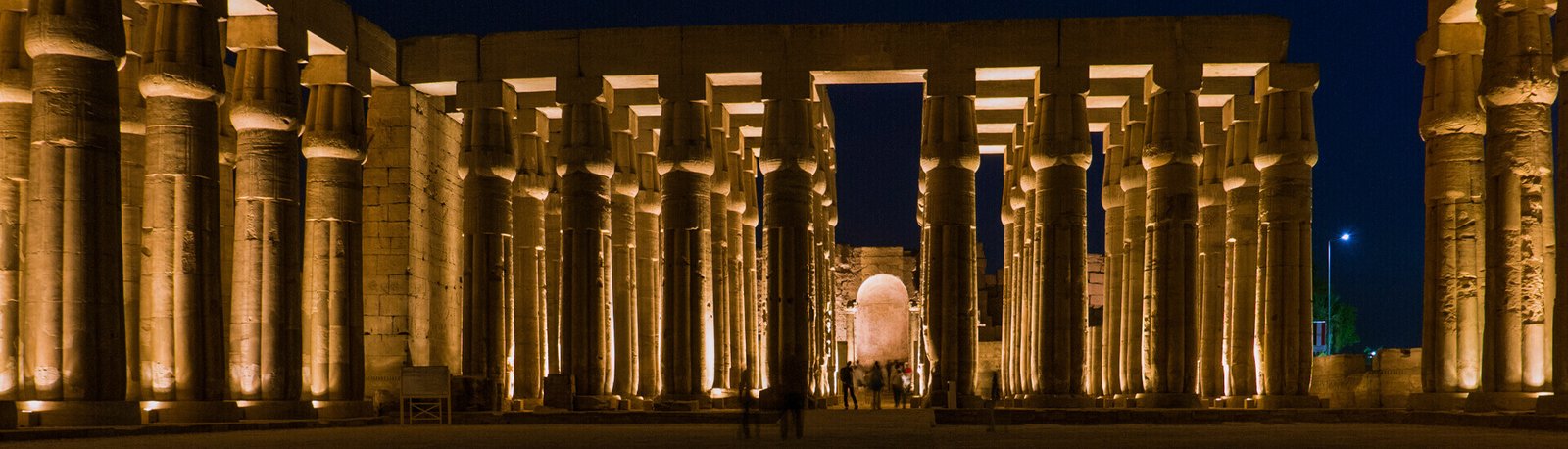
The temples of the south are the best place to appreciate this imagery in its original setting. Exploring the great sites with our Luxor tours lets you trace lotus-topped columns through Karnak and stand where these ideas were first set in stone.
The Djed, Ankh and Was Together
It is worth pausing on how often these emblems appear as a set. Egyptians loved grouping signs so that a single scene could wish someone life, stability, and power all at once.
- Ankh — life and the breath of the gods
- Djed — stability and endurance
- Was sceptre — power and dominion
Spotting this trio is a small game that keeps children and adults alike engaged as they walk through a temple, and it is one of the first things I teach guests who want to read the walls for themselves.
The Winged Sun Disc: Guardian Above the Doorway
Glance up as you pass through almost any temple gateway and you will see a sun disc flanked by two outstretched wings, often with cobras coiled at its centre. This is the winged sun disc, associated with the god Horus of Behdet and with divine protection.
Placed above thresholds, it acted as a heavenly guardian watching over everyone who entered. The two cobras, or uraei, add the protective sting of the goddesses who defended the sun god, making the doorway a threshold no evil could easily cross.
The Uraeus and the Vulture: Serpent and Sky
The rearing cobra known as the uraeus sat on the brow of the pharaoh’s crown, ready to spit fire at any enemy of the king. It embodied the protective goddess Wadjet of Lower Egypt.
Alongside her, the vulture goddess Nekhbet represented Upper Egypt. Together the cobra and the vulture appear on royal headdresses as the “Two Ladies,” another elegant expression of a unified nation guarded by two ancient deities.
The Feather of Maat: Truth on the Scales
Perhaps the most quietly powerful of all ancient Egypt symbols is the single ostrich feather of the goddess Maat. Maat personified truth, balance, and cosmic order, the principle that held the universe together.
In the famous weighing-of-the-heart scene, the heart of the deceased was placed on a scale against Maat’s feather. If the heart was light and honest it balanced, and the soul passed into eternity. If it was heavy with wrongdoing, a fearsome creature waited to devour it.
It is a profoundly human idea rendered in a single, delicate image, and it appears in tomb after tomb along the Nile.
The Sphinx: Guardian at the Edge of the Desert
The sphinx, with the body of a lion and the head of a king, fused royal authority with the raw strength of the desert’s most feared predator. The Great Sphinx at Giza is the most famous, but smaller sphinxes lined the processional avenues between temples.
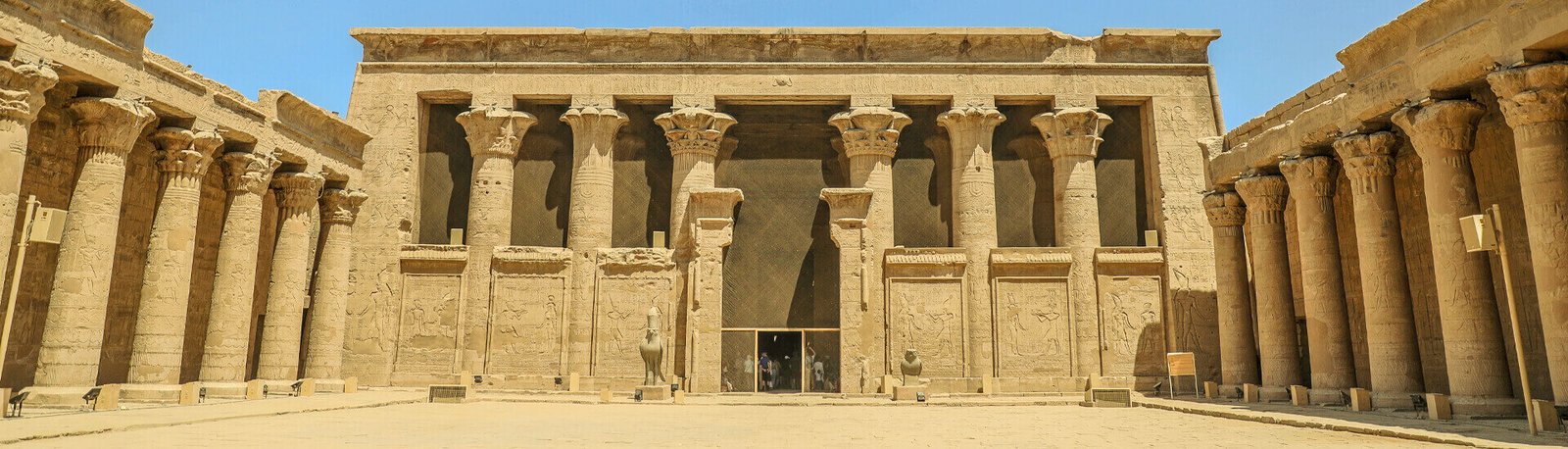
These creatures were guardians, placed to watch over sacred spaces and keep out anything unwelcome. Walking the avenue of ram-headed sphinxes that connects Karnak and Luxor is one of those moments where the scale of Egyptian ambition really lands.
If you want to combine the great monuments of the north with a proper journey through the south, an Egypt travel package is the most relaxed way to see the icons without rushing.
Colours as Symbols: The Meaning Behind the Palette
Colour was never chosen at random in Egyptian art. Each hue carried its own layer of meaning, and knowing the code adds real depth to what you see.
- Green — new life, growth, and rebirth, the colour of Osiris himself
- Blue — the heavens, the Nile, and the primordial waters of creation
- Red — energy and power, but also chaos and the desert of Seth
- Gold — the flesh of the gods and the eternal, imperishable sun
- Black — the fertile Delta soil and, by extension, resurrection
Next time you stand before a painted wall, notice how the artist used these colours deliberately. The green skin of Osiris or the golden face of a mask is telling you something specific about who you are looking at.
Hieroglyphs: A Language Made of Pictures
It would be impossible to talk about Egyptian symbols without the hieroglyphs themselves, the beautiful script of birds, feet, water ripples, and reeds. For centuries no one could read them, until the Rosetta Stone unlocked the system in the nineteenth century.
Each glyph could work as a sound, a whole word, or a silent clue about meaning. The word hieroglyph itself means “sacred carving,” a reminder that writing in Egypt was a gift from the god Thoth and a genuinely divine act.
Cartouches: Royal Names in a Loop of Rope
Among the hieroglyphs you will notice oval rings enclosing a cluster of signs. These are cartouches, and they surround the names of kings and queens. The loop was thought to protect the royal name for eternity, and it makes spotting a pharaoh in a wall of text delightfully easy.
Many travellers love having their own name written in hieroglyphs on a gold cartouche in the workshops of Cairo or Luxor, a souvenir that carries three thousand years of history in a single pendant.
The Bennu Bird: Egypt’s Own Phoenix
The bennu was a heron-like bird linked to the sun, creation, and rebirth, and it is widely believed to have inspired the later Greek legend of the phoenix. According to the myth, the bennu rose from the primordial waters at the dawn of time and was reborn with each sunrise.
It is a gentler cousin of the scarab in its symbolism, both creatures wrapped up in the daily miracle of the sun returning and the promise of life renewed. Small details like this reward the curious traveller who takes time to look beyond the obvious.
Where to See These Symbols in Egypt Today
The wonderful thing about Egyptian symbolism is that it is not locked away in books. It surrounds you the moment you step into a temple or tomb, and different regions offer different rewards.
The temples and tombs of the south around Luxor and Aswan hold the richest painted carvings, while the great museums of Cairo let you hold entire eras in a single gallery. Sailing between the two is arguably the finest way to see it all unfold.
- Cairo and Giza — the Sphinx, pyramid texts, and world-class museum collections
- Luxor — Karnak, the Valley of the Kings, and vividly painted tomb walls
- Aswan and Abu Simbel — Philae, the winged sun disc, and colossal royal imagery
A leisurely journey on one of our Egypt Nile cruises links these southern treasures beautifully, gliding you from temple to temple the same way the ancients travelled. For the quieter island temple of Philae and the granite quarries where obelisks were born, our Aswan tours are hard to beat.
How to Read the Walls Like a Local
You do not need a degree in Egyptology to enjoy these symbols. A few simple habits will transform your visits and help the stories come alive.
Start by looking for the easy wins: the ankh in a god’s hand, the protective eye, the scarab. Then notice repetition, because the Egyptians repeated key signs for emphasis and protection. Finally, pay attention to placement, since a symbol above a door means something different from the same symbol on a coffin.
A knowledgeable guide makes all the difference, turning rows of carvings into a living narrative. If you would rather shape the pace around your own curiosity, our tailor-made Egypt tours let you linger at the temples that fascinate you most.
Symbols That Travelled Beyond Egypt
Part of the magic of these emblems is how far they have journeyed. The ankh and the Eye of Horus appear on modern jewellery around the world, the scarab inspired Victorian brooches, and the phoenix myth echoes through countless later cultures.
The pyramids and the all-seeing eye have found their way onto banknotes and into popular imagination far from the Nile. When you learn these symbols in their homeland, you start recognising their descendants everywhere, a quiet thread connecting the ancient world to our own.
Bringing the Symbols Home With You
Beyond the temples, Egypt’s markets brim with reproductions of these designs, from papyrus paintings to silver amulets. Buying a small piece with genuine meaning, and knowing exactly what it says, makes for a far richer keepsake than a generic trinket.
If your trip includes time by the Red Sea, you can pair symbol-rich sightseeing with sunshine and diving. Many guests combine a cultural journey with a few relaxed days enjoyed through our Hurghada tours, balancing ancient wonder with modern comfort.
Conclusion: Let the Symbols Guide Your Journey
The ancient Egypt symbols scattered across this remarkable country are more than pretty patterns on old stone. They are a language of life, protection, order, and eternity, written by a people who believed deeply in the world to come, and they are waiting to be read by anyone willing to look a little closer.
Once these signs start speaking to you, Egypt changes. A temple becomes a story, a museum case becomes a message, and a simple amulet becomes a small piece of eternity you can carry home. When you are ready to see it all for yourself, we would love to help you plan a journey that brings these symbols to life. Explore our range of experiences with Daily Pyramids Tours and let us show you the Egypt that hides in plain sight, one symbol at a time.
Ready to Experience Egypt for Yourself?
Let our local experts turn these ideas into an unforgettable journey — guided, seamless, and tailored entirely around you.

