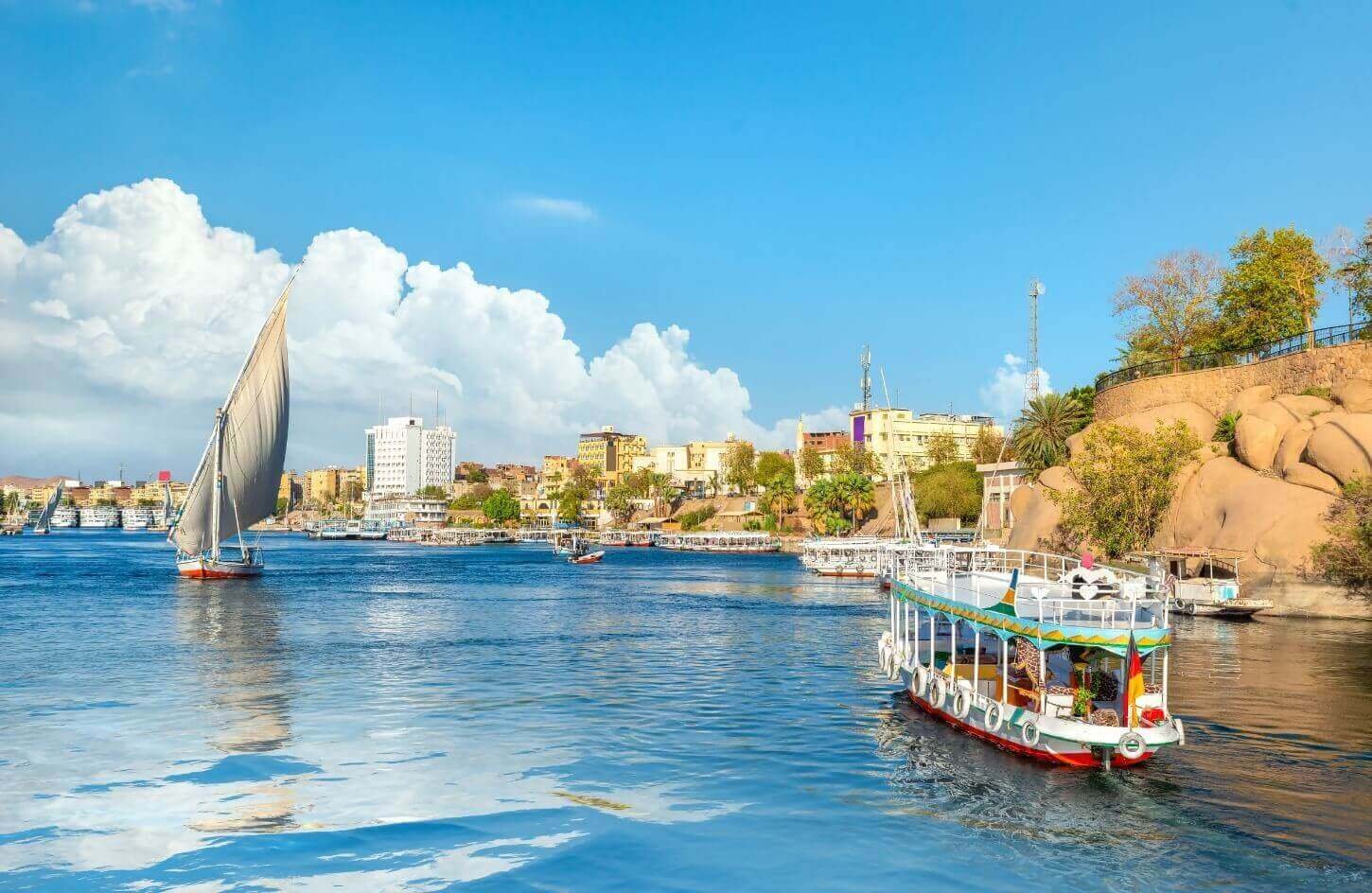
Twelve extraordinary days built around a rare astronomical moment. Open with Cairo, where the Pyramids of Giza and the watchful Sphinx set the tone before the treasure-packed halls of the Grand Egyptian Museum reveal Egypt’s deepest chapters. Then trade the city for a hand-crafted wooden dahabiya and let the Nile pull you southward at an old-world pace between Luxor and Aswan. Karnak’s forest of columns, the royal cliffs of the Valley of the Kings and the riverside sanctuaries at Edfu, Kom Ombo and Philae unfold day by day, while quiet sandbanks that larger ships cannot reach become your private moorings for candlelit dinners under a sky of stars. Every mile leads toward the main event: the total solar eclipse of 2027, framed by Egypt’s crystal-clear desert horizon. Secure your seat on this rare skywatching journey with Daily Pyramids Tours.
Give yourself twelve days to fall completely under Egypt’s spell, on a journey that weaves antiquity, easy comfort and one genuinely once-in-a-lifetime sky-show into a single itinerary. You will stand before the Giza Pyramids at sunrise, wander the vast, light-filled galleries of the Grand Egyptian Museum, and then swap streets for the slow rhythm of the Nile aboard a graceful traditional Dahabiya. The Solar Eclipse of 2027 will find you at Karnak Temple, framed by the greatest religious complex ever built. Between it all, discover the Valley of the Kings, sail in a felucca, break bread with a Nubian family, and let the river carry you between temples at Edfu and Kom Ombo. Ancient stones by day, glowing decks by night, memories for the rest of your life.
Ahlan wa sahlan — welcome to Egypt. As you step out of arrivals at Cairo International Airport, our Daily Pyramids representative will already be waiting for you, holding a card printed with your name so there’s no guessing.
From there, a private air-conditioned car takes over, whisking you smoothly across the city to your hotel, where check-in is arranged and the rest of the evening is yours to unwind after the flight.
Overnight: Cairo
Breakfast at the hotel gives you a gentle start before your certified Egyptologist arrives to lead you into the story of ancient Giza.
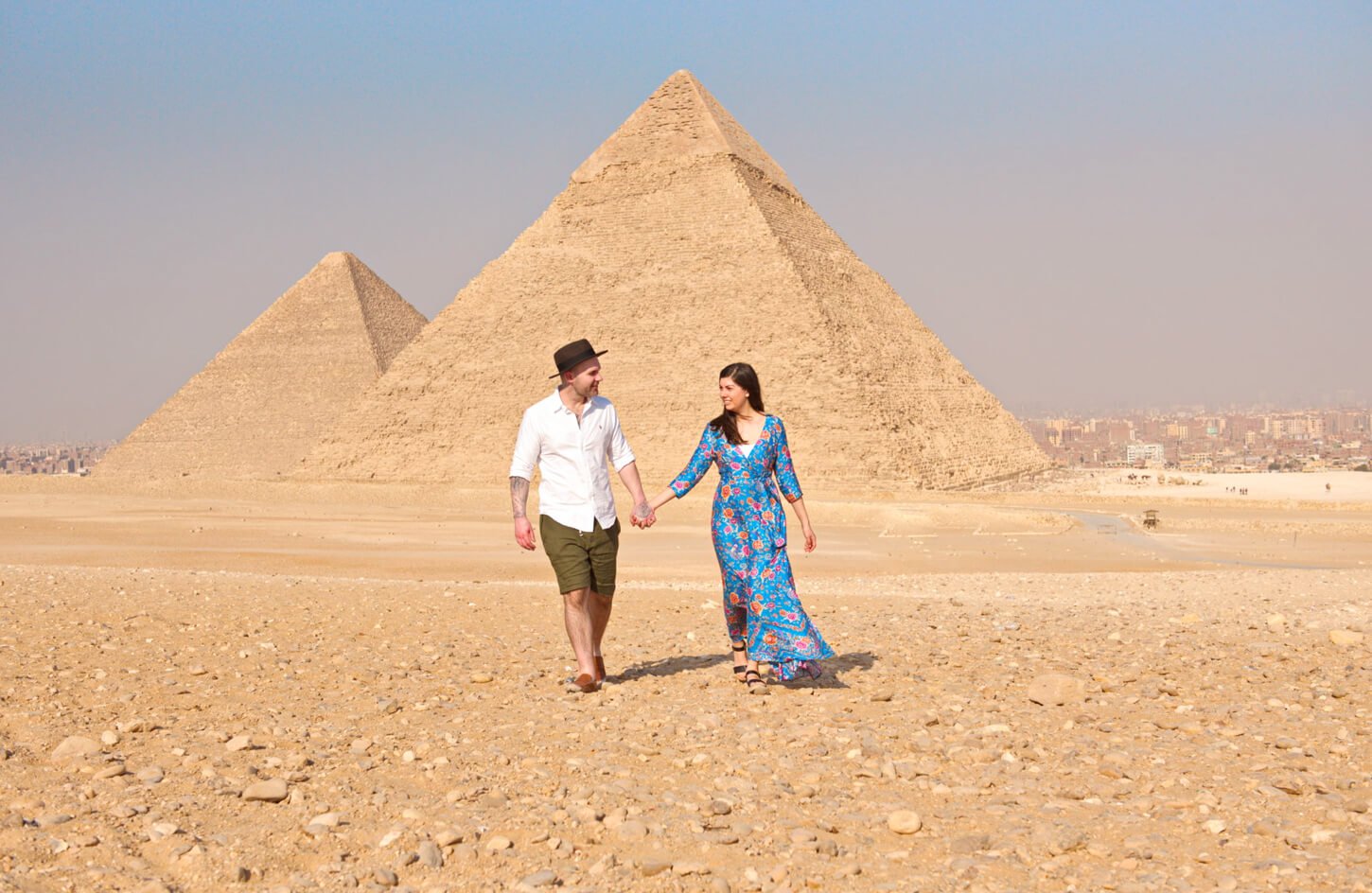
First, the plateau itself: the three great pyramids of Khufu, Khafre and Menkaure rise ahead of you, monuments so immense that photographs never quite prepare a visitor for the real thing. Study the Great Pyramid at close range — still one of the last surviving wonders of the ancient world — and walk down to meet the Sphinx, half-lion, half-king, staring toward the sunrise as it has done for four and a half millennia. You will also step inside the Valley Temple, once used in the mummification rites of the pharaohs.
Lunch is served at a well-regarded local restaurant nearby.
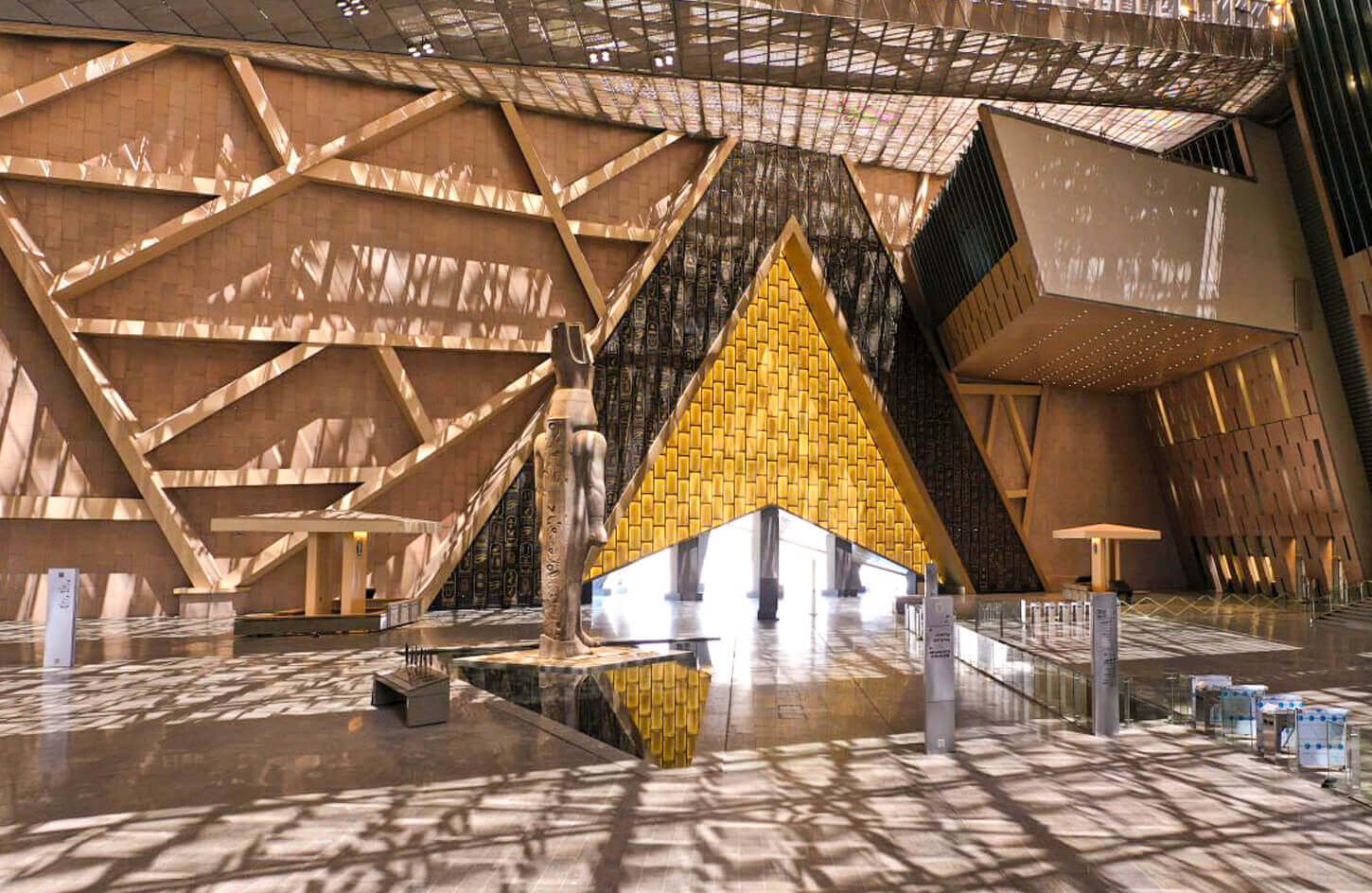
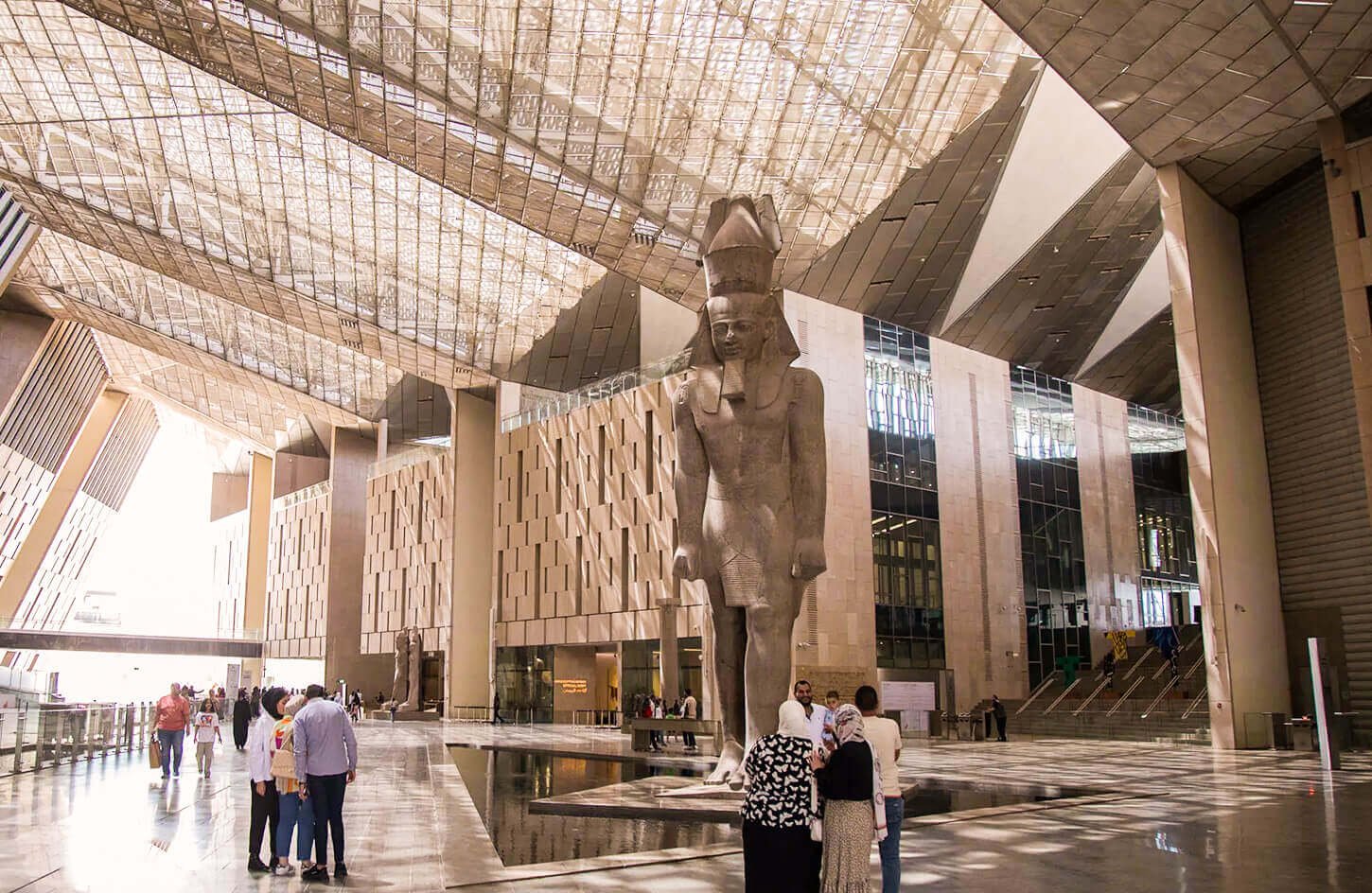
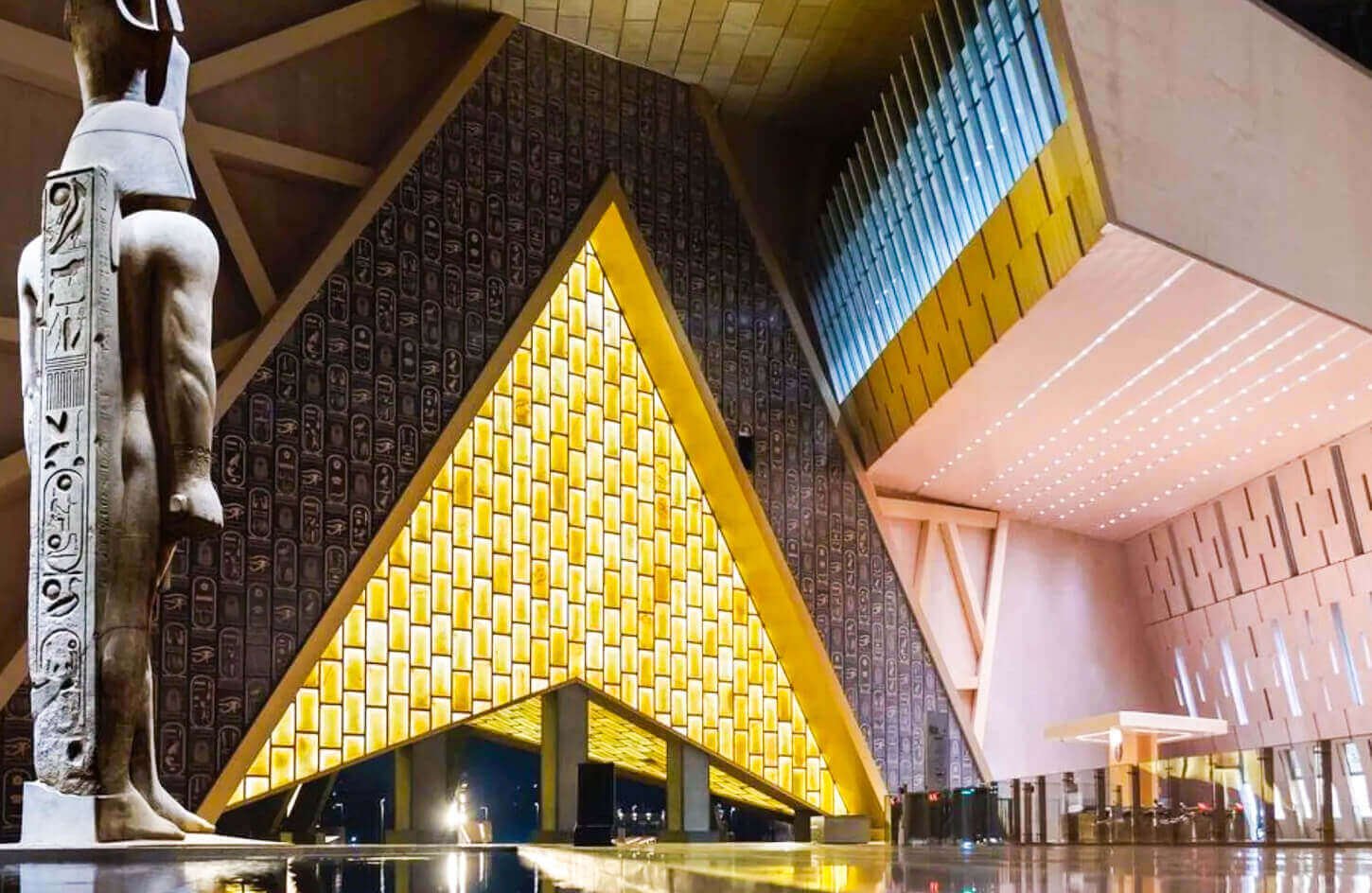
Afternoon brings you to the Grand Egyptian Museum (GEM), the vast new home of Egyptian civilisation and one of the largest archaeological museums on earth. Its bright, purpose-built halls display colossal statues, royal jewellery and countless everyday objects spanning the Old, Middle and New Kingdoms — a sweeping introduction to everything you will encounter on the road ahead.
Afterwards, you’ll be returned to your hotel to relax for the evening.
Meals: Breakfast, Lunch
Overnight: Cairo
Optional: Return to the plateau after dark for the atmospheric Sound & Light Show, where the pyramids and Sphinx retell their history in colour and voice beneath a star-filled sky.
A morning transfer takes you to Cairo Airport for the short hop south to Luxor — the storied city the ancients called Thebes and the capital of the New Kingdom pharaohs. At Luxor International Airport, another friendly member of our team meets your flight and drives you directly to the mooring.
The road runs beside a ribbon of green fields, palm groves and mud-brick villages that have hardly changed in generations. When your Dahabiya comes into view, a crew member escorts you to your cabin, where the wooden interiors and river-side windows begin the spell immediately.
Built in the elegant style of the old sailing vessels once favoured by 19th-century travellers, the Dahabiya is intimate, unhurried and beautifully finished. This evening a welcome dinner on board is laid out with fresh local dishes as the boat slips away from the bank and the journey up the Nile officially begins.
Meals: Welcome dinner on board.
Overnight: Stay aboard the Dahabiya, drifting gently along the Nile.
Fortified by breakfast on deck, cross to Luxor’s West Bank for a day among the greatest royal tombs ever cut. In the Valley of the Kings, sealed corridors lead deep into the limestone, opening onto burial chambers still glowing with painted scenes of the underworld. You will step into the tomb of Tutankhamun, whose treasures reshaped what the world knew about ancient Egypt, and into a rotation of other royal chambers with their striking hieroglyphs and murals.
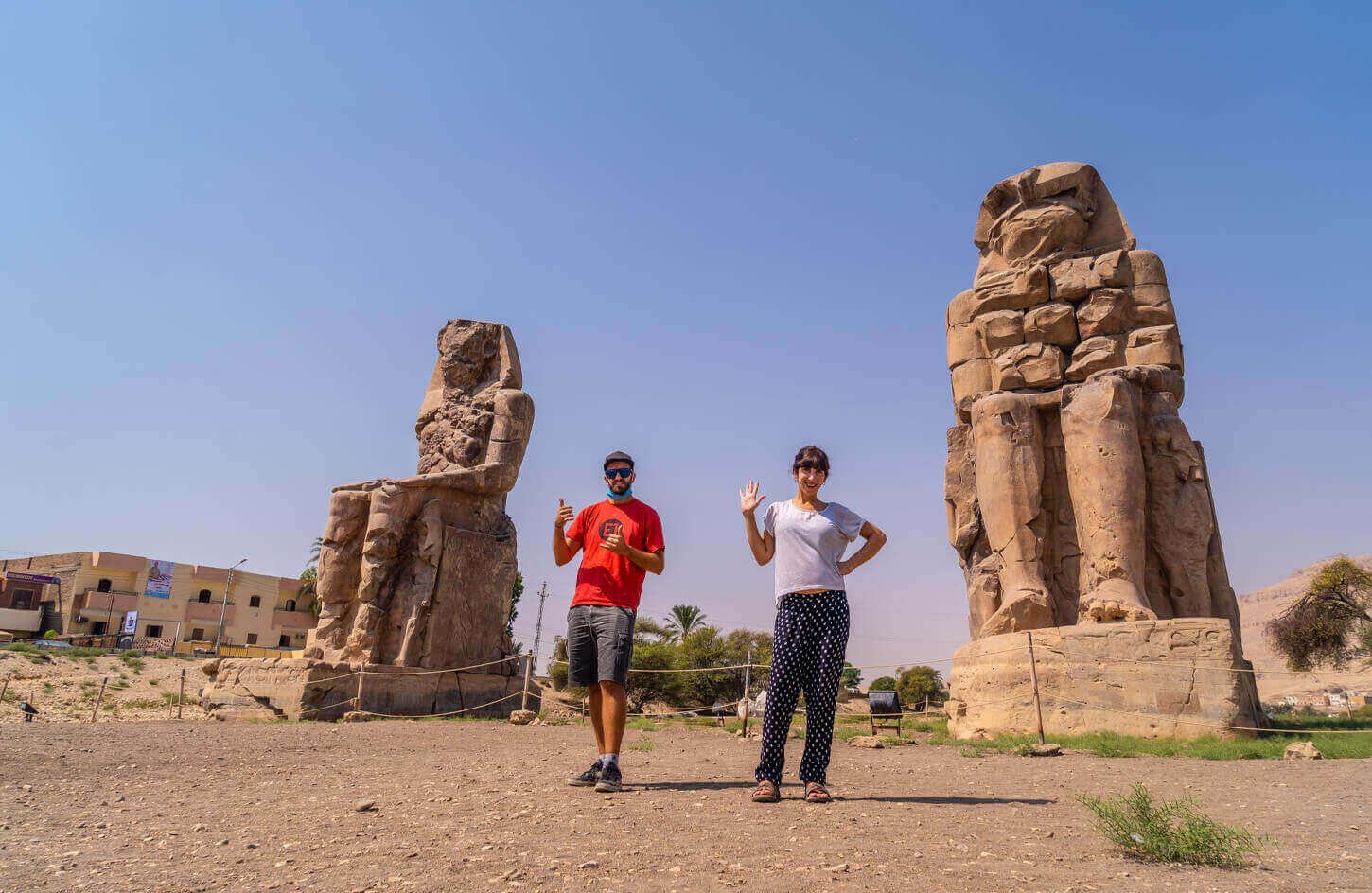
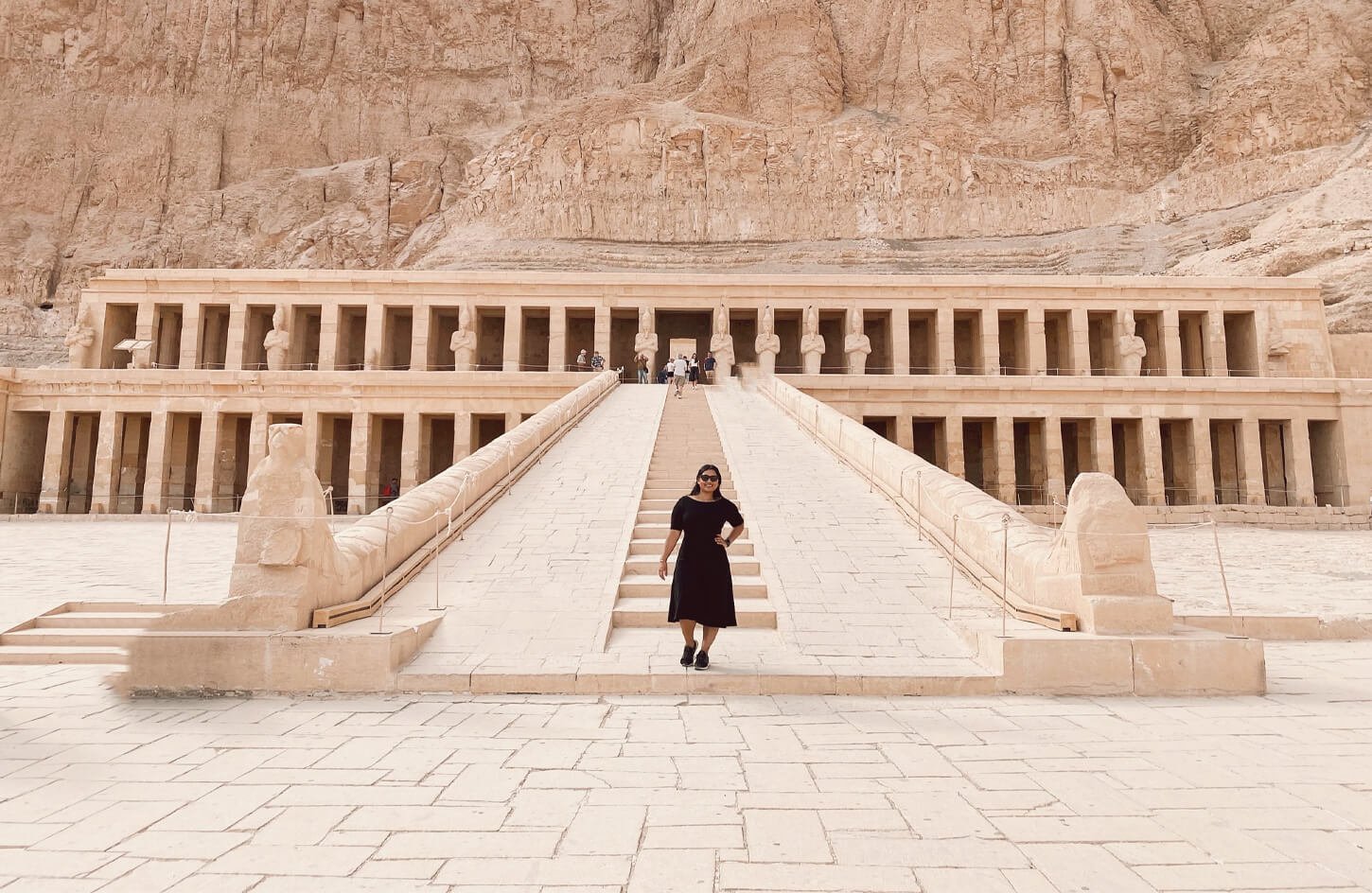
From there you travel along the cliff base to the Temple of Hatshepsut, the terraced mortuary temple of Egypt’s most audacious female pharaoh, its columns rising in tiers straight from the rock face at Deir el-Bahari. A short stop follows at the towering Colossi of Memnon, the two seated guardians that once flanked the entrance to Amenhotep III’s mortuary temple.
Back on board, lunch is followed by an afternoon of doing beautifully little — deckchair, book, breeze — as the Dahabiya moves to a quiet stretch of river for a peaceful night at anchor.
Meals: Breakfast, lunch, and dinner on board.
Overnight: Stay aboard the Dahabiya at a peaceful location on the Nile.
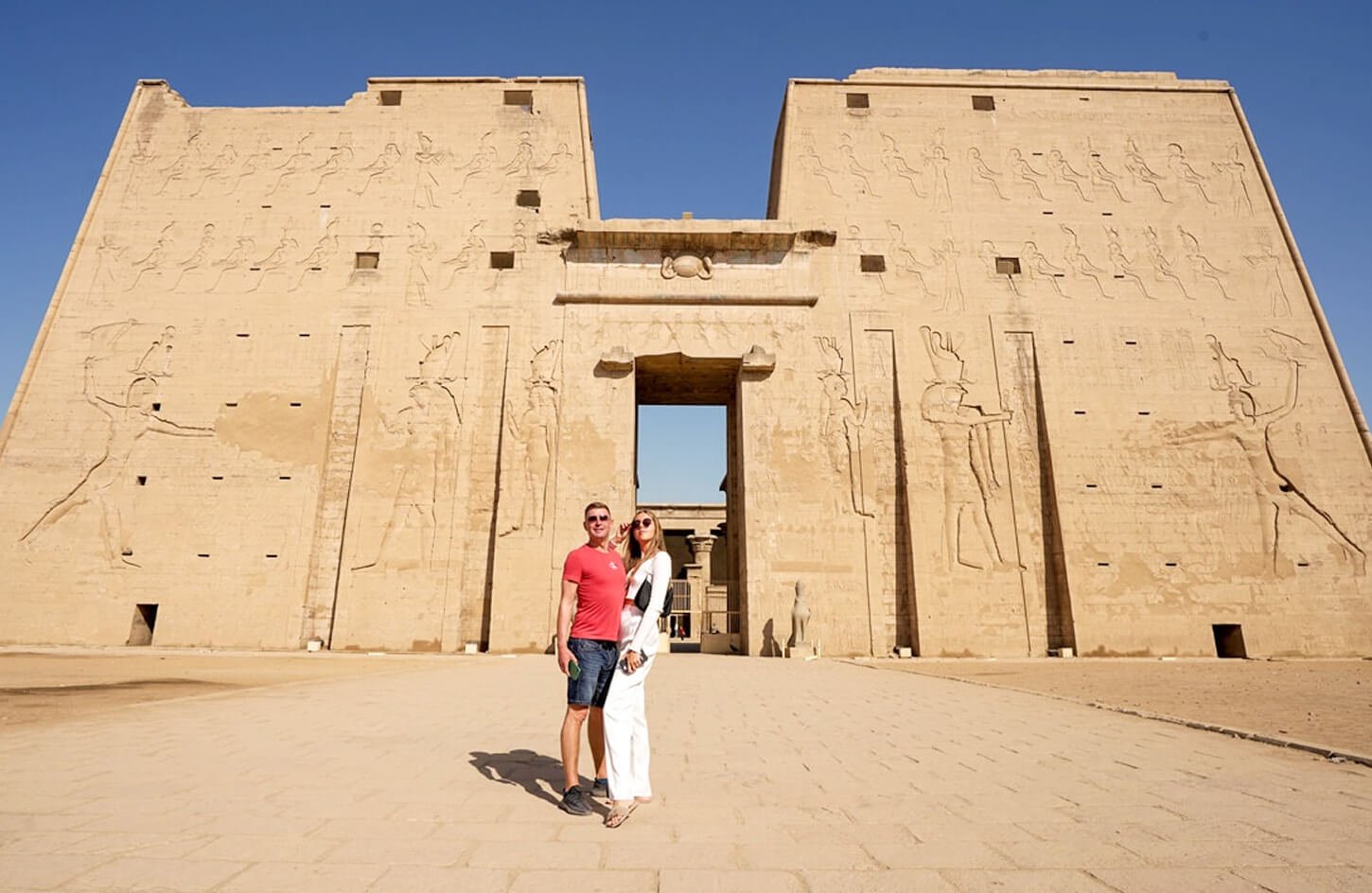
After breakfast, the day is given to the temples of Middle Upper Egypt. First stop is Edfu, home to the Temple of Horus — arguably the most intact temple to survive from antiquity. Massive pylons, sharp-edged reliefs and a shadowy hypostyle hall bring the falcon god’s cult back to full volume, and it is here that the scale and theatre of Egyptian religion feel most alive.
Continuing upstream, you reach Kom Ombo, perched on a bluff above the river. Its unusual dual-temple is split into perfect mirror halves — one side for Horus and Sobek, the crocodile god who was appeased here on the very stretch of Nile where his real-life counterparts once basked. Look for the extraordinary reliefs of surgical instruments, considered some of the earliest medical illustrations in the world.
Lunch is waiting on board, and the boat glides on southward through the tranquil landscapes of the Nile Valley.
Meals: Breakfast, lunch, and dinner on board.
Overnight: Stay aboard the Dahabiya, cruising through the serene waters of the Nile.
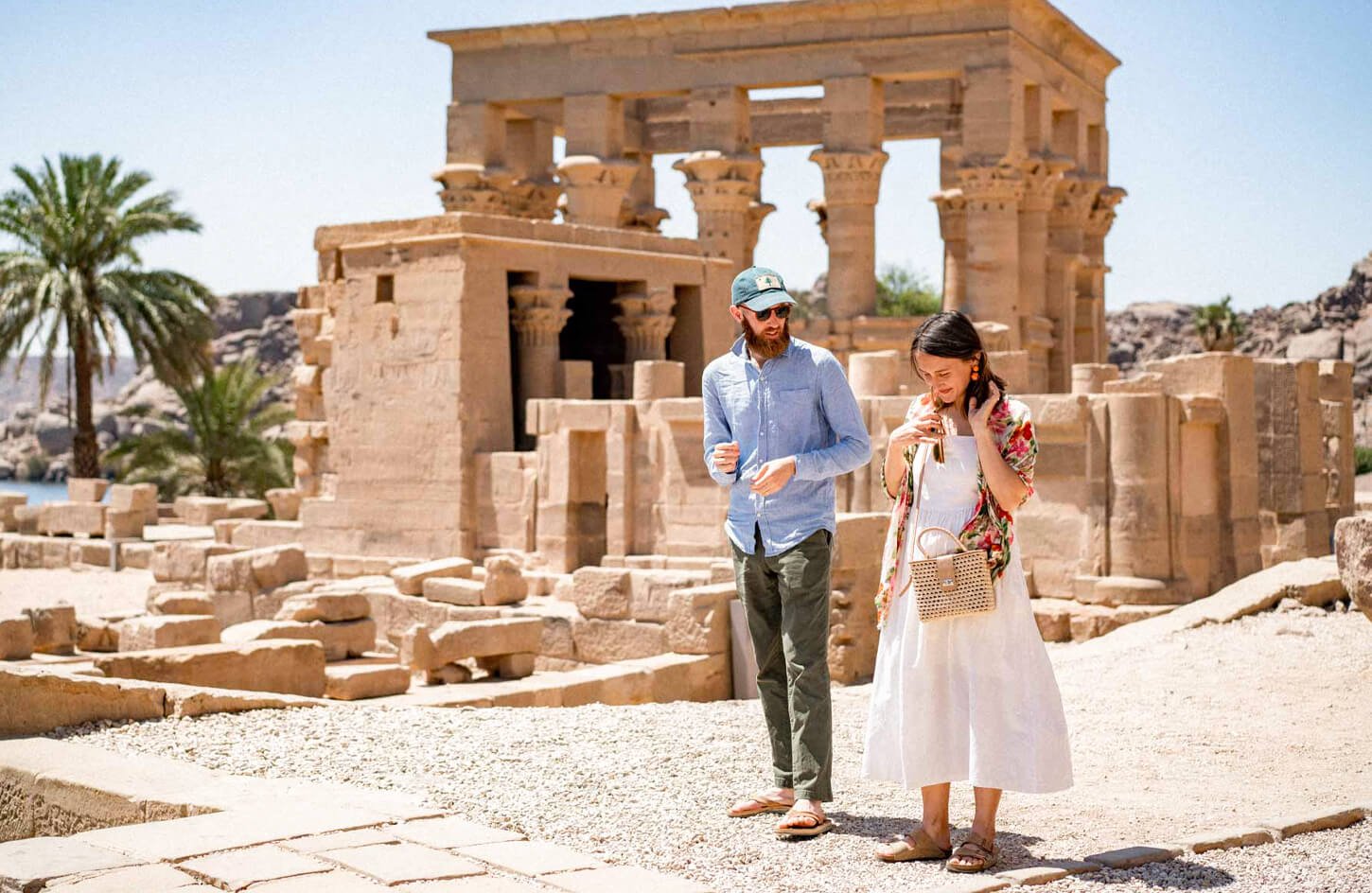
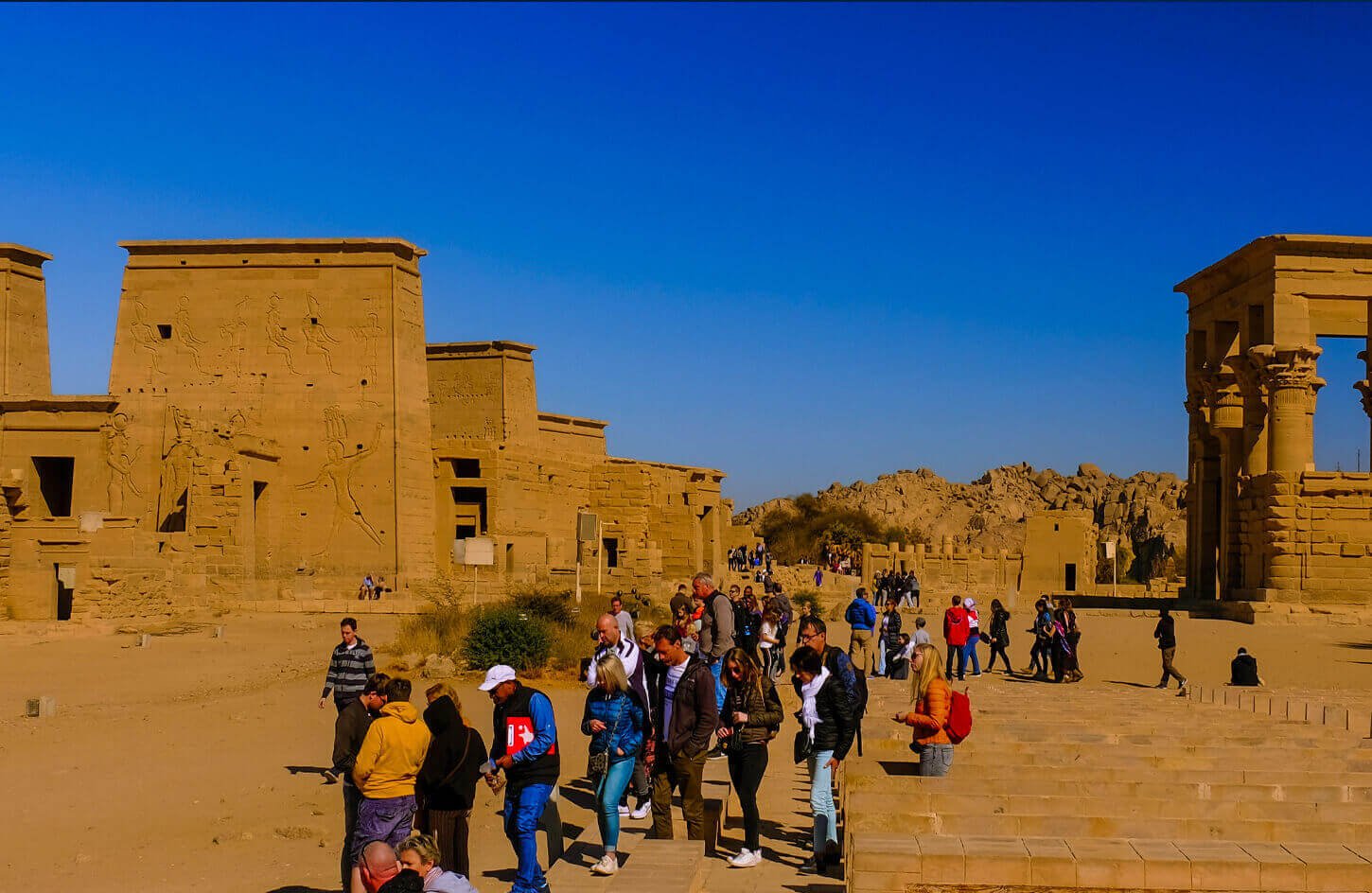
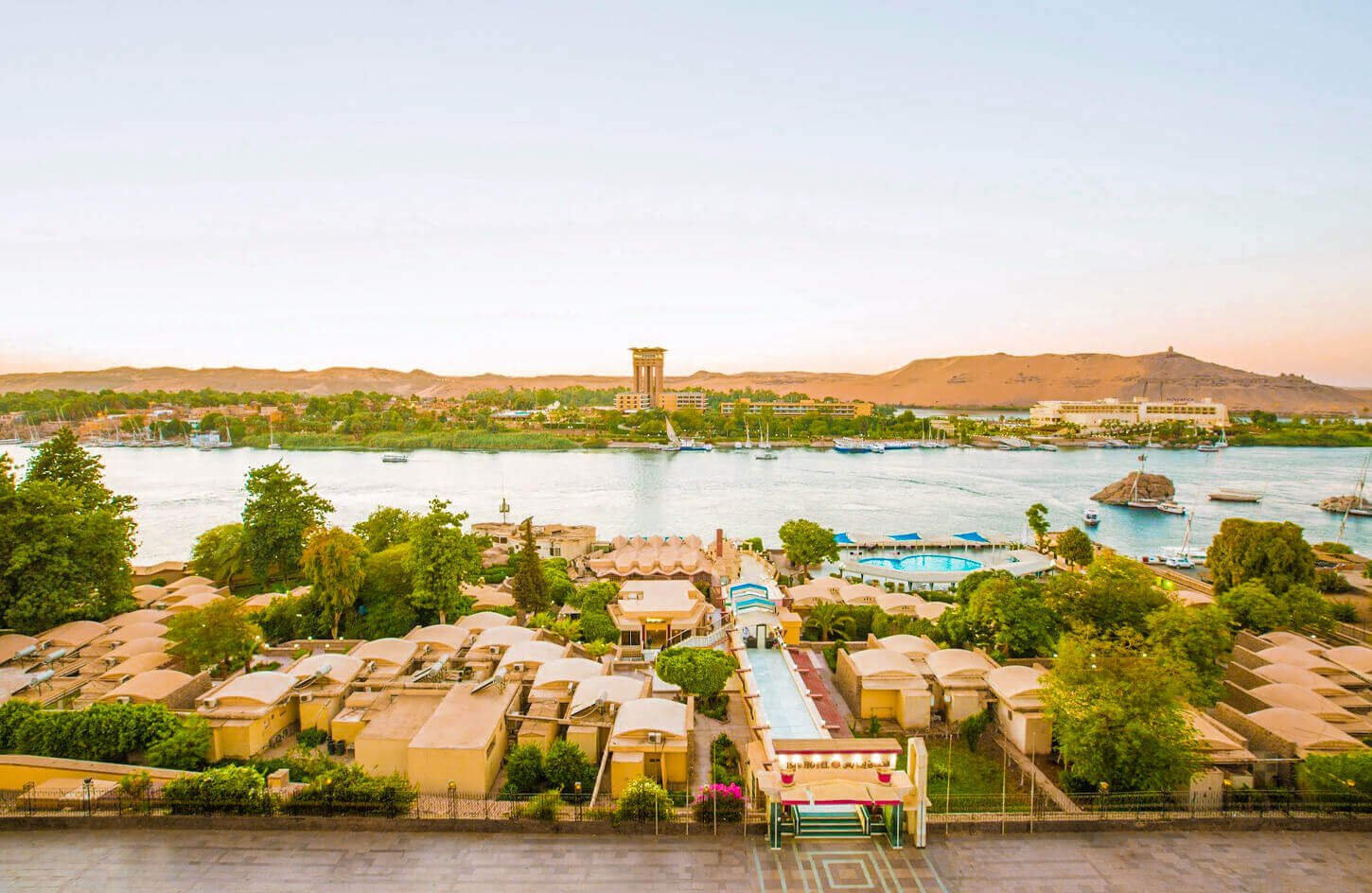
You arrive in Aswan, gentler and more languid than any city downstream, where the Nile widens and islands of granite break its surface. After breakfast, a small motorboat delivers you to the Philae Temple, its columns rising above the water on Agilkia Island. Dedicated to Isis, the sanctuary was famously moved stone by stone to save it from flooding, and its river setting makes it one of the most photographed sights in the country.
A visit to the Aswan High Dam follows, an audacious feat of 1960s engineering that tamed the Nile’s annual flood and rewired Egyptian agriculture and industry — a fascinating counterpoint to five thousand years of temple-building upstream.
Lunch is served on deck, and the rest of the day is yours. As the light softens over the river, sit back with a drink and watch feluccas cut across the sunset.
Meals: Breakfast, lunch, and dinner on board.
Overnight: Stay aboard the Dahabiya docked in Aswan.
Today belongs to the Nubian culture, one of the oldest and most distinctive in Africa. A short boat ride carries you across the river to a traditional Nubian Village, where the houses are washed in electric blues, yellows and pinks and the welcome is genuine rather than staged. You will wander the sandy lanes, sip mint tea in a family courtyard, listen to Nubian music and drums, and learn a little about a heritage that predates the pharaohs.
Afterwards, step aboard a Felucca boat ride — the graceful lateen-sailed craft that has plied the Nile for centuries — and let the wind do the work as the river’s granite islands and palm-fringed banks drift past in silence.
Meals: Breakfast, lunch, and dinner on board.
Overnight: Stay aboard the Dahabiya, cruising peacefully back toward Luxor.
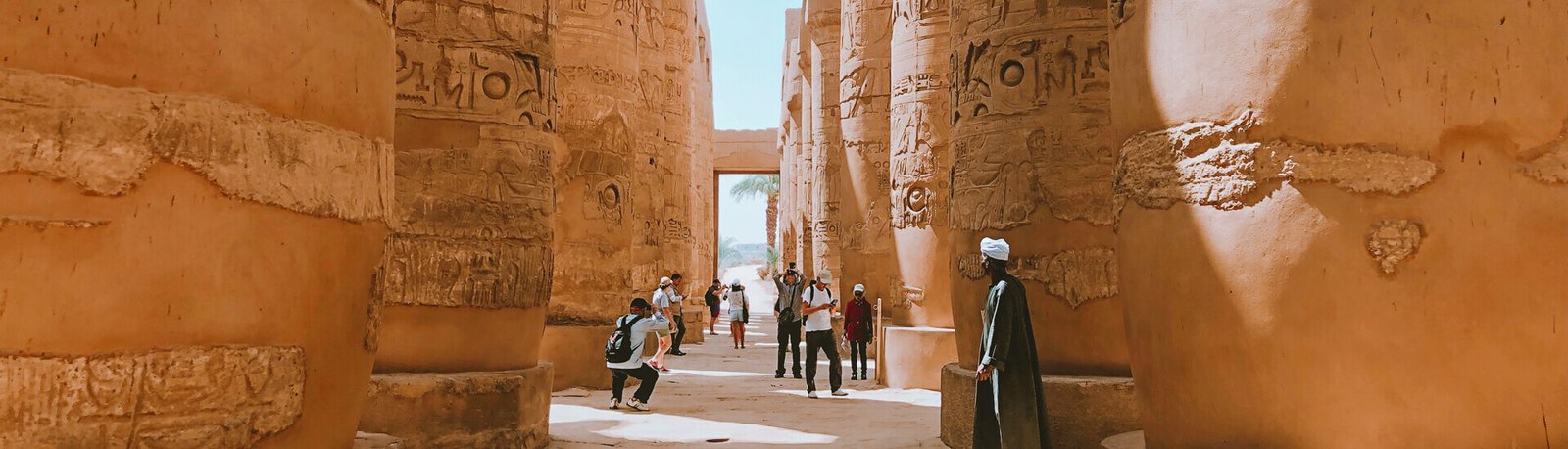
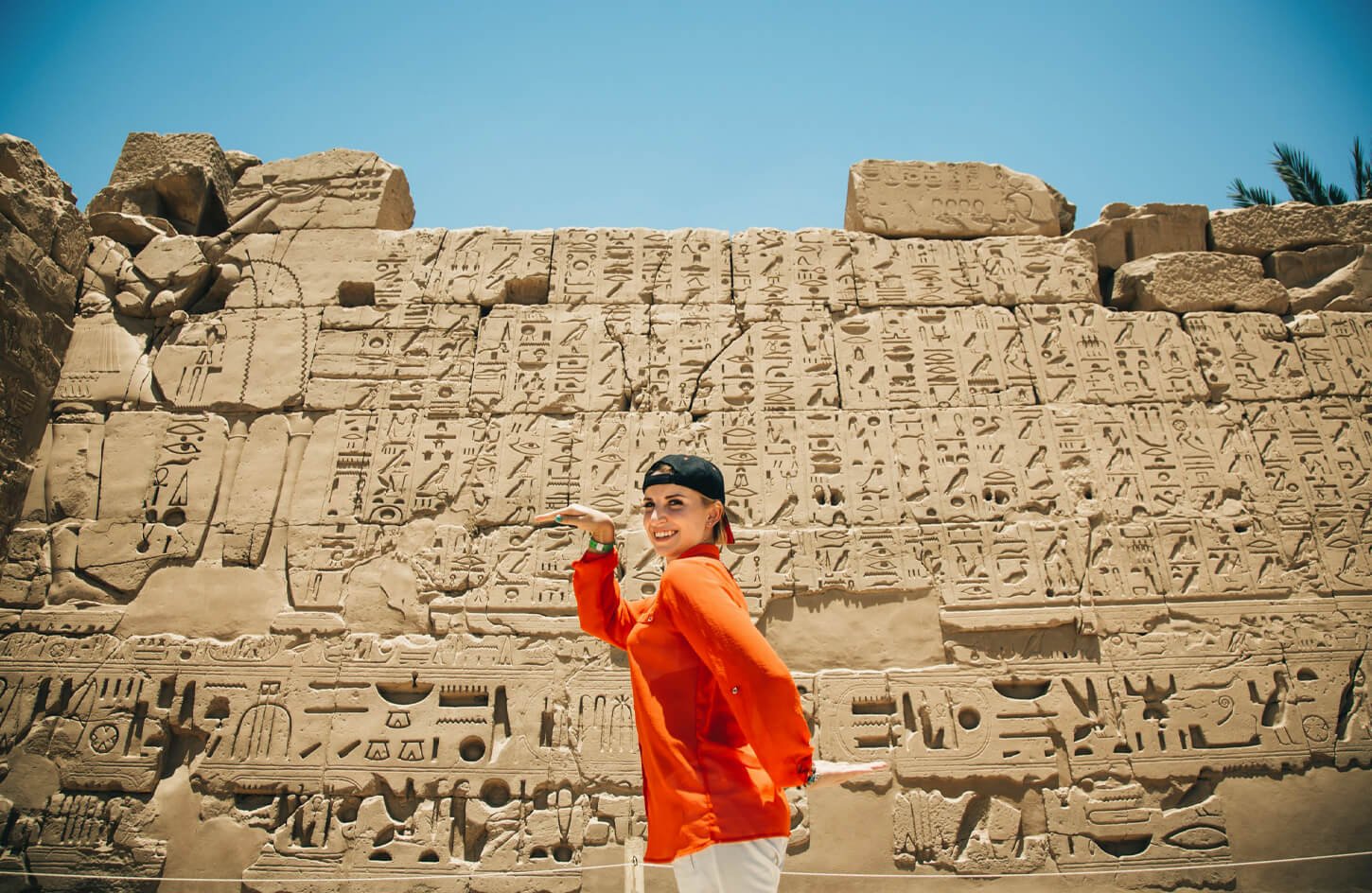
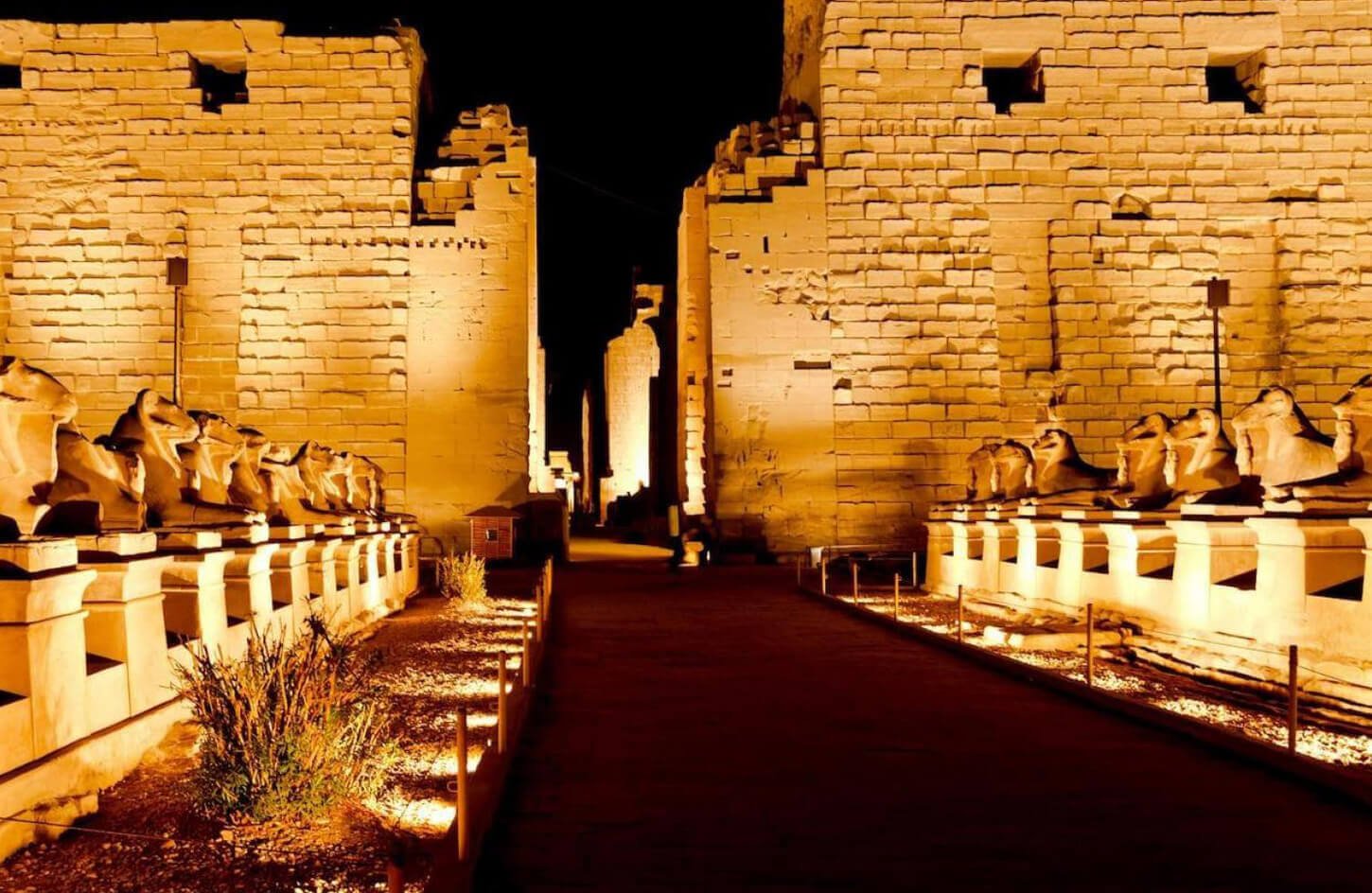
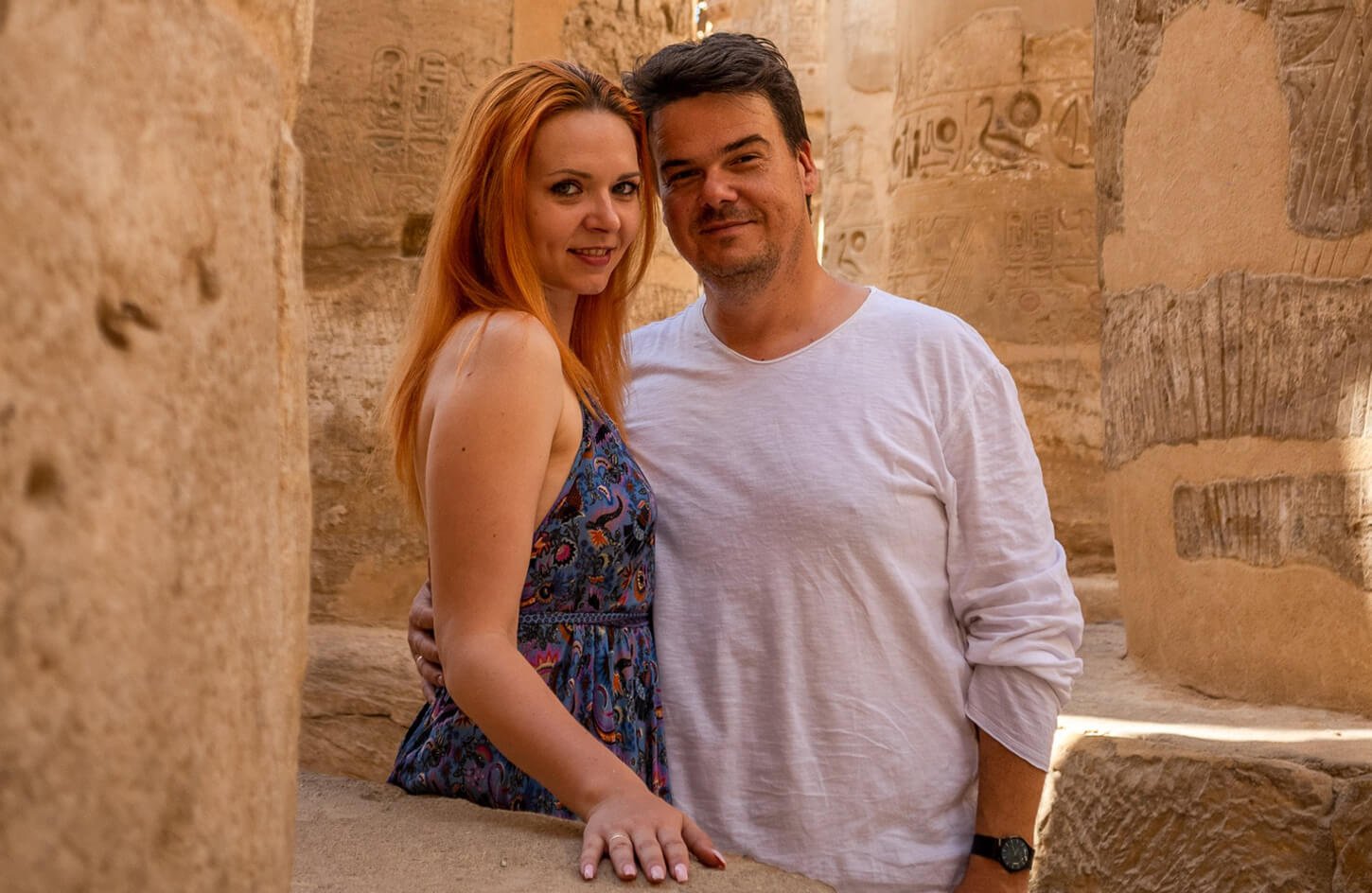
Turning northward, the Dahabiya delivers you back to Luxor, and to the moment this whole trip was designed around. First, a full exploration of Karnak Temple: the largest and most powerful religious complex ancient Egypt ever built, its avenues, pylons and hypostyle hall dedicated to Amun-Ra on a scale that never fails to astonish.
And then the sky does the talking. From within these very courtyards, you witness the Solar Eclipse 2027 — a rare celestial alignment made all the more remarkable by its setting. As the moon crosses the sun and daylight dims, the obelisks, columns and colossi of Karnak fall into an unearthly half-light, and a temple built to worship the sun becomes the perfect stage on which to watch it disappear. A memory that will outlive the trip itself.
Meals: Breakfast, lunch, and dinner on board.
Overnight: Stay aboard the Dahabiya, docked near Luxor.
Today’s temple is Luxor Temple, tucked in the middle of the modern city and connected to Karnak by an ancient processional avenue lined with sphinxes. Dedicated to Amun-Ra, its towering columns, courtyards and finely cut reliefs record royal ceremonies in extraordinary detail. Ask your guide about coming back after nightfall, when the whole complex is bathed in floodlight and turns almost dreamlike.
Afterwards you rejoin the Dahabiya for lunch, a lazy afternoon and a farewell evening on board — the perfect moment to raise a glass to the river before tomorrow’s disembarkation.
Meals: Breakfast, lunch, and dinner on board.
Overnight: Stay aboard the Dahabiya.
One last breakfast on deck, and then a transfer to Luxor Airport for your short flight back to Cairo. On arrival, our driver meets you again and takes you to your hotel, leaving the rest of the day open to rest, shop for souvenirs or wander the capital at your own pace.
Meals: Breakfast
Overnight: Cairo
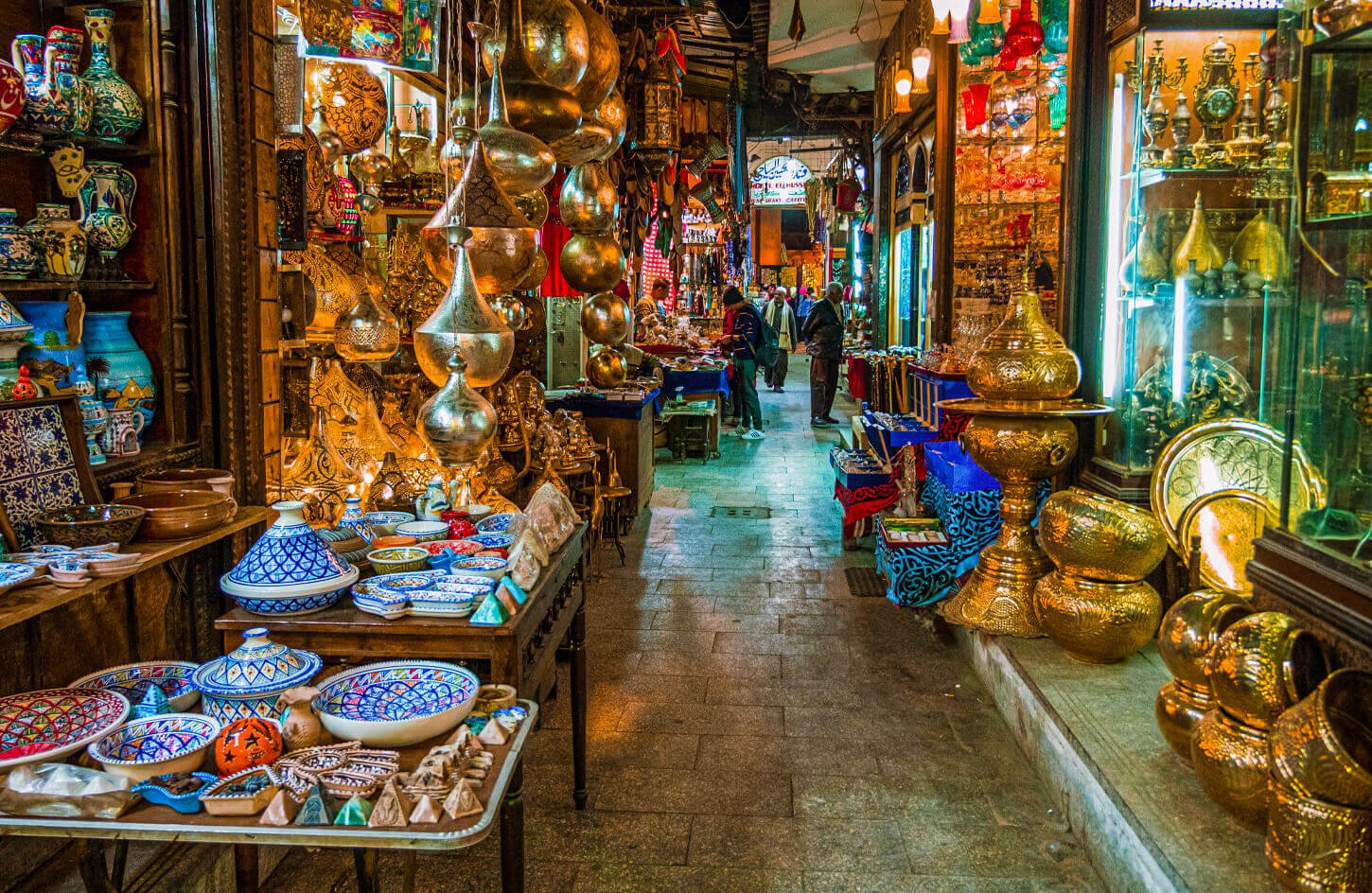
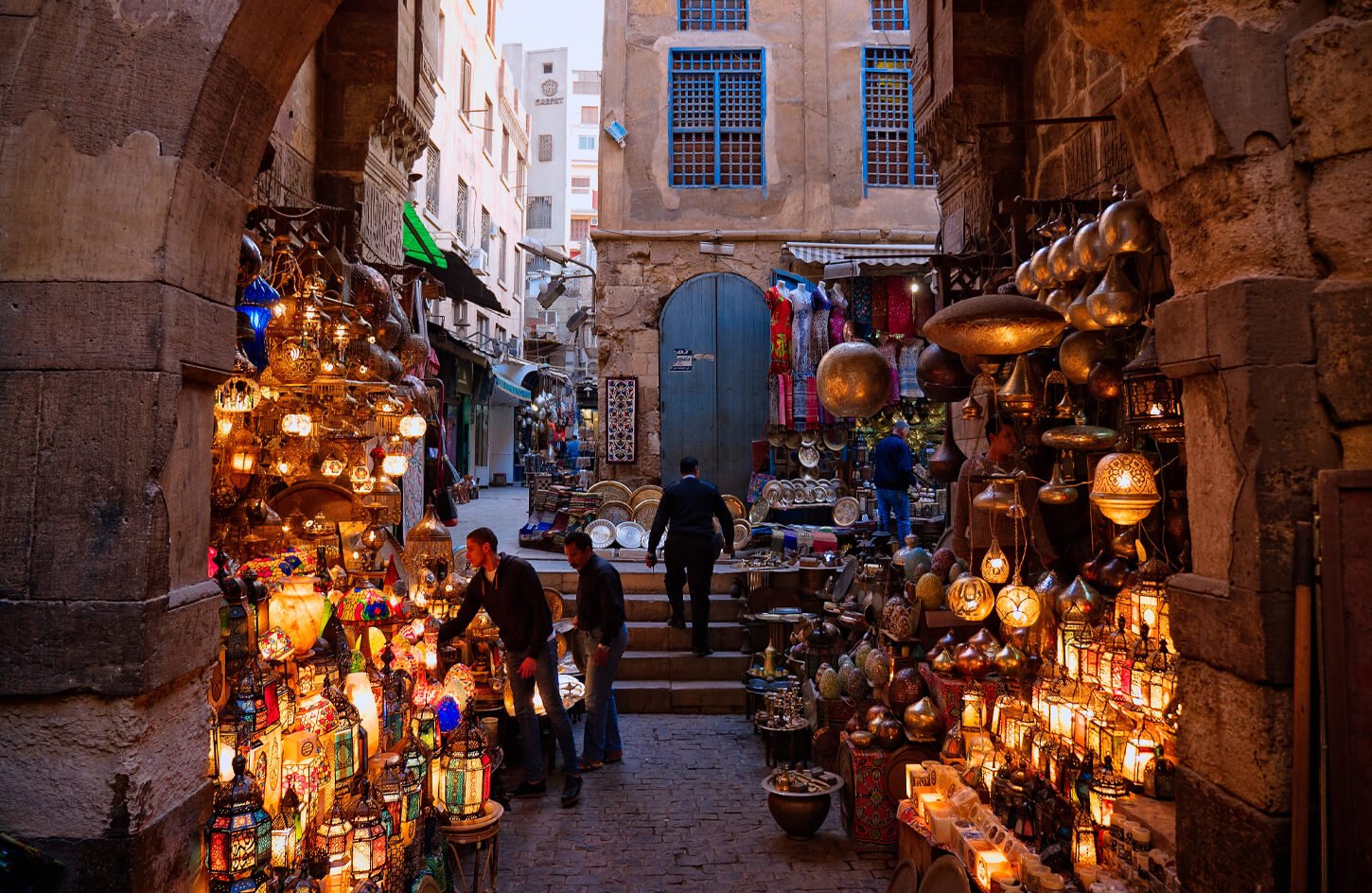
Today is entirely yours — relax by the pool, wander the old souks, or pick from one of the curated day-trips below.
Optional tours:
One last Egyptian breakfast, and then a private transfer to Cairo Airport in good time for your onward flight home.
Thank you for travelling with Daily Pyramids Tours — the Nile has a way of calling people back, and we very much hope to welcome you again.
Meals: Breakfast
At Daily Pyramids Tours, all prices are quoted in US Dollars (USD) unless otherwise specified. However, we gladly accept payments in other major currencies such as Euros (EUR), British Pounds (GBP), and more, based on the official daily exchange rate on the payment date.
Our prices reflect current market conditions, seasonal fluctuations, and service availability, so they may change without prior notice. Once a deposit or full payment is received, your booking price is locked in and guaranteed.
What’s Included in Our Packages:
Please check your specific booking confirmation and itinerary for exact inclusions and exclusions.
Holiday Supplement:
A 25% surcharge applies to all Nile Cruises and tour packages booked during Christmas, New Year, and Easter holidays due to peak demand.
To ensure a smooth booking process with Daily Pyramids Tours, our payment terms vary depending on the service type:
After payment, you will receive written confirmation, a tailored itinerary, and travel documents via email. Receipts for all payments will be provided.
We understand plans can change. Our cancellation terms are:
Refunds, when applicable, are processed within 14 business days of receiving your written cancellation notice. Some cruises or hotels may have stricter cancellation policies, which will be clearly communicated in your itinerary.
At Daily Pyramids Tours, we welcome families and offer the following children’s pricing:
Discounts apply only when children share accommodation with two full-paying adults. Note that certain Nile Cruises and luxury hotels may have different policies or restrictions for young children, which will be detailed in your itinerary if relevant.
Some special experiences are optional and not included in standard packages. You may book these in advance or arrange on-site (subject to availability). Examples include:
Optional tours are payable in USD or local currency (EGP). We recommend booking in advance, especially during peak seasons.
While our packages are comprehensive, travelers should budget for:
We advise carrying small amounts of local currency (EGP) for convenience, especially for tipping and shopping at local markets.
Tipping (“baksheesh”) is a customary way to show appreciation for good service in Egypt. Though not mandatory, it is widely appreciated:
Tipping is generally not included in your package price. We recommend carrying small USD or EGP bills for tipping convenience.
Egypt shines brightest during its winter season, from November through to February, when daytime temperatures stay pleasantly mild and long days at Giza, Luxor and along the Nile feel effortless. Try to avoid the deep summer months of June to August, when the mercury regularly climbs above 40°C (104°F) across much of the country and outdoor sightseeing becomes a real endurance test.
Every international traveller entering Egypt should have the following in order:
Passport: Valid for at least six months from the date of entry.
Visa: Depending on your nationality, you may need to obtain a visa in advance or upon arrival. Some nationalities are eligible for e-visas.
Travel Insurance: Recommended to cover medical emergencies and other unforeseen circumstances.
Vaccinations: While no specific vaccinations are required for entry, it’s advisable to check with your healthcare provider for any recommended vaccinations.
By and large, Egypt is a safe destination for tourists, and the government has invested heavily in visible security around the major archaeological sites, resorts and city centres visitors are most likely to reach. As with any international trip, keep an eye on your home country’s official travel advice before departure and stay tuned in to local news once you’re on the ground.
Decide Your Travel Dates and Budget
Lock in a rough window and a spending ceiling first — those two numbers shape every other decision, from flights to hotel tier to which tours are feasible.
Choose Your Itinerary and Destinations
Egypt covers a lot of ground. Cairo and the Pyramids of Giza are non-negotiables; then consider a Luxor–Aswan Nile Cruise, a stop in Alexandria, or a few beach days on the Red Sea. Pick a shortlist that matches your time.
Find a Reliable Tour Operator or Travel Agency
Whether you book with a local Egyptian specialist, an overseas agency or an online platform, read recent reviews and verify licences before committing. A trustworthy operator is the single biggest quality-of-trip factor.
Select a Tour Package or Customize Your Trip
Off-the-shelf packages bundle flights, hotels, transfers and guided tours at a keen price, but a good operator can also tailor an itinerary around your interests, pace and budget — often for surprisingly little extra.
Make a Reservation
Once availability is confirmed, share your travellers’ details and pay either the deposit or full balance as the operator’s policy requires. Keep every confirmation email for reference.
Prepare Your Travel Documents
Double-check passport validity, apply for your Egyptian visa if required, and print a hard copy of your itinerary, hotel vouchers and tour confirmations — patchy Wi-Fi is a bad time to search for a PDF.
Pack and Get Ready
Pack for the season and the activities on your itinerary. Broken-in walking shoes, sun protection, modest layers for mosques and temples, and a universal travel adapter are the non-negotiables.
Enjoy Your Trip!
When you arrive, hand yourself over to the itinerary, stay in easy contact with your guide or agent, and soak up every layer of Egypt’s history and daily life.
Tipping — known locally as “baksheesh” — is woven into daily life in Egypt and is almost never rolled into the price of a tour. Guides, drivers, cruise crew, porters and hotel staff all expect a small gratuity for good service, and a workable rule of thumb is 10-15% of the underlying bill or a proportionate cash tip based on how well you were looked after.