
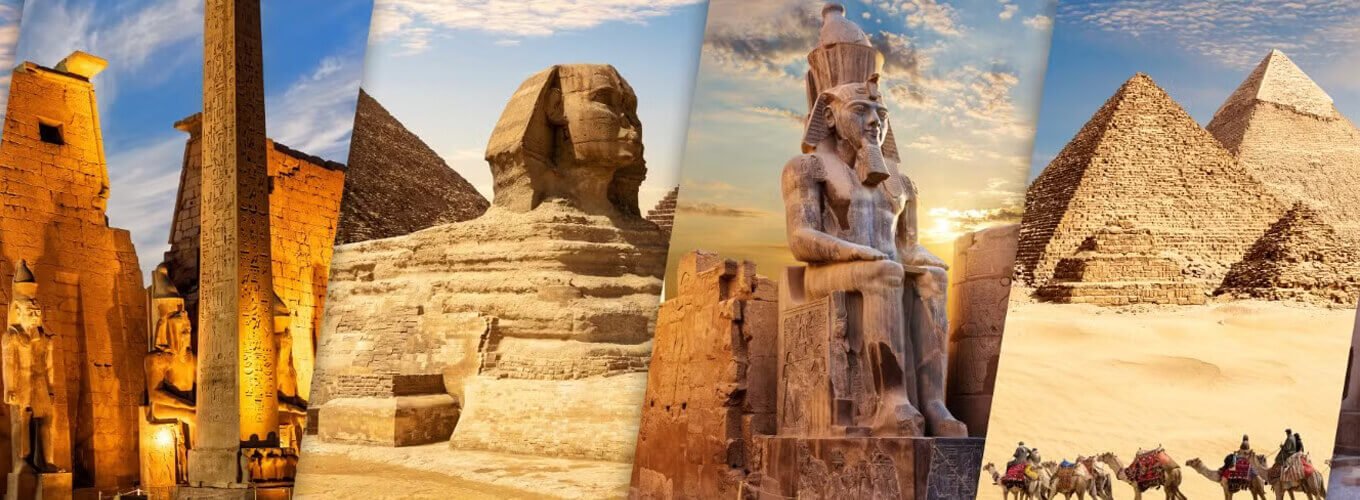
Ancient Egyptians built their monuments using precisely cut limestone and granite blocks moved on sledges over wet sand, hauled up earthen ramps by organized labor crews. Skilled engineers, copper tools, and careful astronomical alignment let them raise pyramids and temples that have endured for thousands of years.
Stand at the foot of the Great Pyramid at dawn, tilt your head back until your neck aches, and one question will refuse to leave you: how did they do this? Understanding how ancient Egyptians built their temples, tombs and towering pyramids is one of the great pleasures of travelling here, because the answers are far more clever, human and surprising than the myths suggest. As locals who walk these sites almost daily, we love watching that moment of wonder land on a visitor’s face for the very first time.
Why Egypt’s Ancient Architecture Still Leaves Us Speechless
Egypt gave the world its first monumental stone architecture, and it did so with astonishing confidence. Long before cranes, steel or concrete, builders here were quarrying, shaping and stacking blocks that many of us could not even nudge today.
What makes these structures so moving is not only their scale but their intention. Every wall, column and corridor was designed to carry meaning about gods, kings and the eternal life beyond death. When you learn to read that intention, a heap of old stone becomes a story you can walk through.
The Building Blocks: Stone, Mudbrick and Egyptian Ingenuity
Ancient Egyptian architects worked mainly with two materials, and knowing the difference explains why some buildings survive and others have all but vanished. Sun-dried mudbrick was cheap, quick and used for homes, palaces and even parts of the earliest royal tombs. Stone, by contrast, was reserved for what had to last forever.
The Nile Valley was generously stocked with the raw materials a civilisation of builders needed:
- Limestone — soft, plentiful and quarried close to Giza and Saqqara for pyramid cores and fine casing.
- Sandstone — the workhorse of southern temples such as Karnak and Luxor, easy to carve into columns and reliefs.
- Granite — the hard, glittering pink stone from Aswan, used for obelisks, sarcophagi and burial chambers.
- Mudbrick — the everyday material for houses, walls and workshops, which is why so few ordinary buildings remain.
That deliberate choice of stone for the sacred and mudbrick for the mundane is one of the reasons temples and tombs have outlived the towns that once surrounded them.
How Ancient Egyptians Built the Pyramids Without Modern Machines
The pyramids are the headline act, and rightly so. The question of how ancient Egyptians built these mountains of stone has fascinated engineers for centuries, and modern research has quietly dismantled the wilder theories.
First, forget the idea of enslaved multitudes toiling under the whip. Archaeology near Giza has uncovered a genuine workers’ town, complete with bakeries, breweries and burial grounds for the builders themselves. These were skilled, well-fed labourers and craftsmen, many working in organised gangs with proud team names.
Ramps, Sledges and Clever Physics
The heavy lifting was achieved with beautifully simple technology. Massive blocks were dragged on wooden sledges, and one famous tomb painting shows a worker pouring water in front of the sledge to reduce friction on the sand.
To raise stones ever higher, builders almost certainly used ramps of mudbrick and rubble, whether straight, spiralling or built into the pyramid’s own flanks. Combine ramps, levers, ropes and enormous coordinated manpower, and the impossible becomes merely extraordinary.
Precision That Shames Modern Builders
What truly humbles engineers is the accuracy. The Great Pyramid’s base is remarkably level and its sides are aligned almost perfectly to the cardinal points, achieved with tools no more complex than plumb lines, set squares and the stars overhead. To stand there and grasp this is unforgettable, and our Cairo tours are built around giving you the time and context to feel it properly.
Raising Obelisks: The Granite Giants of Aswan
If the pyramids astonish through mass, the obelisks astonish through audacity. These single shafts of granite, some weighing hundreds of tonnes, were carved from the quarries of Aswan and floated downriver on barges.
The most eloquent teacher here is the Unfinished Obelisk, still lying in its Aswan quarry, cracked and abandoned before it could be freed from the bedrock. Walking around it, you can see the tool marks, the dolerite pounding stones and the sheer ambition frozen in mid-project.
Getting these giants upright involved earthen embankments, sand-filled funnels and precise rope work. The engineering is so bold that experimental archaeologists still argue happily over the exact method, and Aswan remains the best place to see where it all began, as we explore on our Aswan tours.
Temples Designed as a Journey Toward the Divine
Egyptian temples were never meant to be taken in at a single glance. They were choreographed experiences, leading the worshipper from bright, open courtyards into progressively darker, lower and more sacred spaces.
This gradual compression of light and height was pure theatre with a spiritual purpose. By the time a priest reached the innermost sanctuary, holding the god’s shrine, the sense of mystery had been carefully built, room by room.
Karnak in Luxor is the ultimate example, a temple complex expanded by pharaoh after pharaoh across two millennia. To wander it slowly is to walk through layers of ambition, which is exactly what we aim for on our Luxor tours.
The Hypostyle Hall: A Forest Carved in Stone
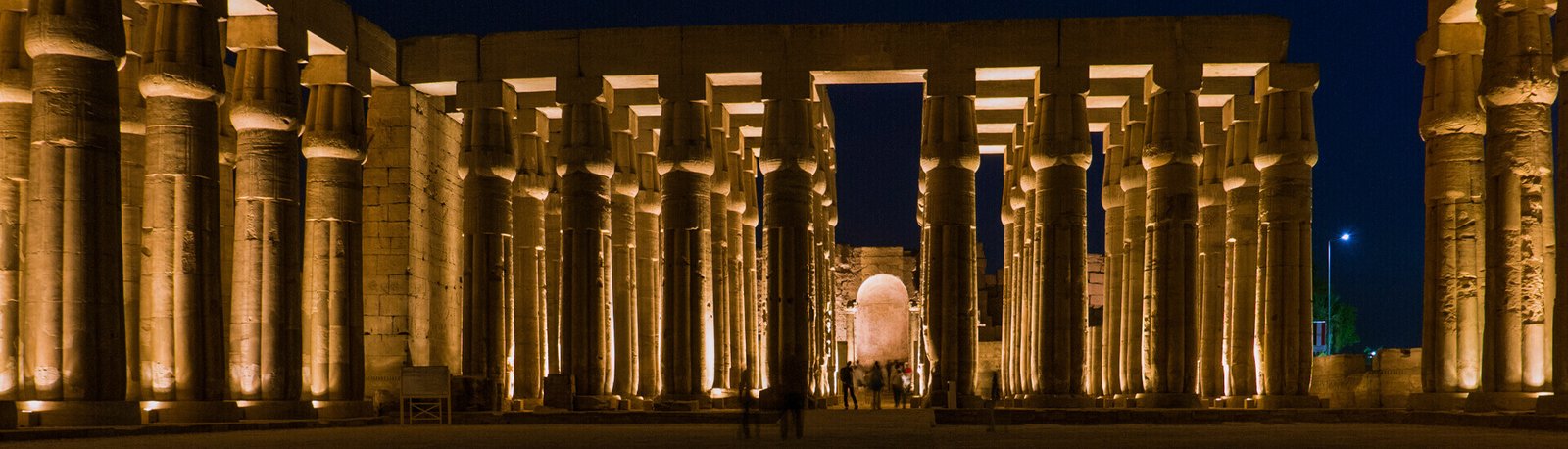
No single space captures Egyptian architectural genius quite like the Great Hypostyle Hall at Karnak. Imagine a vast roofed room crowded with 134 colossal columns, the central ones so wide that several people linking hands can barely encircle one.
The design was inspired by nature. Columns were shaped and painted to resemble papyrus and lotus stems, so that walking among them felt like moving through a primeval marsh, the mythical landscape from which the world was born.
Light once filtered down through stone window grilles high above, dappling the painted stone below. Even roofless and weathered today, the effect is overwhelming, and it explains why the ancient builders trusted columns and lintels rather than the arch for their grandest interiors.
Tombs Cut Deep Into the Mountains
By the time of the New Kingdom, pharaohs had abandoned pyramids in favour of hidden rock-cut tombs, hoping to outwit robbers. The result was the Valley of the Kings, where corridors and chambers were carved deep into the Theban hills.
Building downwards presented its own puzzles of ventilation, lighting and structural stability. Workmen from the dedicated village of Deir el-Medina cut, plastered and painted these tombs by lamplight, leaving walls glowing with astronomy, ritual and colour.
Here the architecture almost disappears, replaced by decorated surfaces designed to guide the king safely into the afterlife. It is a completely different building philosophy from the pyramids, yet driven by the very same obsession with eternity.
Colour, Carving and the Art That Covered Every Wall
We often picture ancient Egypt in honeyed sandstone tones, but that is a trick of time. Temples and tombs were once vividly painted in reds, blues, greens and gold, so bright they would look almost gaudy to modern eyes.
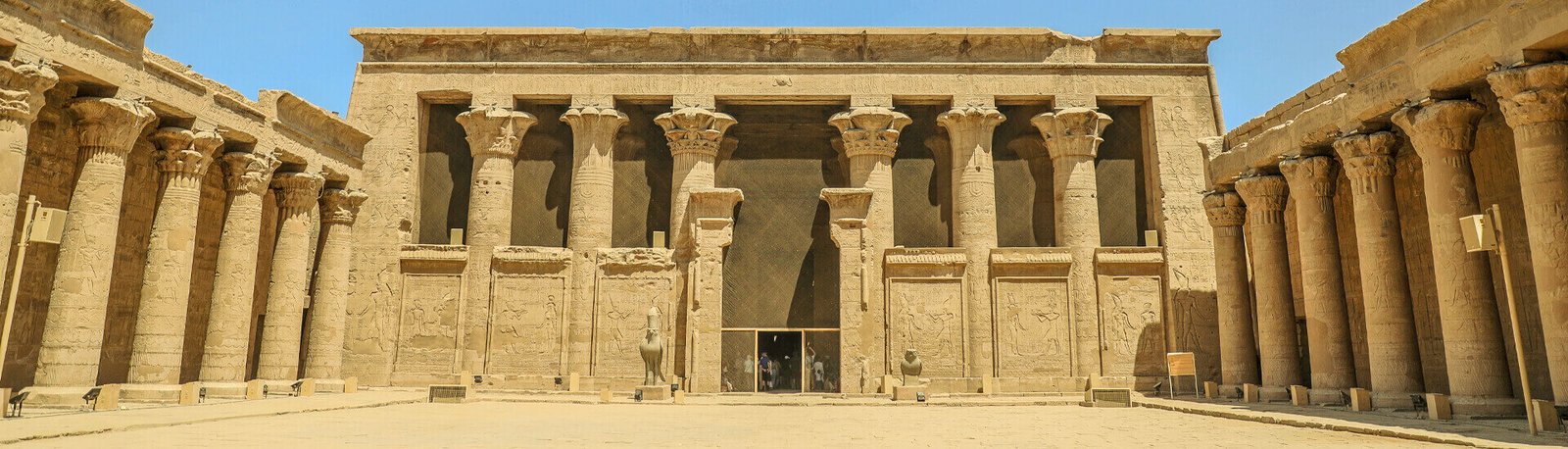
Two carving techniques brought these surfaces to life. Sunk relief, cut into the stone, suited bright exterior walls where harsh sunlight sharpened the shadows. Raised relief, standing proud of the background, was reserved for sheltered interiors.
Look closely and you will still find flecks of original pigment tucked into carved hieroglyphs and ceiling stars. Spotting that surviving colour is one of the small joys we love pointing out to travellers as we move between sites.
The People Behind the Monuments
It is easy to talk about pyramids and temples as if they built themselves, but every stone passed through human hands. Behind each monument stood an army of specialists working in remarkable harmony.
- Architects and overseers who planned proportions and supervised the work, some remembered by name to this day.
- Quarrymen and masons who freed and dressed the stone with copper and stone tools.
- Sledge crews and haulers who moved unimaginable weights with ropes and muscle.
- Scribes who tracked rations, deliveries and labour with meticulous care.
- Artists and painters who turned bare walls into scripture and story.
Understanding how ancient Egyptians built on such a scale means appreciating this organisation as much as the muscle. It was project management on a civilisational level, thousands of years before the term existed.
Aligning Buildings With the Sun and Stars
Egyptian builders were also astronomers. Many temples were oriented so that sunlight would strike a sacred spot on specific days, turning architecture into a giant calendar.
The most famous example lies at Abu Simbel, where twice a year the rising sun reaches deep into the mountain to illuminate statues in the innermost sanctuary. This was no accident, but the product of careful observation and confident design.
This marriage of stone and sky reminds us that these were not merely builders but thinkers, weaving religion, seasons and engineering into a single coherent vision. A leisurely Nile cruise between Luxor and Aswan is the ideal way to trace this thread of temples along the river.
What Ancient Egyptian Architecture Can Teach Us Today
Beyond the awe, there are lessons in this ancient stonework that still feel modern. Egyptian builders understood their climate, choosing thick walls and shaded interiors that stayed cool under a fierce sun.
They also built for permanence and meaning rather than speed, an idea that feels almost radical today. And they proved that extraordinary results come less from advanced machinery than from planning, coordination and patience.
Perhaps that is the deepest reason these monuments move us. They are proof of what determined, organised human beings can achieve together, a message every bit as inspiring now as it was five thousand years ago.
Planning Your Own Encounter With These Wonders
The good news is that these marvels are wonderfully accessible to modern travellers. Giza and Saqqara sit within easy reach of the capital, while Luxor and Aswan hold the greatest temples and tombs in the south.
A few gentle tips make all the difference to your experience:
- Start early to enjoy softer light and cooler temperatures at the big sites.
- Pair Cairo’s pyramids with the south so you see both pyramids and temples.
- Allow unhurried time at each monument rather than racing through a checklist.
- Travel with a knowledgeable local guide who can decode the walls for you.
If you would rather not juggle the logistics, our Egypt travel packages stitch the highlights together seamlessly, and our tailor-made tours let you shape an itinerary around exactly the wonders that fascinate you most.
Come and Stand Where History Was Built
No photograph, film or article, however heartfelt, can replace the feeling of standing beside a pyramid or gazing up into a hall of painted columns. Learning how ancient Egyptians built their world is thrilling in theory, but transformative in person.
Whenever you are ready to swap wonder for first-hand experience, we would love to walk these ancient stones with you. Explore our range of journeys with Daily Pyramids Tours and let us help you plan a trip that turns Egypt’s architectural wonders into memories you will carry for a lifetime.
Ready to Experience Egypt for Yourself?
Let our local experts turn these ideas into an unforgettable journey — guided, seamless, and tailored entirely around you.

