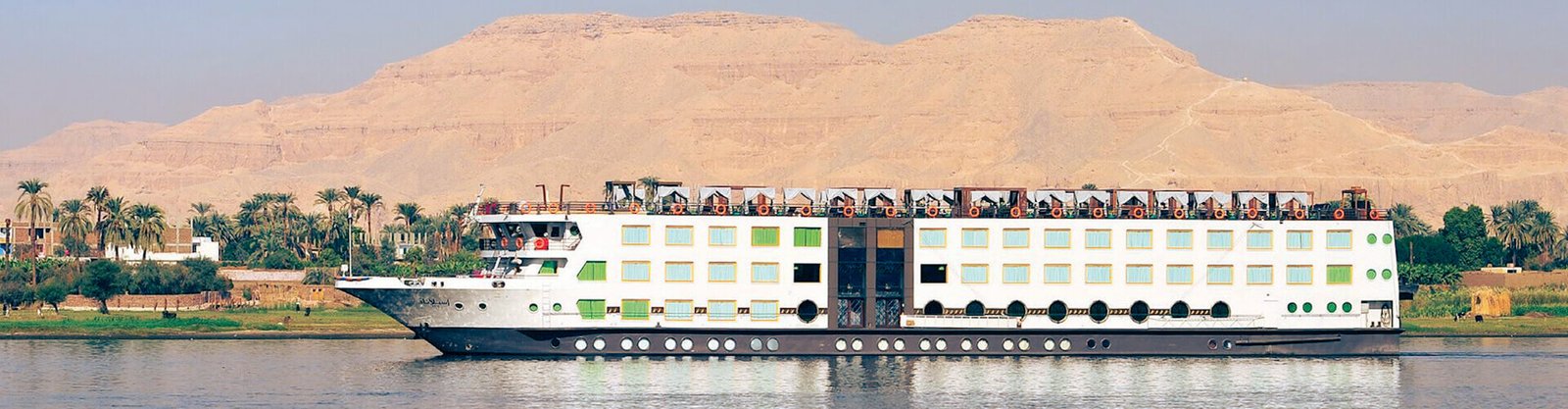
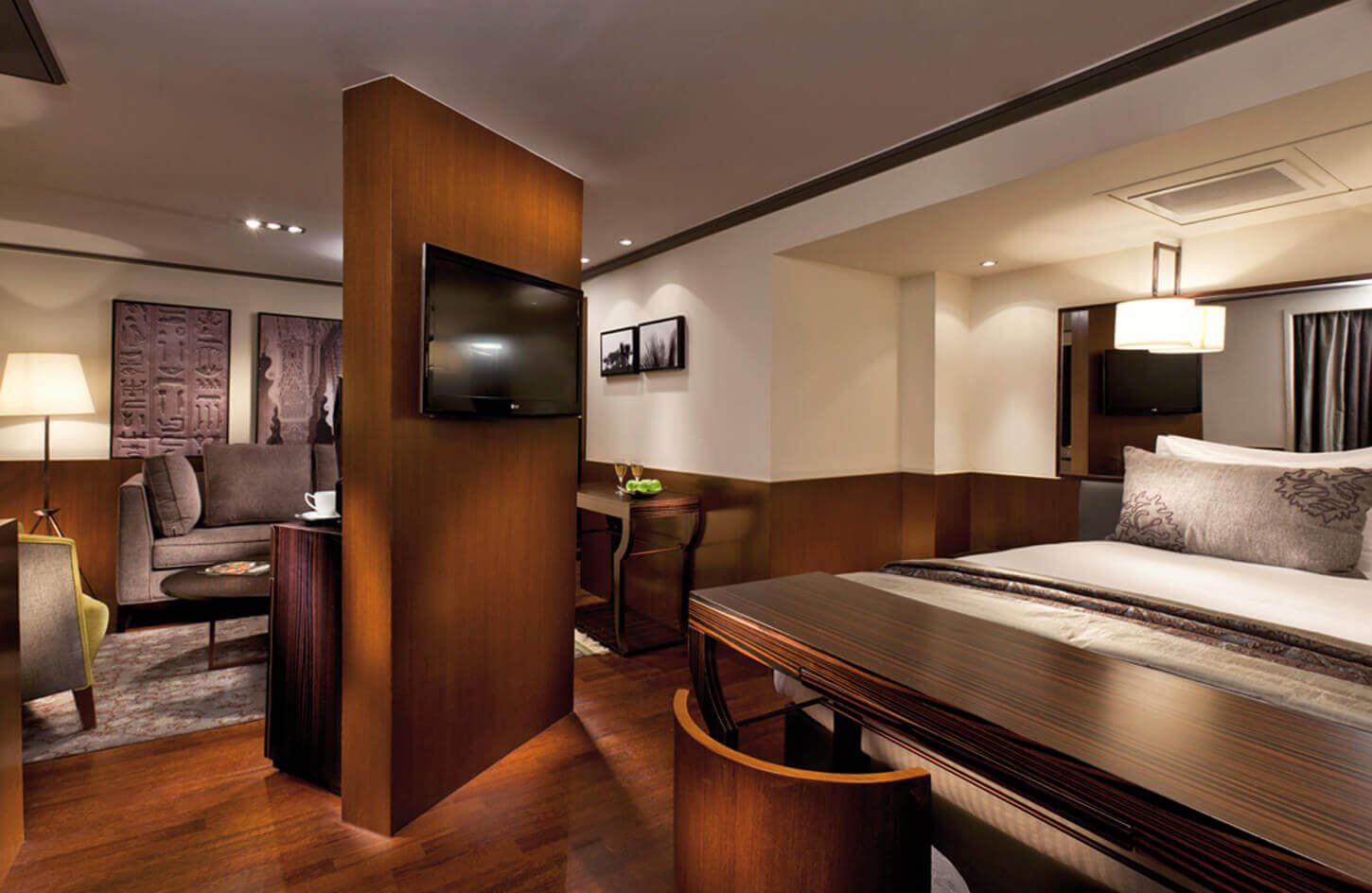
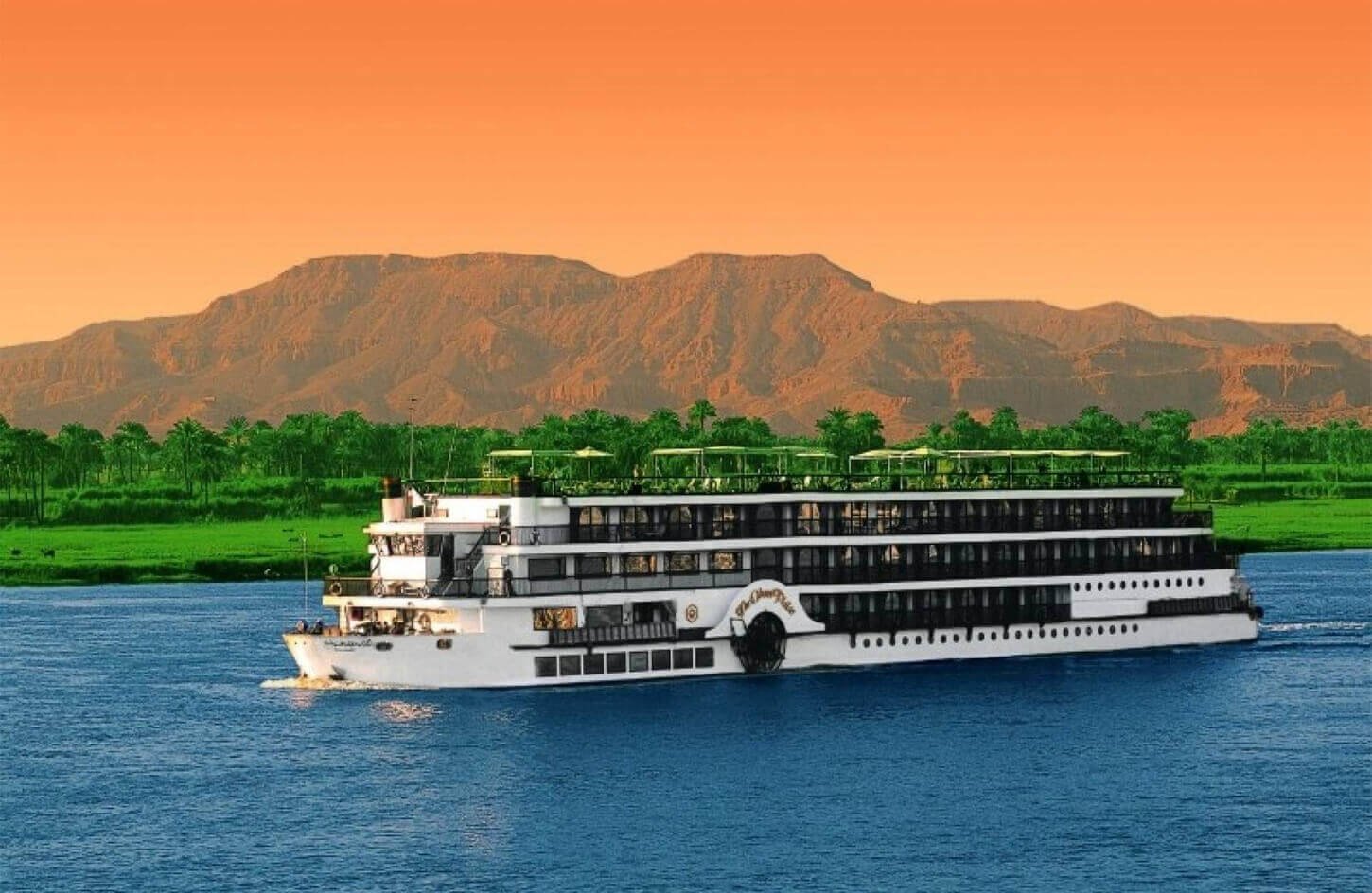
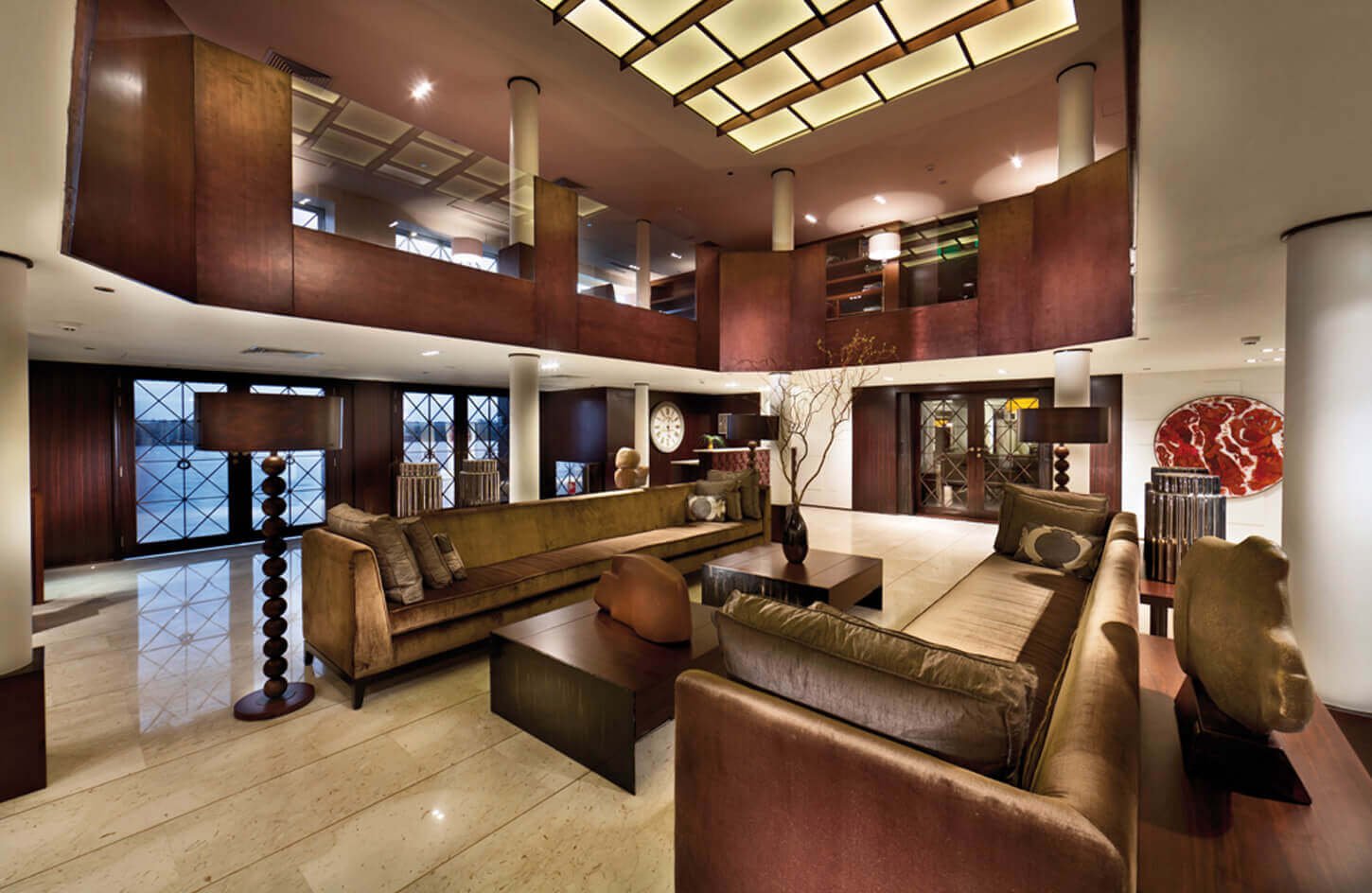
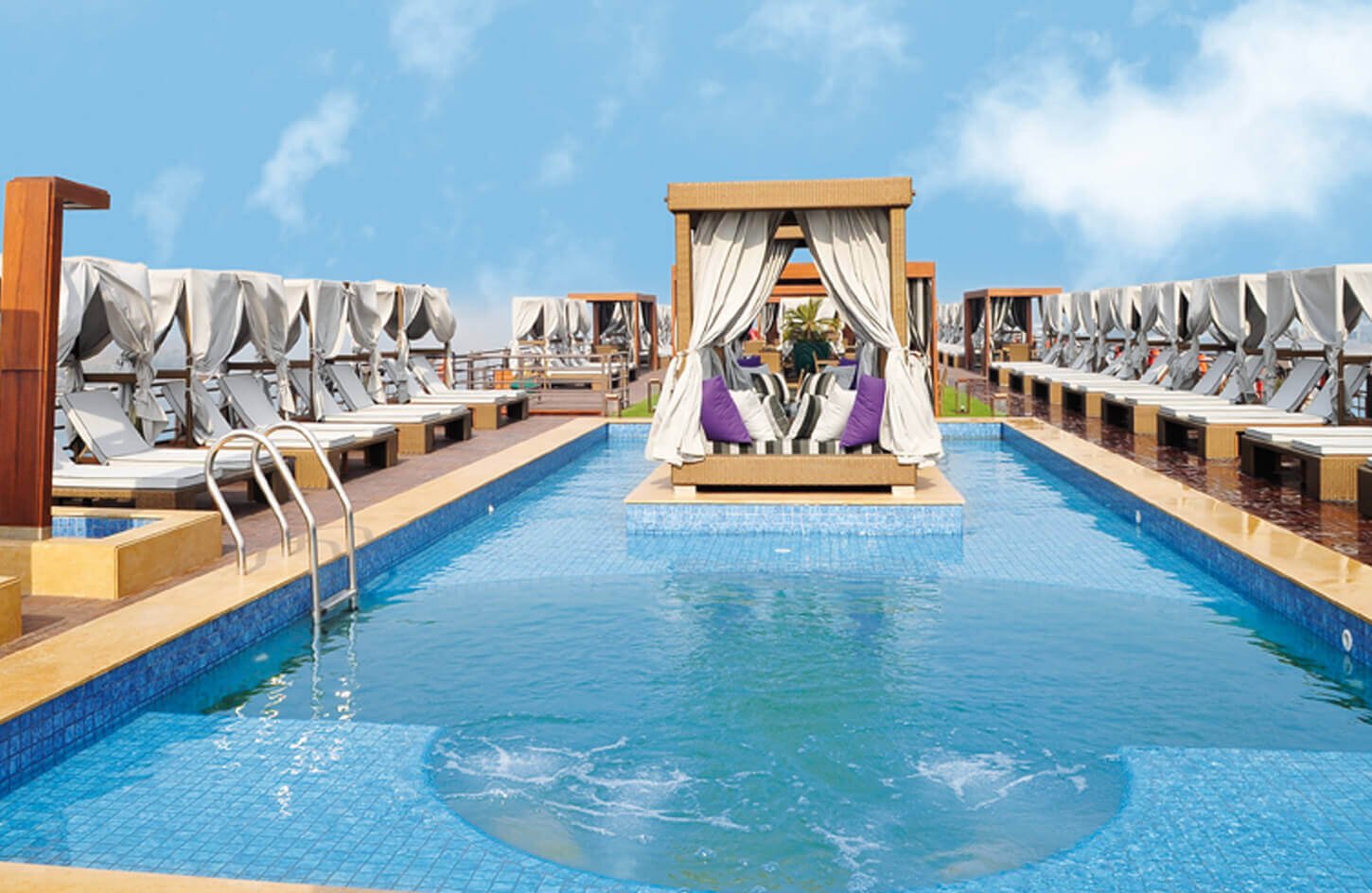
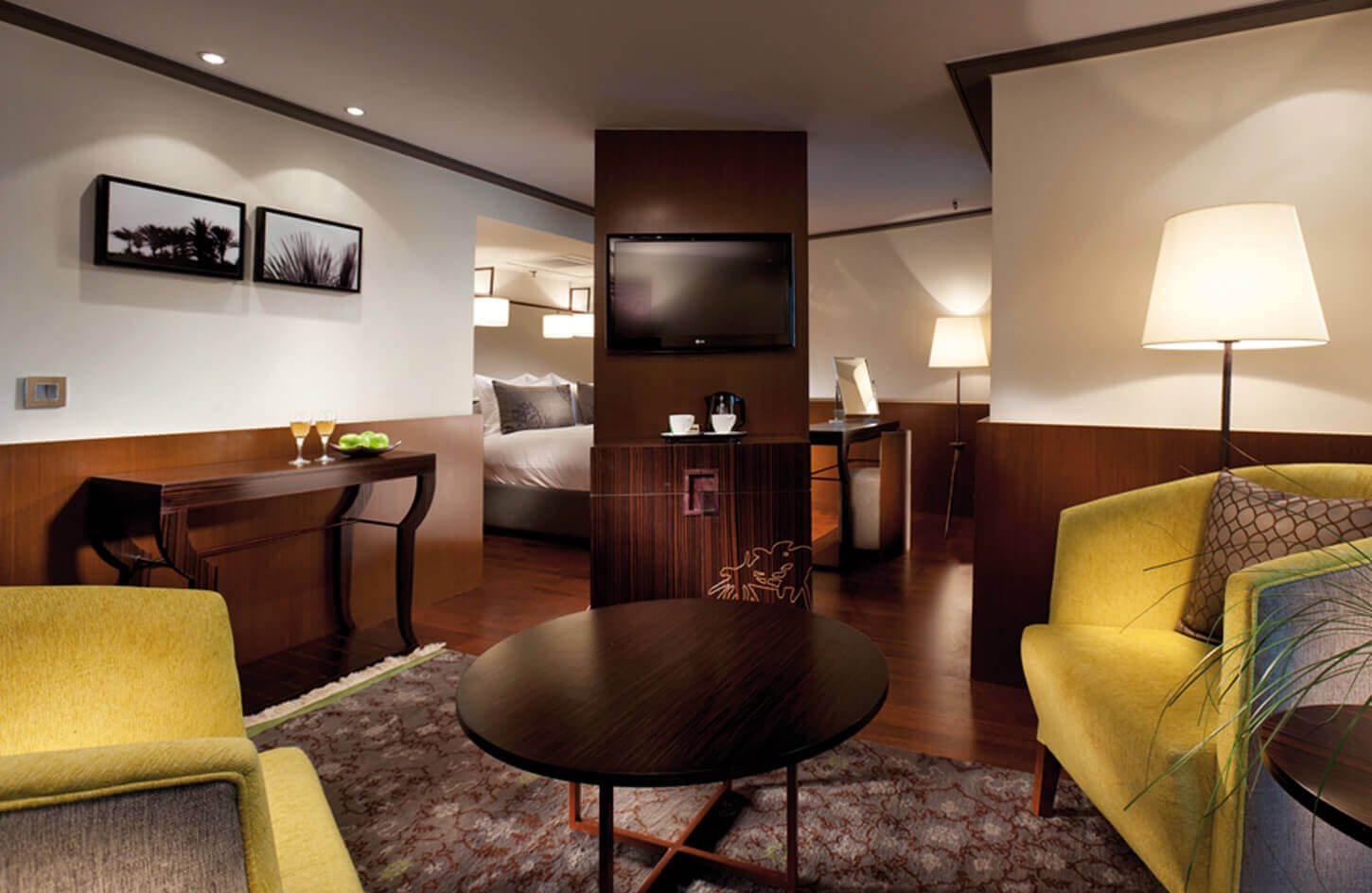
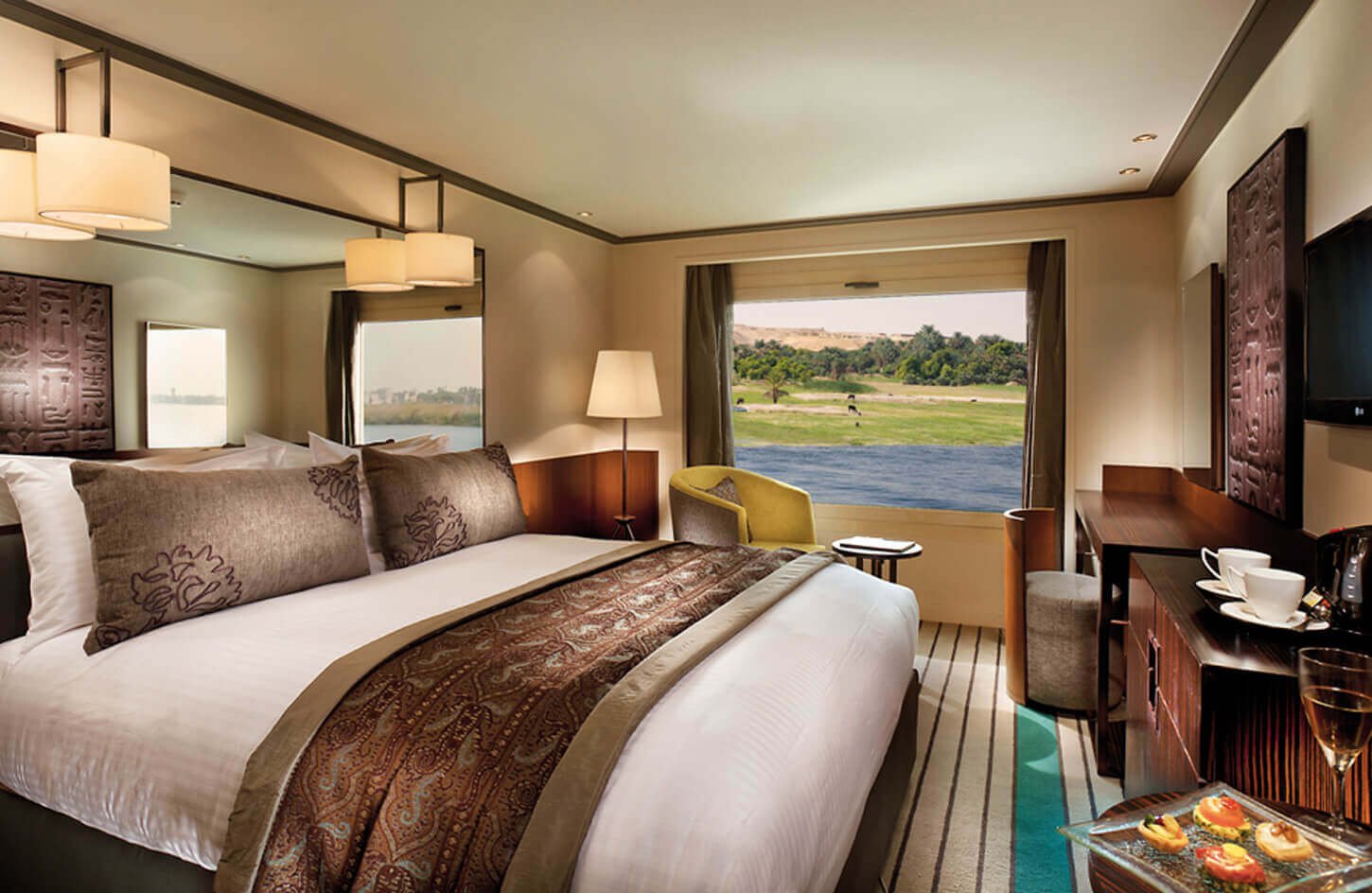
Slip off your shoes, exhale, and let the Esplanade set the tempo. This handsome river vessel drifts between Luxor and Aswan at exactly the pace Egypt deserves: slow enough to notice the egrets lifting off a sandbank, quick enough to fit three millennia of pharaonic wonders into a single week. Cabins open onto wide river views, the sun deck rewards early risers with mint tea and mist over the palms, and the pool is at its most inviting after a morning among the columns of Karnak. Between shore visits, the painted chambers of the Valley of the Kings, the towering pylons of Edfu and the twin sanctuaries of Kom Ombo, you fall into an easy rhythm of unhurried meals, warm Nubian service and long, cinematic afternoons of shoreline. Comfortable, scenic and quietly generous with history, the Esplanade turns sightseeing into a floating retreat. Reserve your voyage with Daily Pyramids Tours.
The Esplanade Nile Cruise pairs old-world river travel with quietly polished comfort. Panoramic cabins keep the water in view from the moment you wake; the kitchen turns out generous Egyptian and international menus; and Egyptologist-led excursions unlock the temples of Luxor, Edfu, Kom Ombo and Aswan with real depth. It is a journey that balances lazy sun-deck hours with meaningful time inside the country’s greatest monuments, an easygoing, culturally rich way to see the Nile.
Day 1: Arrival in Aswan – Aswan City Tour
Your journey begins the moment you land. A representative greets you at Aswan Airport (or your hotel) and stays with you through the day’s introductions to this quietly beautiful river city. Your private, air-conditioned vehicle rolls first towards the Aswan High Dam, the twentieth-century colossus that tamed the Nile’s floods and, in doing so, rescued a constellation of Nubian monuments from the rising waters.
From there you head into the golden granite quarry that once supplied the pharaohs’ obelisks. The Unfinished Obelisk still lies where its ancient masons abandoned it, cracked in the bedrock, an unfiltered lesson in how such monuments were shaped and moved.
A motorised felucca then ferries you across the Nile to Philae Temple, the island shrine of Isis painstakingly relocated stone by stone to Agilkia Island. If you wish, you can extend the afternoon with an optional sail around Elephantine Island and the First Cataract, where the river breaks in silver channels around dark boulders.
Lunch is taken at a well-loved local restaurant before you board your Nile cruise vessel to check in. Dinner is served onboard, and your first night unfolds moored in Aswan.
Meals: Lunch – Dinner
Day 2: Kom Ombo & Sailing to Edfu
After a leisurely breakfast onboard, your private vehicle carries you roughly 45 km north from Aswan to Kom Ombo. Here you tour the Temple of Kom Ombo, an unusually symmetrical double sanctuary shared between Sobek, the crocodile deity, and Haroeris, a form of Horus.
You explore its mirrored inner rooms, its columned hypostyle hall and the ritual chambers reserved for priests, then step into the Crocodile Museum next door, where mummified crocodiles unearthed nearby are beautifully displayed.
Lunch follows at a local restaurant before you rejoin the cruise. Through the afternoon the vessel eases north towards Edfu, gliding past sugarcane fields, riverside villages and the sandstone cliffs that shape the character of Upper Egypt.
An onboard briefing sets the scene for tomorrow’s visit, and the boat moors overnight at Edfu.
Meals: Breakfast – Lunch – Dinner
Day 3: Edfu Temple & Arrival in Luxor
After breakfast, a horse-drawn carriage clatters through the streets of Edfu town and delivers you to the Temple of Horus, the most completely preserved ancient temple anywhere in Egypt.
Its soaring pylons, cavernous halls and finely cut inscriptions tell the story of Horus’s mythic duel with Seth and record the daily rituals of the Ptolemaic priesthood. Because so little has been lost, you can trace the building through nearly all of its original levels, right up to the roof terraces.
You return to the cruise and continue sailing north towards Luxor, with lunch served as the river slips by.
On arrival, you head to Luxor Temple on the East Bank, a monument shaped across the centuries by rulers including Amenhotep III and Ramesses II.
Its long colonnades, sunlit courts and sphinx-flanked approach convey the ceremonial heart of ancient Thebes. The cruise docks overnight in Luxor.
Meals: Breakfast – Lunch – Dinner
Day 4: Luxor West Bank & Departure
After breakfast you disembark and cross the river to the West Bank, the ancient necropolis of Thebes. Your morning begins in the Valley of the Kings, where three royal tombs open up onto luminous wall paintings and sacred texts written to guide their pharaohs through the afterlife.
You continue to the Temple of Hatshepsut at Deir el-Bahari, an architectural set piece rising in terraces from the cliff face and dedicated to one of Egypt’s most formidable female rulers.
A final pause is made at the Colossi of Memnon, twin seated giants that once guarded the entrance to a mortuary temple long since vanished. After lunch, you are transferred to Luxor Airport or your hotel for onward travel.
Meals: Breakfast
Day 1: Arrival in Luxor – East Bank Exploration
You are met at Luxor Airport or the train station by a representative and driven in a private, air-conditioned vehicle straight to your Nile cruise vessel.
After a smooth check-in, your Egypt begins in earnest at the Karnak Temple Complex, the largest religious structure ever raised by human hands, expanded and re-expanded by successive pharaohs across two millennia.
From Karnak you move on to Luxor Temple, a jewel of the New Kingdom once linked to Karnak by the ceremonial Avenue of Sphinxes.
Lunch is served at a local restaurant during the day, and you return to the ship for your first overnight in Luxor.
Meals: Lunch, Dinner
Day 2: West Bank of Luxor – Sailing Toward Edfu
After breakfast you cross the Nile to the West Bank for a guided walk through the Valley of the Kings, where more than 60 royal tombs preserve some of the most vividly painted afterlife scenes ever created.
You continue to the Temple of Hatshepsut at Deir el-Bahari, an architectural feat sculpted into the golden cliffs in honour of Egypt’s most powerful female pharaoh.
A brief pause follows at the Colossi of Memnon, twin monoliths that mark the site of Amenhotep III’s lost mortuary temple.
Lunch is taken at a local restaurant, and you rejoin the ship as it begins its southward passage towards Edfu. You spend the night onboard as the Nile drifts past your cabin window.
Meals: Breakfast, Lunch, Dinner
Day 3: Edfu and Kom Ombo Temples
The ship arrives at Edfu, where a horse-drawn carriage carries you into town for a guided visit to the Temple of Horus.
This exceptionally intact Ptolemaic temple is dedicated to the falcon god and remains one of the most complete ancient sanctuaries anywhere in Egypt.
You return onboard, and the vessel presses on towards Kom Ombo. There you explore an unusual twin temple shared jointly by Sobek, the crocodile god, and Haroeris, a form of Horus.
Its perfectly symmetrical layout and dramatic riverside setting make it one of the most distinctive temples on the Nile. Lunch is served onboard as you sail on, before the ship continues towards Aswan.
Overnight onboard in Aswan.
Meals: Breakfast, Lunch, Dinner
Day 4: Aswan Highlights and Nile Sailing
The day opens with a visit to the High Aswan Dam, a landmark of modern engineering that reshaped Egyptian agriculture and irrigation by giving birth to Lake Nasser.
You continue to the Unfinished Obelisk, the enormous granite shaft left half-carved in its quarry, offering rare, hands-on insight into how ancient stonemasons worked.
A motorboat then whisks you across to Philae Island for a guided visit to the Temple of Isis, a Ptolemaic sanctuary saved from the rising waters after the building of the Aswan Dam.
Lunch is served at a local restaurant, followed by a traditional felucca sail around Elephantine Island, a gentle, quietly beautiful way to see Aswan’s granite landscapes and river life.
You return to the ship for your final overnight onboard.
Meals: Breakfast, Lunch, Dinner
Day 5: Departure from Aswan
After a final breakfast on board, you check out from the cruise vessel. A private, air-conditioned vehicle transfers you to Aswan Airport or the train station for your onward journey.
Meals: Breakfast
At Daily Pyramids Tours, all prices are quoted in US Dollars (USD) unless otherwise specified. However, we gladly accept payments in other major currencies such as Euros (EUR), British Pounds (GBP), and more, based on the official daily exchange rate on the payment date.
Our prices reflect current market conditions, seasonal fluctuations, and service availability, so they may change without prior notice. Once a deposit or full payment is received, your booking price is locked in and guaranteed.
What’s Included in Our Packages:
Please check your specific booking confirmation and itinerary for exact inclusions and exclusions.
Holiday Supplement:
A 25% surcharge applies to all Nile Cruises and tour packages booked during Christmas, New Year, and Easter holidays due to peak demand.
To ensure a smooth booking process with Daily Pyramids Tours, our payment terms vary depending on the service type:
After payment, you will receive written confirmation, a tailored itinerary, and travel documents via email. Receipts for all payments will be provided.
We understand plans can change. Our cancellation terms are:
Refunds, when applicable, are processed within 14 business days of receiving your written cancellation notice. Some cruises or hotels may have stricter cancellation policies, which will be clearly communicated in your itinerary.
At Daily Pyramids Tours, we welcome families and offer the following children’s pricing:
Discounts apply only when children share accommodation with two full-paying adults. Note that certain Nile Cruises and luxury hotels may have different policies or restrictions for young children, which will be detailed in your itinerary if relevant.
Some special experiences are optional and not included in standard packages. You may book these in advance or arrange on-site (subject to availability). Examples include:
Optional tours are payable in USD or local currency (EGP). We recommend booking in advance, especially during peak seasons.
While our packages are comprehensive, travelers should budget for:
We advise carrying small amounts of local currency (EGP) for convenience, especially for tipping and shopping at local markets.
Tipping (“baksheesh”) is a customary way to show appreciation for good service in Egypt. Though not mandatory, it is widely appreciated:
Tipping is generally not included in your package price. We recommend carrying small USD or EGP bills for tipping convenience.
Nile cruise pricing depends on how long you sail, the calibre of the vessel and the services rolled into the fare. As a working guide, expect $600 to $900 per person for a 3-4 night voyage on a mid-range to luxury ship. Longer itineraries or top-tier cruises with elevated amenities naturally sit above that range.
The sweet spot for a Nile cruise runs from October to April, when the daytime warmth is pleasant and temple visits are genuinely comfortable. It is best to avoid the peak of summer between May and September, when Upper Egypt turns fiercely hot.
Absolutely. A Nile cruise is one of the most rewarding and relaxing ways to experience Egypt, weaving together sweeping river scenery with expert-led visits to the country’s most iconic temples and tombs. You get comfort, convenience and a genuinely memorable cultural journey in a single package.
Swimming directly in the Nile is not advised. Water quality, wildlife and unpredictable currents all make it a poor idea, and the great majority of cruise operators do not permit it. Enjoy the river instead from your cabin balcony, the sun deck or the ship’s pool.
Daytime dress on a Nile cruise is casual and unfussy, with light, breathable fabrics your best friend under the Egyptian sun. Evenings lean smart-casual for dinner and onboard events, and modest coverage of shoulders and knees is welcomed when visiting temples and other religious or historical sites.